
Cloud-bordered Brindle
Apamea epomidion
Description
How to identify
The Cloud-bordered Brindle (Apamea epomidion) is a moth species belonging to the family Noctuidae, characterized by its cryptic appearance and nocturnal lifestyle.
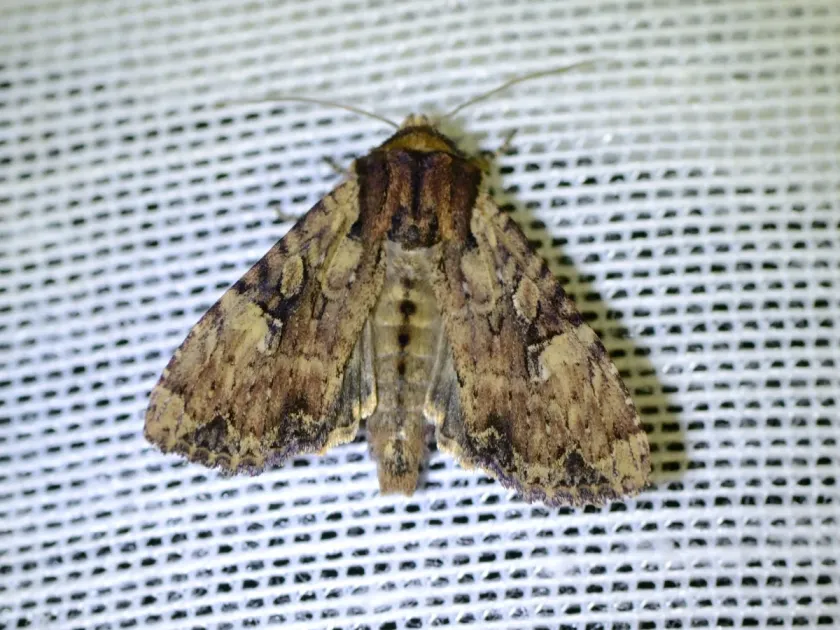
The adult moth features a wingspan ranging from 35 to 45 mm, with forewings displaying mottled yellow-brown patterns that resemble dead leaves or debris, providing excellent camouflage.
Larvae are typically drab in color, ranging from greyish-brown to dull brown, which allows them to remain hidden in the leaf litter or soil surface during daylight hours.
The species is widespread across various habitats, including agricultural fields where it exploits grain and grass crops as primary food sources for its developing larvae.
Being part of the Noctuidae family, this insect possesses strong flight capabilities and adaptive physiological mechanisms for overwintering, which are typical for temperate climate species.
What it damages
The primary damage is caused by the larvae, which are known to be polyphagous but show a distinct preference for various species of cereals and wild grasses.
Early instar larvae may consume leaf tissue, while older larvae often feed at the base of the stems, leading to weakened plant structure and potentially lethal injuries to the tillers.
Economic damage is most pronounced when population density is high, resulting in patchy crop stands and reduced overall grain yield due to plant stress and loss of biomass.
In addition to direct feeding, the larvae can compromise the plant's health, making it more susceptible to various fungal pathogens that enter through feeding wounds.
Frequent infestations can lead to significant cumulative losses, especially in regions with mild winters that allow for a higher survival rate of the overwintering larvae.
When it appears
The life cycle is univoltine, meaning there is only one generation per year, with adult activity peaking throughout the mid-summer months of June and July.
Eggs are typically laid on or near host plants, and after a relatively short incubation period, the larvae emerge to begin their development cycle.
Larval development continues through the autumn, as they feed and grow, eventually entering a state of diapause as mature larvae to survive the winter months.
Spring activity resumes once temperatures rise, at which point the larvae may feed briefly before pupating in the soil during late spring or early summer.
Pupation takes place within a subterranean chamber, where the insect remains protected until the adult moth emerges to restart the reproductive cycle.
Signs of infestation
Infestation signs often start with the appearance of localized areas of chlorotic or withered plants within a field, indicating localized feeding activity by the larvae.
The presence of notches or large irregular holes on leaf blades is a visual cue that chewing insects are active, especially when observed at night or early morning.
Soil disturbance or frass deposits near the base of the stems are reliable indicators of where larvae are hiding and feeding during the day.
In cases of severe infestation, growers might notice a general thinning of the crop stand, which is usually accompanied by stunted plant growth in the affected patches.
Observation of moths using light traps or pheromone baits during the summer is an early warning sign that eggs have been laid and that future larvae populations may pose a threat.
Control measures
Effective management begins with integrated pest management (IPM) practices, emphasizing crop rotation to break the life cycle of the moth in affected fields.
Mechanical control through deep tillage in late autumn can destroy overwintering larvae and pupae by exposing them to extreme weather conditions and natural predators.
Biological control agents, such as specific entomopathogenic fungi or predators like carabid beetles, can help keep population levels below the economic threshold.
Chemical applications should be strictly timed to the most vulnerable larval stages and only used when monitoring data confirms that threshold levels have been exceeded.
- Regular field scouting to identify early signs of larval feeding damage.
- Maintenance of clean field borders to reduce alternative host plants for the larvae.
- Application of targeted insecticides as a last resort in high-pressure years.
Taxonomy
- Latin name
- Apamea epomidion
- Order
- Lepidoptera (butterflies)
- Family
- Noctuidae
- EPPO code
- PARIHE
Discussion
No discussions yet — be the first.