
Apamea apamiformis
Apamea apamiformis
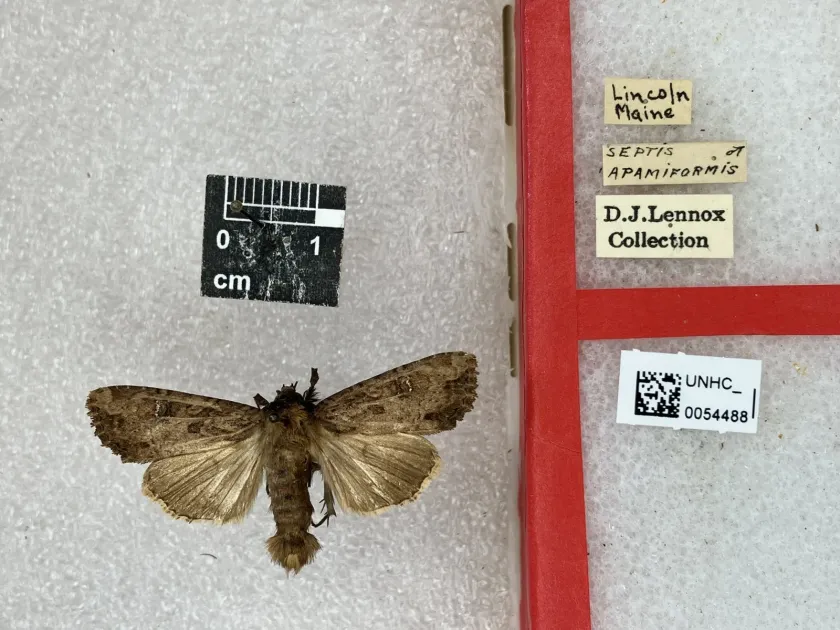
Description
How to identify
Apamea apamiformis is a member of the Noctuidae family within the Lepidoptera order, commonly known as a type of cutworm moth.
The adult moth is nocturnal, possessing a cryptic coloration on its forewings that helps it remain invisible while resting on bark or soil during the daylight hours.
The larvae are typically cylindrical with five pairs of prolegs, often displaying coloration patterns that blend with the stalks of cereal crops.
Identification of the species is usually confirmed by entomologists through the examination of genital structures in adult specimens captured via light traps.
This species is highly adaptable, maintaining viable populations across diverse landscapes ranging from open meadows to agricultural fields.
What it damages
The primary agricultural damage is caused by the larval stage, which feeds on various cereals including wheat, barley, and corn, often targeting the stems and leaves.
Feeding behavior involves cutting through plant stalks at the base, which significantly impacts the nutrient supply to the developing ear of the plant.
High infestation rates result in patchiness within fields, where clusters of plants are destroyed, leading to substantial yield losses in affected areas.
The larvae are also known to feed on grassy weeds, allowing them to bridge the gap between crop seasons and maintain population density.
Direct damage to the vegetative mass reduces the plant's capacity for photosynthesis, further weakening the crop's ability to resist secondary diseases.
When it appears
The life cycle typically consists of one generation per year, with adult activity peaking during the early to mid-summer period.
Eggs are deposited on host plants, and once hatched, the larvae begin an intensive feeding period that lasts throughout the summer months.
As temperatures begin to drop in the autumn, larvae seek out protective environments, typically within the upper layers of soil, to enter a period of diapause.
Emergence from overwintering happens in the spring, triggered by rising soil temperatures and the availability of fresh vegetative growth.
The timing of the adult flight is often monitored to predict the potential severity of larval infestation in the subsequent growth stage of the crop.
Signs of infestation
Field signs of infestation often include wilted or drooping plants, which occur when the larvae sever the plant's connection to its root system.
Visible notches or irregular holes in the foliage of young cereal crops are clear indicators of early-stage larval feeding activity.
Small mounds of larval excrement found at the base of affected plants serve as an undeniable trace of pest presence in the field.
In cases of severe infestation, circular patches of dead or stunted plants become apparent, especially after dry spells that stress the crop.
Observing adult moths in the field during the night using light sources is the most direct way to identify the presence of the population.
Control measures
Deep autumn plowing is a recommended cultural practice to disrupt the life cycle by exposing overwintering larvae to harsh conditions.
Effective management includes the removal of weeds around field margins to reduce alternative food sources and nesting sites for the moth.
Biological control agents, including parasitic wasps and entomopathogenic fungi, can be integrated into management programs to suppress population growth.
Chemical intervention should be reserved for instances where the population exceeds economic thresholds, utilizing targeted insecticide applications.
- Utilizing pheromone traps for monitoring flight cycles.
- Implementing crop rotation to break the pest's life cycle.
- Applying insecticides during the peak activity of young larvae.
- Maintaining healthy crops through optimized fertilization.
Taxonomy
- Latin name
- Apamea apamiformis
- Order
- Lepidoptera (butterflies)
- Family
- Noctuidae
- EPPO code
- APAMAP
Discussion
No discussions yet — be the first.