
Apamea
Apamea
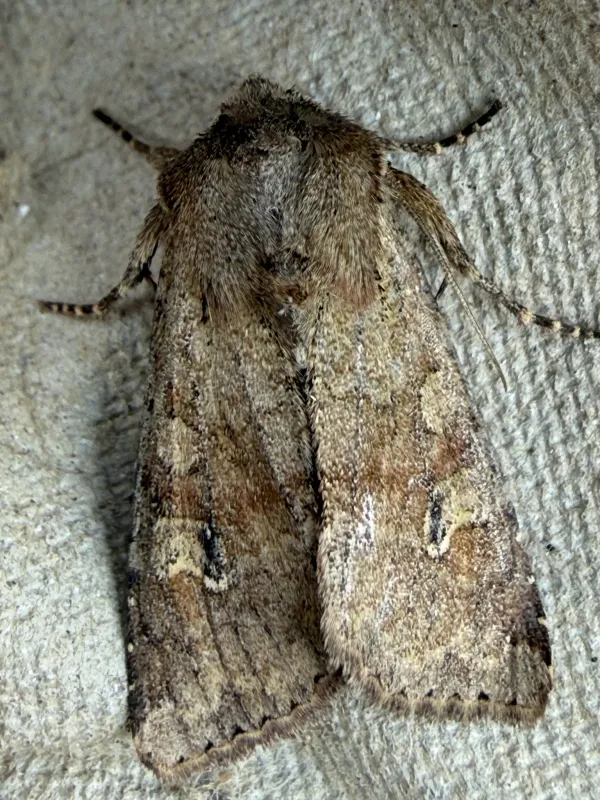
Description
How to identify
The genus Apamea belongs to the Noctuidae family within the order Lepidoptera. These moths are typically nocturnal, with medium-sized bodies and cryptic coloration that allows them to blend perfectly with plant debris or bark.
Adult moths feed on nectar and are primarily active at night. During the day, they remain stationary in dense vegetation or sheltered spots, making them difficult to spot without specialized traps.
Apamea larvae, often called cutworms or stalk borers, have robust, cylindrical bodies. Their color usually ranges from grey to brownish, providing excellent camouflage against the soil surface.
They possess a well-developed chewing mouthpart designed to feed on both roots and stems. The head is usually dark and sclerotized, adapted for heavy feeding on vegetation.
The life cycle involves a complete metamorphosis: egg, larva, pupa, and adult. Most species overwinter as larvae in the soil, emerging when spring conditions become favorable.
What it damages
Apamea primarily affects cereal crops such as wheat, barley, rye, and oats. They are significant pests that can drastically reduce crop stands through direct feeding on the plants.
The larvae damage the tillering node and the base of the stems. This feeding disrupts the plant's nutrient transport, leading to wilting, yellowing, and eventually the death of young shoots.
In high-density outbreaks, these pests can cause significant thinning of crops, requiring intervention or partial replanting to compensate for the loss of plant density.
Beyond cultivated fields, the larvae thrive on wild grasses. This creates a reservoir for the pest, allowing them to migrate into crops from field margins and fence rows.
Plants weakened by larval feeding are often predisposed to secondary infections, such as root rot or other fungal pathogens, which further complicate crop recovery.
When it appears
Adult flight activity typically begins in late spring or early summer, depending on regional climatic patterns. The peak egg-laying period occurs during the initial weeks of summer.
Eggs are deposited near the base of the host plants or directly on the soil. A single female can produce a large number of offspring, ensuring population persistence across seasons.
Larval development spans most of the growing season. The most active and damaging period for crops is usually during the early growth stages of cereals, such as tillering.
By autumn, as temperatures drop, the larvae move deeper into the soil profile to enter a state of dormancy or diapause, where they remain until the following spring.
Monitoring for adult activity using pheromone traps is essential for predicting larval emergence and timing preventive measures accurately.
Signs of infestation
The most noticeable sign of an Apamea infestation is the sudden wilting of individual plants. If you attempt to pull a wilted plant, it often separates easily from the root base.
Closer inspection reveals gnawed tissue or tunnels at the base of the stem or within the crown. In some cases, the larvae can be found buried just beneath the soil surface.
Areas of sparse growth within the field, often called "dead patches," are indicators of localized larval activity. These patches tend to expand as larvae mature.
The presence of larval frass (excrement) at the base of affected plants is a definitive sign of feeding activity, helping to distinguish it from abiotic stress or plant diseases.
Using soil baiting or manual excavation around symptomatic plants can confirm the presence of larvae, allowing for a more informed decision regarding chemical application.
Control measures
Cultural management is the cornerstone of Apamea control. Deep fall plowing is highly effective at exposing overwintering larvae to predators and harsh weather conditions.
Crop rotation is essential for breaking the pest's cycle. Moving away from susceptible grass-based crops for one or two seasons significantly reduces larval numbers in the soil.
Controlling weeds, especially wild grasses around fields, removes alternative food sources and breeding sites, forcing the pest population to decline.
If economic thresholds are met, the application of targeted insecticides is necessary. Treatment should be applied before the larvae move deeper into the soil or stems for protection.
- Use of pest-resistant or tolerant crop varieties.
- Integration of biological control agents like entomopathogenic nematodes.
- Proper fertilization to boost plant vigor and speed up regeneration after light damage.
Taxonomy
- Latin name
- Apamea
- Order
- Lepidoptera (butterflies)
- Family
- Noctuidae
- EPPO code
- APAMSP
Discussion
No discussions yet — be the first.