
Pronghorn
Antilocapra
Description
How to identify
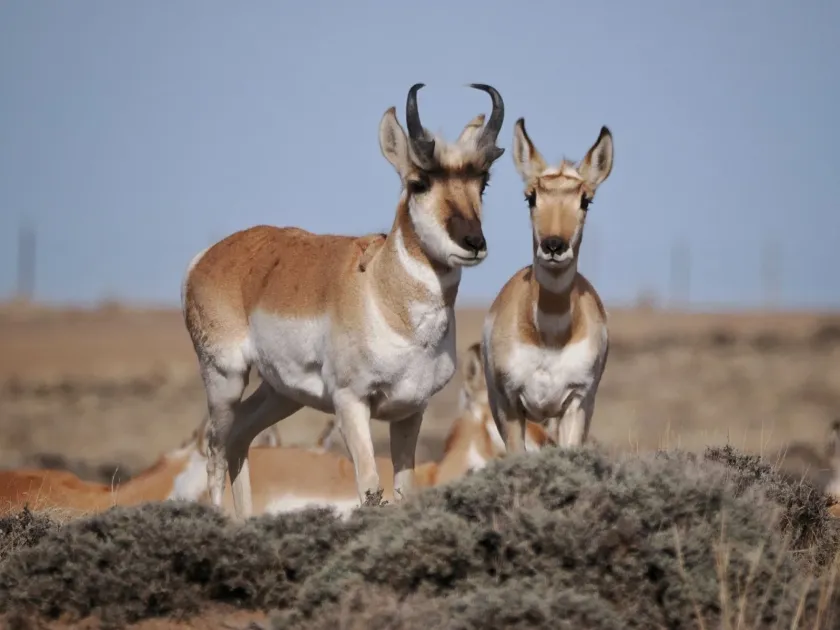
The pronghorn (lat. Antilocapra americana) is a unique ungulate, the only extant member of the family Antilocapridae in the order Artiodactyla. Adults typically weigh between 35 and 60 kg and are distinguished by their tan coat and white rump patches.
Pronghorns are known for their exceptional speed, making them difficult to deter from agricultural areas once they establish a habit of visiting. They possess unique horns that are shed annually, which is a key biological marker of the species.
Their natural habitat includes the prairies and plains of North America. When farmland overlaps with these ecosystems, pronghorns often view crops as a high-quality forage source, leading to human-wildlife conflicts.
Sexual maturity is reached by their second year. If food availability is stable, these animals tend to remain in one area for extended periods, increasing the potential for significant crop loss.
The species is primarily diurnal, allowing agronomists to identify the presence of a herd visually during daylight hours before extensive damage occurs to the crop canopy.
What it damages
Pronghorns pose a significant risk to various field crops, including alfalfa, wheat, and barley. Their grazing habits directly reduce the biomass available for harvest and decrease overall yield.
In addition to direct consumption, pronghorns cause substantial mechanical damage through trampling. A large herd can quickly turn a dense, healthy crop into a sparse field of flattened stems.
Most economic loss is observed during the spring growth phase. Tender seedlings are highly attractive, and heavy grazing during this sensitive period can result in total crop failure for the affected section of the field.
Beyond grazing, these animals often impact agricultural infrastructure by damaging fencing and irrigation systems, often leading to costly repairs and operational downtime.
Understanding the interaction between this species and agricultural land is essential for implementing sustainable management strategies that minimize economic impact.
When it appears
The peak activity of pronghorn in agricultural fields occurs in early spring, when natural forage in the surrounding grasslands is still dormant. Farm crops provide the necessary nutrition during this critical time.
During the summer, as natural vegetation begins to dry out, pronghorns tend to congregate near irrigated fields. The constant availability of water and lush green growth makes these areas prime targets.
While activity might decline in the autumn, mild weather conditions can lead to late-season grazing on winter wheat, which can negatively influence the crop's ability to survive the cold months.
Migration patterns are closely linked to regional climate fluctuations. Sudden weather shifts, such as early snow, often force herds to move, making their presence on farmland a dynamic and unpredictable challenge.
Developing a predictive model based on seasonal behavior allows farmers to prioritize protective measures and limit access to the most vulnerable crop areas during peak risk periods.
Signs of infestation
The most common indicator of pronghorn presence is their distinct, elongated hoof prints. You may also observe patches of trampled vegetation, often characterized by erratic patterns.
A high concentration of fecal pellets is a reliable indicator that a herd has spent a significant amount of time in the vicinity, signaling a need for immediate intervention.
Ragged stem damage at varying heights and uprooted seedlings are clear signs that large ungulates have been foraging in the area, differentiating the damage from that of smaller pests.
Early morning visual inspections are the most effective way to detect herds. Pronghorns are highly visible and often linger in fields until approached closely by farm equipment.
The absence of burrowing or denning activity, combined with wide-scale top-layer crop removal, usually confirms the presence of pronghorns or similar large herbivores.
Control measures
Physical fencing is the most effective deterrent, provided it is designed to prevent both jumping and crawling underneath. Special designs are required due to the pronghorn's athletic ability.
Audio and visual deterrents, such as motion-activated devices, can be effective in the short term. However, it is crucial to rotate these methods frequently to prevent the animals from becoming habituated.
Repellents applied to the edges of the fields can create a chemical barrier, although these need to be reapplied after significant rainfall to maintain their efficacy.
Integrated management includes the use of buffer zones planted with non-palatable species to discourage herds from entering the core production areas.
- Electric fencing with appropriate voltage settings.
- Regular field monitoring during peak migration and grazing periods.
- Collaboration with local wildlife agencies to manage herd populations and movement corridors.
Taxonomy
- Latin name
- Antilocapra
- Family
- Antilocapridae
- EPPO code
- ANLCSP
Discussion
No discussions yet — be the first.