
Varied carpet beetle
Anthrenus vorax
Description
How to identify
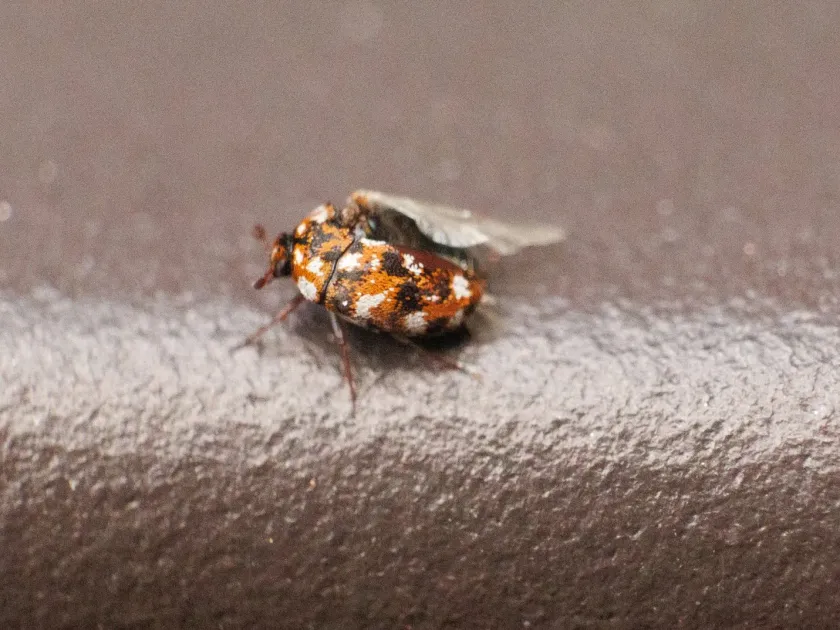
The Varied carpet beetle (Anthrenus vorax) belongs to the order Coleoptera and the family Dermestidae. This is a small beetle, typically measuring between 2 and 4 millimeters in length.
The appearance of the adult is characterized by an oval-shaped body covered with fine scales, which often form a mottled or marbled pattern on the elytra.
The larvae are spindle-shaped and densely covered with long, stiff bristles, which is why they are commonly known as "woolly bears".
The color of the larvae ranges from light yellow to dark brown, and they often possess distinct tufts of bristles at the rear end of their bodies.
The life cycle of this insect consists of egg, larva, pupa, and adult stages, with the larval stage being the most destructive to organic materials.
What it damages
While primarily recognized as a pest in museums and herbaria, this species poses a significant threat to agricultural research samples and stored biological specimens.
The pest attacks dry seeds, cereal crops stored in laboratory conditions, and any plant-based substrates containing organic material.
Damage to seed material intended for breeding or scientific research is particularly concerning, as the larvae consume the internal tissues of the seeds.
In warehouses or storage facilities, these beetles can damage packaging materials made of natural fibers, which facilitates secondary infestations of stored products.
Besides plant matter, these beetles actively damage animal taxidermy, hides, wool, and feathers, making them a menace to any biological repository.
When it appears
The development of the Varied carpet beetle depends heavily on the temperature and humidity conditions within the storage environment.
Optimal conditions for rapid reproduction are air temperatures between +22 and +28 degrees Celsius with moderate humidity levels.
In climate-controlled or heated rooms, the pest can remain active and reproduce throughout the year, producing multiple generations within a single calendar year.
The peak emergence of adult beetles typically occurs in the spring and summer when rising temperatures stimulate the metamorphosis of pupae.
Females lay their eggs directly onto a substrate that will serve as food for the offspring, making the infestation process hidden and difficult to manage.
Signs of infestation
The first sign of an infestation is the presence of specific "frass" or fine dust generated by the feeding activity of the larvae.
During inspections of collections or seeds, one can often spot empty larval skins (exuviae) shed during the molting process as the larvae grow.
Damaged items usually exhibit characteristic boreholes or eaten-away edges, with the larvae often remaining hidden inside the material.
Adult beetles are frequently found on window sills or near light sources, as they exhibit positive phototaxis and attempt to leave the larval feeding sites.
The presence of live or dead beetles on shelves is a critical indicator that an active infestation is already damaging the materials.
Control measures
The foundation of effective control is strict sanitation: regular damp cleaning of shelves and removal of debris where organic matter might accumulate.
Utilizing low-temperature treatments (freezing materials below -18 degrees Celsius) is highly effective at destroying all life stages of the pest.
To protect valuable collections, use airtight display cases and storage containers that prevent beetles from entering to lay eggs.
The use of pheromone traps allows for population monitoring and enables early detection of adults before large-scale reproduction begins.
Chemical treatments of premises, such as fumigation or the use of contact insecticides, should only be used as a last resort by trained professionals.
Discussion
No discussions yet — be the first.