
Anergates
Anergates
Description
How to identify
Anergates is a rare and highly specialized genus of ants belonging to the family Formicidae. They are unique among insects as they are social parasites that lack a worker caste entirely.
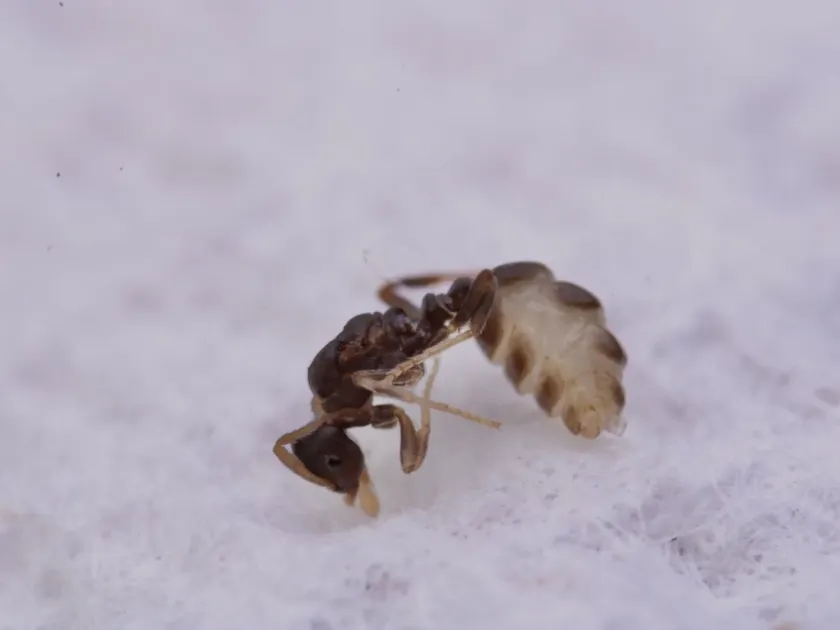
The queens of this genus possess a distinctive morphology with enlarged gasters, an adaptation for high egg production. They rely entirely on the resources and workforce of their host species, usually of the genus Tetramorium.
These ants operate through chemical mimicry, which allows them to bypass the defenses of the host colony. Once inside, the queen takes over the reproductive control of the nest.
Taxonomically, they are part of the subfamily Myrmicinae. Their evolution represents a fascinating example of extreme specialization where the parasite loses all ability to interact with the external environment.
Identifying Anergates is difficult without careful examination of the host colony, as their presence is concealed within the underground structures of the ant nest.
What it damages
Anergates does not cause direct damage to agricultural crops or plant tissues. Their impact is categorized as biological interference by depleting beneficial insect populations.
By infiltrating Tetramorium nests, Anergates eventually leads to the decline and extinction of the host colony. Tetramorium ants are essential predators of various soil-dwelling pests.
The economic consequence of a high prevalence of this parasite is the loss of natural pest control services provided by the ants. This can lead to an increase in other harmful insect populations.
The damage is indirect, manifesting as a disruption of the local food web within the field. This reduction in biodiversity can affect the overall health of the agricultural ecosystem.
While not a direct threat to crop yield, Anergates functions as an ecological factor that can reduce the natural resilience of the soil environment against primary pests.
When it appears
The life cycle of Anergates is closely synchronized with the seasonal activity of its host species. The reproductive phase typically occurs during the warmer summer months.
During the peak of the season, the winged virgin queens emerge to seek new host nests. This dispersal is highly dependent on favorable weather conditions to ensure successful colonization.
Winter months are spent in diapause within the underground tunnels of the host nest. The parasite queen remains dormant until the spring soil temperatures rise.
The development of the parasite larvae occurs in parallel with the brood development of the host ants, utilizing the constant care provided by the host workers.
Observing the timing of new colony outbreaks is essential for entomologists studying the long-term sustainability of ant populations in agricultural landscapes.
Signs of infestation
The primary sign of infestation is the gradual weakening of the Tetramorium colony. This is often observed as a significant reduction in the number of foraging workers seen on the surface.
A lack of defense response when the nest mound is disturbed suggests that the colony is struggling and potentially compromised by the presence of the parasite.
Detection of the unique queen morphology of Anergates within the nest chambers provides definitive evidence of parasitism.
An unusual number of winged reproductive individuals seen exiting the mound during the summer can indicate a mature parasite infestation within the colony.
- Reduced foraging activity on the soil surface.
- Decreased colony aggression towards intruders.
- Presence of anomalous larvae and pupae within the brood chambers.
Control measures
There are no specific chemical control measures for Anergates, as it is generally considered an ecologically important species rather than a commercial pest.
To support a healthy agroecosystem, the focus should be on maintaining stable and diverse ant populations through sustainable farming practices.
Reducing the application of broad-spectrum soil insecticides helps protect the host ant colonies, thereby keeping the ecosystem in natural balance.
Promoting diverse vegetation and healthy soil structure provides the habitat necessary for Tetramorium ants to establish robust colonies that are less susceptible to invaders.
Monitoring the health of local ant populations acts as a bio-indicator for the overall stability of the farm environment, allowing for proactive management of soil health.
Discussion
No discussions yet — be the first.