
Anemonia manjano
Anemonia manjano
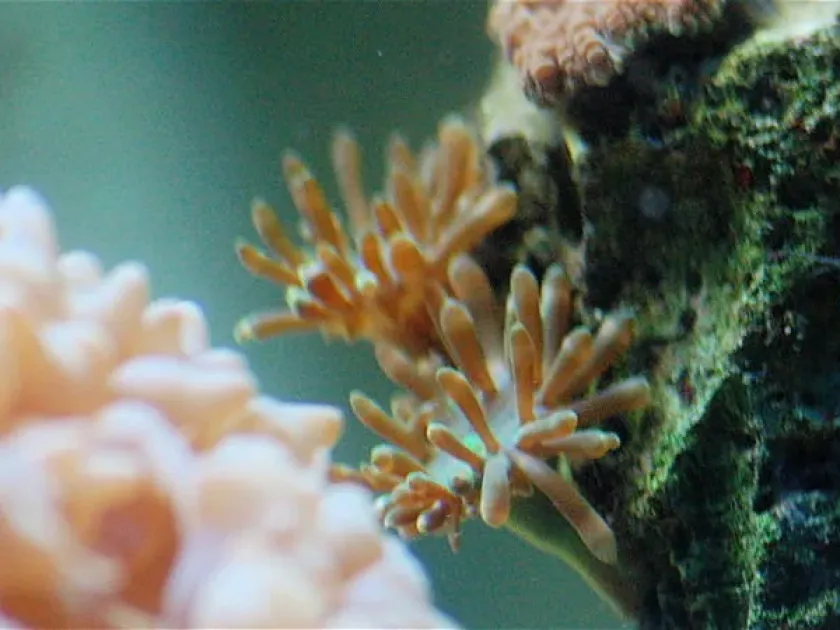
Description
How to identify
Anemonia manjano is a small, highly invasive species of sea anemone that frequently infiltrates marine aquariums via live rock or coral fragments. Its ability to colonize systems quickly makes it a problematic pest for reef keepers.
The anemone typically exhibits a pale brown or greenish color. While it may look harmless initially, it possesses powerful stinging cells that allow it to outcompete corals and other sessile organisms for space and resources.
Classified under the order Actiniaria, family Actiniidae, this species is noted for its high adaptability. It can thrive in a wide range of water conditions, making it incredibly resilient and difficult to eradicate once established.
Adult specimens are generally small, often reaching only a few centimeters in diameter. Their size allows them to hide in deep crevices, making physical removal without disturbing the surrounding reef structure challenging.
They are easily recognized by their rapid vegetative reproduction. A single anemone can split into several individuals within a short timeframe, leading to a sudden surge in population density within the aquarium environment.
What it damages
The primary damage caused by Anemonia manjano is the physical displacement of corals. By aggressively encroaching on space, it prevents corals from expanding and growing, effectively stunting their development.
Their stinging tentacles cause chemical burns to sensitive coral tissues, leading to tissue necrosis and death. If left unchecked, they can decimate expensive and delicate coral colonies within a short period.
An infestation negatively affects water quality. The anemones release mucus and metabolic waste, which can lead to fluctuations in chemical parameters, adding stress to the overall ecosystem and other inhabitants.
These pests often colonize critical equipment, such as pump impellers and intake valves. This interferes with water flow and circulation, which is vital for the health of a closed-loop marine system.
Anemonia manjano essentially turns a biodiverse reef into a monoculture. This ecological imbalance makes it nearly impossible to maintain healthy, thriving coral reefs due to constant competition and toxicity.
When it appears
Anemonia manjano does not have a seasonal cycle in the traditional sense, as it is a pest of controlled aquarium environments. It reproduces continuously throughout the year, provided that light and nutrients are available.
Reproduction occurs through pedal laceration, where the anemone detaches small pieces of its foot. These fragments grow rapidly into fully mature individuals, ensuring a steady expansion of the colony.
High nutrient levels, particularly nitrates and phosphates from overfeeding, act as a catalyst for population growth. Proper waste management is essential to keep their numbers in check.
The life cycle is highly adaptable to lighting conditions. They are capable of flourishing in both high-light areas and deep, shadowed recesses of the reef, making them difficult to locate during routine maintenance.
Without natural predators or competition, a single specimen can overwhelm an entire aquarium ecosystem in just a few months, necessitating immediate action upon initial discovery.
Signs of infestation
The first sign of an infestation is the appearance of small, brownish dots on the substrate or rockwork. These eventually develop into distinct, tentacled anemones as they grow larger.
The retraction of nearby coral polyps is a major indicator of Anemonia manjano presence. Corals will often close up in defense against the proximity of the anemone's potent sting.
Look for tissue recession on coral colonies located near mysterious brown formations. If the base of a coral is dying, there is likely an anemone hiding in a crevice right underneath it.
Night-time observations using a flashlight are very effective. These anemones are often more active at night, extending their tentacles to feed on plankton, which makes them easier to spot and count.
- Small patches of brown tissue on rocks.
- Receding coral edges in specific zones.
- Sudden increases in anemone count on filtration equipment.
Control measures
Physical removal should be done with extreme care. Since any left-behind tissue can regenerate into a new anemone, it is often best to remove the small piece of rock the anemone is attached to.
Chemical control using concentrated calcium solutions or specialized commercial anemone killers can be effective for precise, localized treatment without affecting the rest of the aquarium.
Biological control involves introducing natural predators, such as specific butterflyfish or nudibranchs. However, these animals have their own specific care requirements and may not be suitable for every tank.
Maintaining high water quality and reducing organic load is the most effective long-term strategy. Limiting nutrient availability helps slow their reproductive rate and makes the environment less favorable for them.
Quarantining all new additions, including corals and live rock, is the only way to effectively prevent Anemonia manjano from entering your marine system in the first place.
Discussion
No discussions yet — be the first.