
Anchomenus dorsalis
Anchomenus dorsalis
Description
How to identify
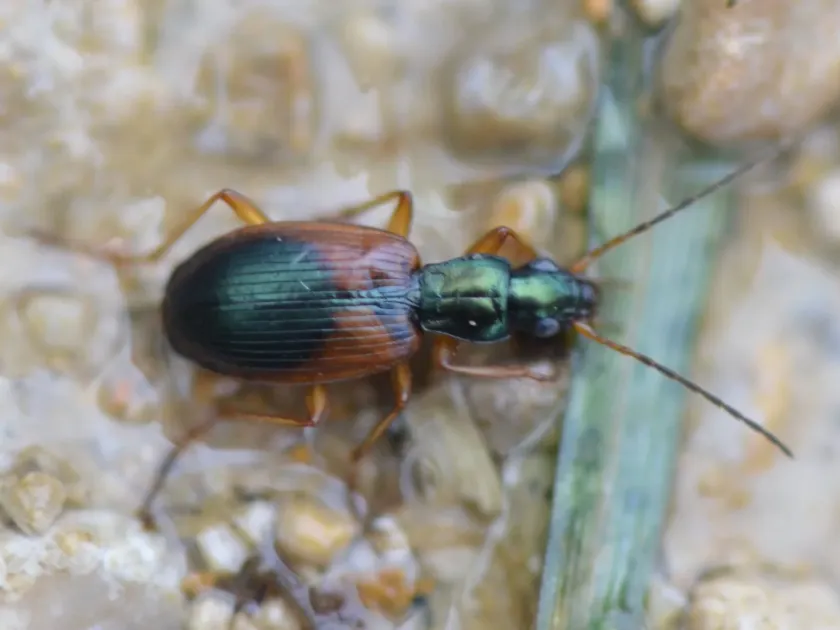
Anchomenus dorsalis belongs to the family Carabidae, commonly known as ground beetles. This species is relatively small, measuring approximately 6 to 8 millimeters in length.
The adult beetle has a distinct appearance with a flattened body, a reddish-brown pronotum, and metallic elytra featuring a characteristic pale central spot.
The larvae are typically elongate with well-developed legs, allowing them to move rapidly through the topsoil layer in search of food sources.
Their biological development involves complete metamorphosis, and they typically overwinter as adults, finding shelter in plant residues or soil crevices.
These insects are highly mobile and adapt well to various agricultural environments, particularly where surface moisture is present during the spring season.
What it damages
While many ground beetles are primarily predatory, Anchomenus dorsalis may occasionally shift to phytophagous behavior, feeding on young agricultural plants.
The primary crops at risk include emerging cereal grains, sugar beets, and various vegetable crops during their most vulnerable seedling stages.
Damage occurs when larvae or adults feed on germinating seeds, destroying the embryo, or chew through the tender stems of young seedlings near the soil surface.
Fields characterized by minimum tillage practices often provide higher protection for the pest, leading to increased pressure on newly sown crops.
Feeding damage weakens the plants, often exposing them to secondary infections from soil-borne pathogens, which significantly reduces total plant population.
When it appears
The pest becomes active in early spring, once soil temperatures reach a threshold of approximately 8–10 degrees Celsius, aligning with crop emergence.
The highest level of economic damage is observed during the critical period from planting until the development of the first true leaves.
During hot summer months, the beetles decrease their surface activity and seek shelter in deeper soil layers to avoid desiccation.
Activity may increase again in the autumn, though the spring phase remains the most significant in terms of potential impact on total crop yield.
As winter approaches, beetles migrate to surrounding areas, such as field edges or undisturbed vegetation, to prepare for their dormant period.
Signs of infestation
The first indicator of an Anchomenus dorsalis infestation is the sudden appearance of sparse patches within the field where seedlings are missing or stunted.
Careful examination of the soil around affected plants often reveals small tunnels, while damaged stems show visible gnawing marks near the ground level.
When investigating during cool, damp mornings, one may observe the beetles actively feeding or moving near the base of the crop rows.
Examination of damaged seeds or seedlings often reveals partially consumed tissues, which is a classic symptom of ground beetle feeding activity.
Stunted or wilted plants amidst a healthy field are typical signs of localized pest hotspots that require immediate agronomic attention.
Control measures
Effective management begins with proper tillage practices, which disrupt the overwintering sites of the beetle and reduce the overall population.
Crop rotation is essential to prevent the buildup of pest density, as these beetles favor fields with continuous cereal or broad-leaved crop cultivation.
- Application of insecticidal seed treatments.
- Effective weed control to reduce nesting sites.
- Targeted insecticide sprays when economic thresholds are reached.
Chemical control should be applied judiciously, ensuring that the insecticides chosen are effective against the pest while minimizing impact on beneficial insects.
Regular field scouting and the use of soil-level traps are recommended methods for monitoring population levels and determining the need for chemical intervention.
Discussion
No discussions yet — be the first.