
West Indian fruit fly
Anastrepha mombinpraeoptans
Description
How to identify
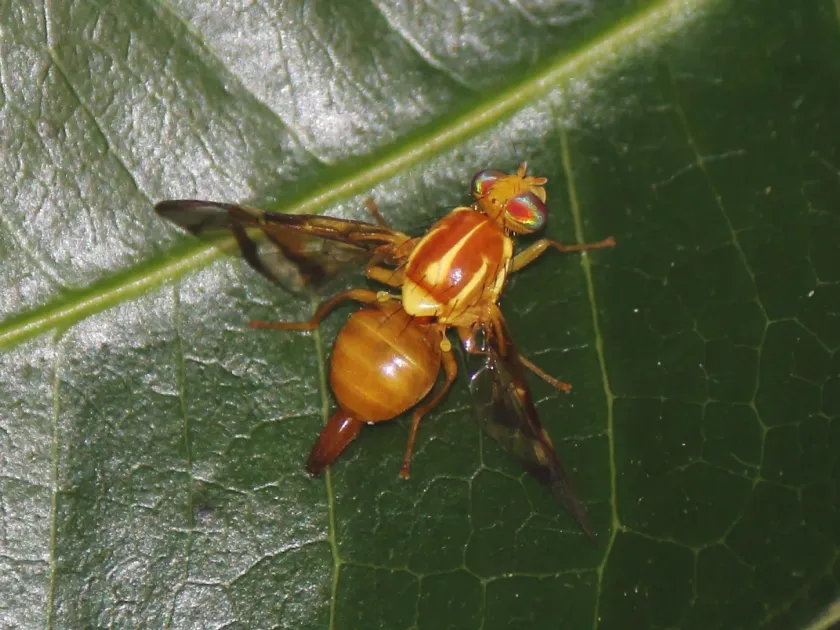
The West Indian fruit fly (Anastrepha mombinpraeoptans) is a destructive member of the Tephritidae family. The adult fly is characterized by its yellowish-brown body and distinct dark patterns on its wings, which help distinguish it from other local species in tropical regions.
Females possess a long, sharp ovipositor designed to penetrate the fruit skin and deposit eggs into the flesh. The larvae are legless, cream-colored, and typically develop within the fruit, leading to internal degradation that is often invisible from the outside in the early stages.
Correct identification often requires expert examination of the wing venation patterns and the female ovipositor morphology. In field conditions, specialized traps containing parapheromones or food lures are essential for monitoring the fly's presence and activity levels.
The life cycle encompasses egg, larva, pupa, and adult stages. Favorable conditions, such as high humidity and consistent warm temperatures, significantly accelerate the developmental stages, allowing for multiple generations within a single growing season.
Adult flies are primarily active during daylight hours, preferring the shelter of canopy leaves where they feed on available moisture, plant secretions, and honeydew. They are highly mobile and can quickly infest neighboring orchards if left unmanaged.
What it damages
The larvae of the West Indian fruit fly feed exclusively on the pulp of developing fruits. Key hosts include various tropical fruits like mangoes, guavas, and hog plums, making it a major economic concern for the fruit export industry worldwide.
As the larvae tunnel through the fruit, they create galleries that facilitate the entry of pathogens, leading to rapid decay and fermentation. These damaged fruits often lose their commercial value and are rendered completely inedible by the time they reach maturity.
Premature fruit drop is a common symptom of severe infestation. After finishing their feeding phase, the larvae exit the fruit and drop to the soil, where they pupate in the top layers of the earth, creating a permanent reservoir for future outbreaks.
Due to its high reproductive capacity, a small population of flies can cause significant losses in a short period. This species is widely recognized as a serious quarantine pest, and its presence can halt the international trade of affected commodities.
Total crop failure in specific varieties can occur if no integrated pest management strategies are implemented. The invisible nature of early larval damage makes it particularly insidious for growers who may not realize the extent of the infestation until harvest time.
Control measures
Phytosanitary regulations are the first line of defense, focusing on strictly prohibiting the movement of infested fruit across regional or national borders. Regular monitoring via surveillance traps is required to detect early arrivals in non-infested areas.
Cultural control practices, such as the systematic removal and disposal of dropped fruit, are highly effective in breaking the life cycle. Burying fallen fruit deeply or placing it in airtight bags prevents larvae from reaching the soil for pupation.
Chemical control usually involves the application of bait sprays containing protein hydrolysates and systemic or contact insecticides. These baits attract the flies to feed on the toxic mixture, reducing the need for broad-spectrum spraying.
Biological control options include the introduction of parasitic wasps that attack the fly larvae inside the fruit. While beneficial, this method often requires large-scale integration and favorable conditions to suppress pest populations effectively.
Orchard management should also prioritize soil maintenance, such as tilling under the tree canopy, which exposes pupae to predators and heat, further reducing the number of adult flies emerging in the following season.
Discussion
No discussions yet — be the first.