
Nutmeg moth
Anarta trifolii
Description
How to identify
The Nutmeg moth (Anarta trifolii) is a member of the Noctuidae family within the order Lepidoptera, widely recognized as a serious agricultural pest.
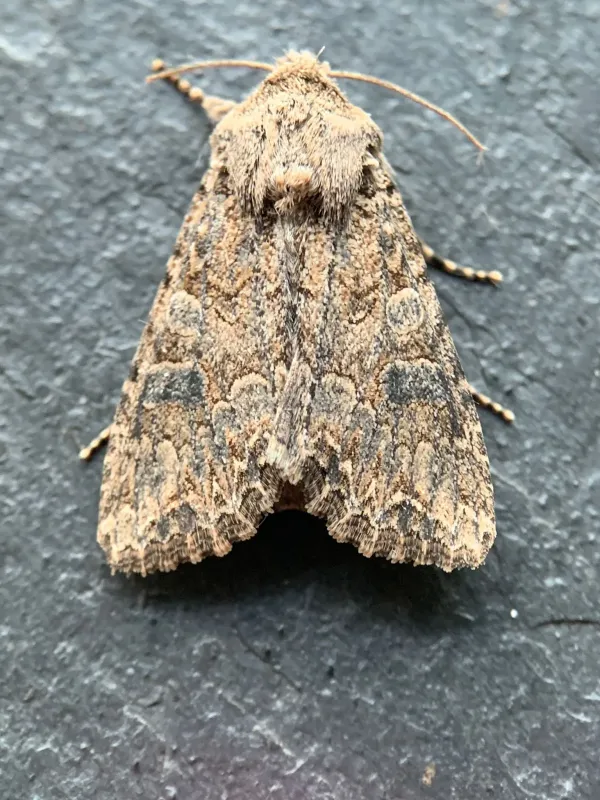
The adult moth has a wingspan ranging from 30 to 35 mm, with forewings varying from greyish-yellow to dark brown, often featuring a distinct pale kidney-shaped mark.
The hindwings are generally lighter in color with a dark marginal band, a feature that distinguishes the species from other similar noctuids in the field.
The larvae, or caterpillars, display significant color variation ranging from pale green to dark brown or nearly black, typically marked with light longitudinal stripes.
Pupation occurs in the soil, where the insect remains in a subterranean earthen cell, often protected by a silken cocoon during the overwintering stage.
What it damages
This species is a polyphagous pest, known to feed on a wide variety of plant species, though it shows a marked preference for the Chenopodiaceae family.
It causes severe damage to sugar beets, fodder beets, and table beets, significantly reducing yields by consuming large portions of the leaf tissue.
Crops such as peas, alfalfa, and various legumes are also susceptible to infestations, leading to decreased plant vigor and reduced vegetative growth.
Vegetable gardens are frequently attacked as well, with crops like spinach, lettuce, and cabbage suffering from heavy feeding pressure throughout the summer.
The larvae are capable of migrating between crops and common weeds like fat-hen (Chenopodium album), ensuring population survival across diverse field environments.
When it appears
The life cycle of the Nutmeg moth typically involves two or three generations per year, depending on the climatic conditions and regional temperature patterns.
Adult moths emerge in late spring as soil temperatures rise, beginning the first cycle of egg-laying on the undersides of the leaves of host plants.
A single female can lay hundreds of eggs, which hatch within a week under favorable warm conditions, releasing larvae that immediately start feeding on the host.
The larval stage lasts for several weeks, during which they grow rapidly and pass through several instars before burying themselves in the soil to pupate.
Peak activity periods, where maximum damage occurs to field crops, are generally observed during the mid-summer months of July and August.
Signs of infestation
Early symptoms of infestation include small, irregular holes or 'shot-holes' appearing in the leaves as young larvae begin their initial feeding.
As the larvae mature, they shift to consuming the leaf edges, often skeletonizing the plant by leaving only the main vascular structures intact.
The presence of dark, granular frass (excrement) scattered on the leaves or accumulated at the base of the plant is a clear sign of active infestation.
In cases of severe outbreaks, plants may appear defoliated, which severely stresses the plant and prevents the proper development of roots or tubers.
- Holes in the leaf blades;
- Skeletonized leaf margins;
- Accumulation of larval frass;
- Stunted growth of crops;
- Premature yellowing of leaves.
Control measures
Cultural control practices, such as deep autumn plowing, are highly effective in disrupting the pupation sites and exposing larvae to winter frosts and predators.
Strict weed management, particularly focusing on the elimination of Chenopodium species, is essential to deprive the moth of secondary breeding sites.
Integrated Pest Management (IPM) strategies, including the use of pheromone traps, assist in monitoring moth flights and determining the optimal timing for intervention.
Chemical control involving selective insecticides is recommended when larval population densities exceed established economic injury thresholds.
Biological control agents, such as microbial sprays based on Bacillus thuringiensis, offer a targeted solution for controlling younger larval instars.
Taxonomy
- Latin name
- Anarta trifolii
- Order
- Lepidoptera (butterflies)
- Family
- Noctuidae
- EPPO code
- ANRTTR
Discussion
No discussions yet — be the first.