
Anajapyx
Anajapyx
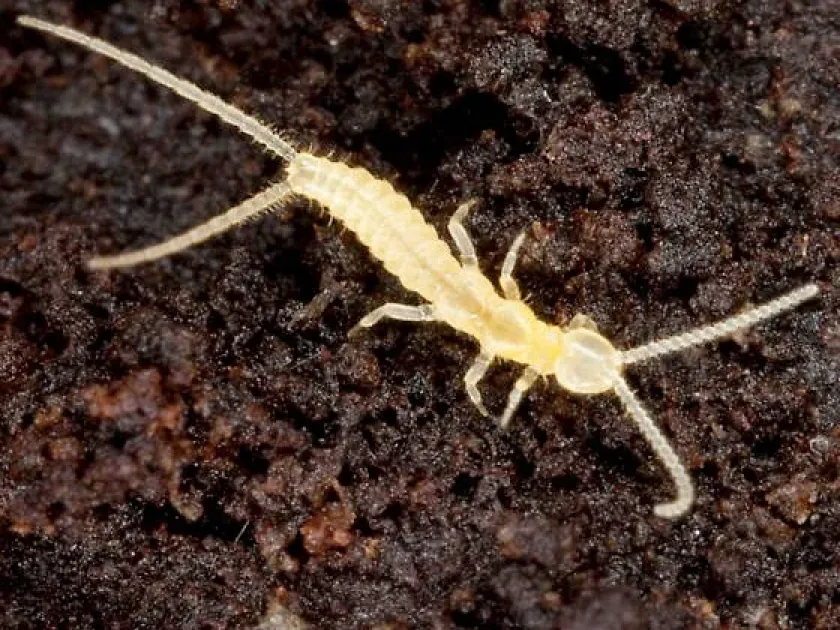
Description
How to identify
Anajapyx belongs to the order Diplura and the family Japygidae. It is a small, colorless or yellowish soil-dwelling arthropod with an elongated body.
A characteristic anatomical feature of this insect is the powerful cerci, located at the rear end of the abdomen, which resemble scorpion pincers.
Unlike many other soil inhabitants, Anajapyx lacks eyes and visual organs, as its entire life cycle takes place in deep soil layers or under plant debris.
The body length of an adult usually ranges from 5 to 10 mm, making them difficult to detect during field inspections without the use of specialized equipment.
The mobility of the insects is ensured by well-developed thoracic limbs, which allow them to move quickly through soil pores in search of food or a favorable environment.
What it damages
The damage caused by Anajapyx consists of injury to the underground parts of plants, including roots, root vegetables, and germinating seeds of various vegetable crops.
These pests feed on plant tissues, weakening the root system, which leads to reduced crop immunity and susceptibility to secondary fungal infections.
The greatest damage is observed in areas with high soil moisture, where the Anajapyx population density can reach critical levels.
The damage left by the cerci during feeding creates micro-wounds that become entry points for phytopathogenic bacteria and fungi.
Seedlings are particularly vulnerable in the initial phase of development, as even minor damage to the root system can lead to the complete death of the plant.
When it appears
The activity of Anajapyx depends directly on the hydrothermal regime of the soil, peaking during periods of high humidity and moderate temperatures.
The spring period is the most dangerous, as it coincides with seed germination, which serves as a primary food source for young individuals.
In summer, when the topsoil dries out significantly, the pest migrates to deeper horizons where the necessary moisture level is maintained for its survival.
In autumn, with the onset of rainy weather and dropping temperatures, the pest returns to the root zone, continuing its harmful activity until the soil freezes.
The life cycle includes several developmental phases occurring without metamorphosis, allowing the population to adapt quickly to seasonal changes in environmental conditions.
Signs of infestation
Signs of infestation include general depression of crop growth, manifested by leaf yellowing and stunted growth without visible causes on the above-ground parts.
An inspection of the root system reveals characteristic surface ulcers or small holes in the root hair zone.
The presence of the pest is often accompanied by reduced seed germination in certain parts of the field where the soil was poorly drained or overly compacted.
An indirect sign can be areas of the field with thinned seedlings that lack symptoms of infestation by typical above-ground diseases or pests.
The presence of Anajapyx can be confirmed by conducting soil excavations and analyzing soil samples in a laboratory using flotation methods.
Control measures
The primary control measure is crop rotation, which prevents the buildup of specific pests in the soil at the same location over several seasons.
Deep autumn plowing plays an important role by disrupting the pest's habitat and bringing insects to the surface, where they perish due to low temperatures.
Ensuring optimal drainage and preventing soil waterlogging create unfavorable conditions for the life and reproduction of Anajapyx.
The use of balanced mineral fertilizers promotes rapid root system development, making plants more resilient to damage.
In cases of high pest density, the application of specialized soil insecticides is permitted, but this must be done strictly according to regulations and after assessing the economic threshold.
Taxonomy
- Latin name
- Anajapyx
- Family
- Projapygidae
- EPPO code
- ANJPSP
Discussion
No discussions yet — be the first.