
Anagrus armatus
Anagrus armatus
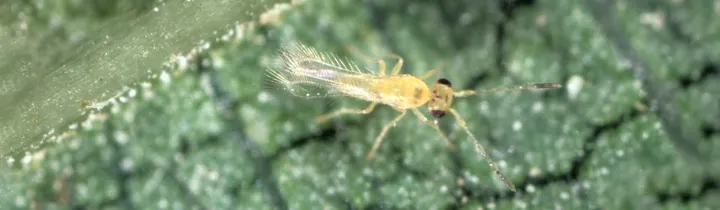
Description
How to identify
Anagrus armatus is a minute parasitic wasp belonging to the family Mymaridae, order Hymenoptera. Its size is typically microscopic, making it virtually invisible to the naked eye.
Adults possess long, fringed wings, a typical characteristic of fairyflies, which allow them to navigate efficiently through dense vegetation to locate their hosts.
They are specialized egg parasitoids, meaning they search for the eggs of other insects laid within the tissue of host plants to lay their own eggs inside.
Taxonomically, they are highly specialized to target specific groups of insects, particularly cicadellids, making them essential components of complex food webs.
Identification in the field is rarely possible without professional entomological training and equipment such as sweep nets or yellow sticky traps.
What it damages
Anagrus armatus does not damage agricultural crops; instead, it acts as a natural enemy of various species of leafhoppers (Cicadellidae).
By consuming the eggs of these pests before they hatch, the parasitoid significantly reduces the potential population of insects that harm crops.
The ecological impact of this species is highly beneficial, as it provides a natural form of pest management, reducing the need for chemical interventions.
In vineyards and orchards, their presence is often viewed as a positive indicator of a functional and healthy ecosystem capable of self-regulation.
Therefore, agricultural management should focus on preserving these populations rather than treating them as a target for pest control measures.
When it appears
The seasonal activity of Anagrus armatus begins in early spring when the first generation of hosts becomes available for oviposition.
As the season progresses, multiple generations of the parasitoid emerge, following the lifecycle patterns of the cicadellid populations they target.
During the peak of the growing season, their numbers may increase rapidly in response to an abundance of host eggs in stems and leaves.
As winter approaches, the species enters diapause as larvae within the eggs of their hosts, ensuring survival through the cold months.
Agricultural monitoring programs track these cycles to understand how environmental factors affect the overall efficacy of the parasitoid's impact.
Signs of infestation
Signs of Anagrus armatus presence are microscopic and typically require laboratory analysis of leaf tissue or stems containing host eggs.
The most reliable sign is the observation of tiny exit holes in the chorion (shell) of host eggs, which indicate that a parasitoid has successfully emerged.
A reduction in the emergence rate of nymphs in a field that previously showed high egg densities is a key indicator of parasitoid activity.
The absence of damage to the host plant itself distinguishes this species from harmful phytophagous pests that feed on plant tissues.
Professional scouts observe the ratios of healthy vs. parasitized eggs to determine the success rate of this biological control agent.
Control measures
No control measures are directed against Anagrus armatus; rather, management strategies aim to protect and promote their natural populations.
The primary recommendation is to avoid the prophylactic use of broad-spectrum insecticides that are known to have high toxicity for beneficial wasps.
Integrating ecological infrastructure, such as wildflower margins, can provide refuge and resources for these insects during the non-crop season.
Decision-making for pesticide application should rely on thresholds that account for the presence of natural enemies to preserve biological balance.
- Use selective pesticides that target specific pests without harming parasitoids.
- Maintain permanent vegetation cover to support wintering populations.
- Implement Integrated Pest Management (IPM) strategies to sustain the ecosystem.
Discussion
No discussions yet — be the first.