
Pea silver Y
Anadevidia
Description
How to identify
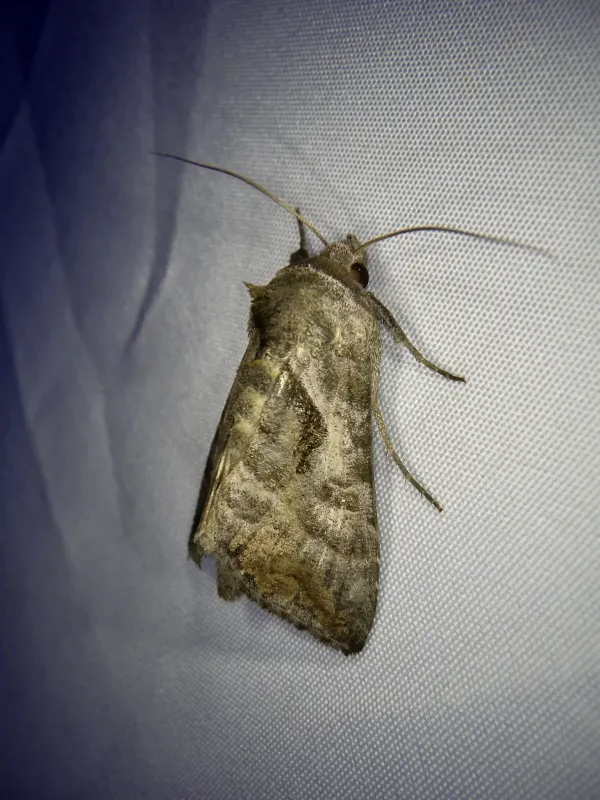
The pea silver Y (Anadevidia peponis) is a member of the Noctuidae family, commonly known as moths. The adult moth features a distinct metallic-looking spot on its forewings, which gives it its common name and serves as a key identification feature for field scouting.
The larvae, or caterpillars, are typically green with faint longitudinal stripes, perfectly adapted for camouflage against the leaves of host plants. They progress through five instars, growing up to 40 mm in length before reaching the pupal stage.
Pupation occurs within a silken cocoon, usually attached to the foliage or leaf litter. The insect overwinters as a pupa in the soil or protected debris, making autumn soil cultivation a vital practice for reducing the carry-over population.
The life cycle involves complete metamorphosis, which is heavily influenced by ambient temperature and humidity levels. In favorable warm climates, the entire cycle can be completed in just over a month, allowing for several generations per season.
Adult moths are nocturnal flyers that feed on nectar and are highly mobile. Females lay their eggs individually on the underside of host plant leaves, ensuring that the larvae have immediate access to food upon hatching.
What it damages
The primary host plants for this pest are members of the Fabaceae family, including peas, beans, and soybeans. The caterpillars can cause severe defoliation and directly attack reproductive structures, leading to significant yield losses.
Young larvae initially skeletonize the leaves, consuming only the soft tissue and leaving the vein structure intact. Older larvae consume the entire leaf lamina, significantly reducing the plant's photosynthetic capacity.
Damage to buds, flowers, and developing pods is particularly detrimental. When larvae feed on these reproductive organs, they directly reduce the number of potential seeds and the overall weight of the harvest.
Secondary infections are a common consequence of larval feeding. Wounds created by the caterpillars provide entry points for various bacterial and fungal pathogens, leading to pod rot and reduced quality of harvested grain.
Economic damage is most severe during the flowering and pod-filling stages. High populations of caterpillars during these critical windows can result in complete crop failure if left unmanaged.
When it appears
Adult activity typically begins in late spring, around June, as temperatures rise consistently. This period marks the start of the first egg-laying cycle, requiring active monitoring by agricultural scouts.
Larval activity peaks during the mid-summer months of July and August. This timing often aligns with the most sensitive growth phases of legume crops, making this the period of highest risk for growers.
In warm regions, the pest can complete multiple generations, with subsequent waves of larvae appearing through the late summer and early autumn. This extended activity window poses a threat to late-maturing legume varieties.
Environmental conditions play a crucial role in population dynamics. Warm, humid weather accelerates the developmental rates of larvae and pupae, leading to rapid population growth that can overwhelm crops in a short time.
As the season comes to a close, the final generation of larvae pupates in preparation for winter. These pupae remain dormant in the soil until the following spring, completing the cycle.
Signs of infestation
The earliest signs of infestation are irregular holes in the leaves, often referred to as windowing. These marks are caused by young larvae feeding on the leaf surface without fully piercing through.
Frass (larval droppings) found on the leaves or the ground beneath the plants is a tell-tale sign of active feeding. A sudden accumulation of this debris indicates a growing population of older caterpillars.
Deformed flowers or buds that fail to develop into pods often indicate larval presence. Close inspection of these areas frequently reveals the caterpillars themselves hiding within the floral structures.
Pod damage appears as surface scarring or deep holes where larvae have bored into the developing seeds. This damage is often irreversible and significantly impacts the aesthetic and nutritional quality of the crop.
Using light traps or pheromone lures at night can help detect the presence of adult moths. If moths are trapped in high numbers, it is a strong indicator that a significant larval infestation will follow shortly.
Control measures
Cultural control practices, such as crop rotation and spatial isolation of legume fields, are the first line of defense. Deep plowing after harvest disrupts the pupation sites and significantly reduces the overwintering population.
Weed management is essential, as many leguminous weeds serve as alternative hosts for the pest. Keeping field margins clean prevents the buildup of the population before it can migrate to the main crop.
Biological control using *Trichogramma* wasps can be highly effective in parasitizing eggs and limiting larval numbers. This method is particularly useful during the flowering stage when chemical applications may be restricted.
Chemical control should be employed only when monitoring reveals that population levels have exceeded the economic threshold. Insecticides with high selectivity are preferred to protect beneficial pollinator populations.
- Monitor fields regularly with pheromone traps.
- Rotate crops to break the life cycle.
- Utilize biological agents like *Bacillus thuringiensis*.
- Apply insecticides during evening hours to minimize impact on bees.
- Remove crop residues to eliminate wintering pupae.
Taxonomy
- Latin name
- Anadevidia
- Order
- Lepidoptera (butterflies)
- Family
- Noctuidae
- EPPO code
- ANDVSP
Discussion
No discussions yet — be the first.