
Copper Underwing
Amphipyra pyramidea
Description
How to identify
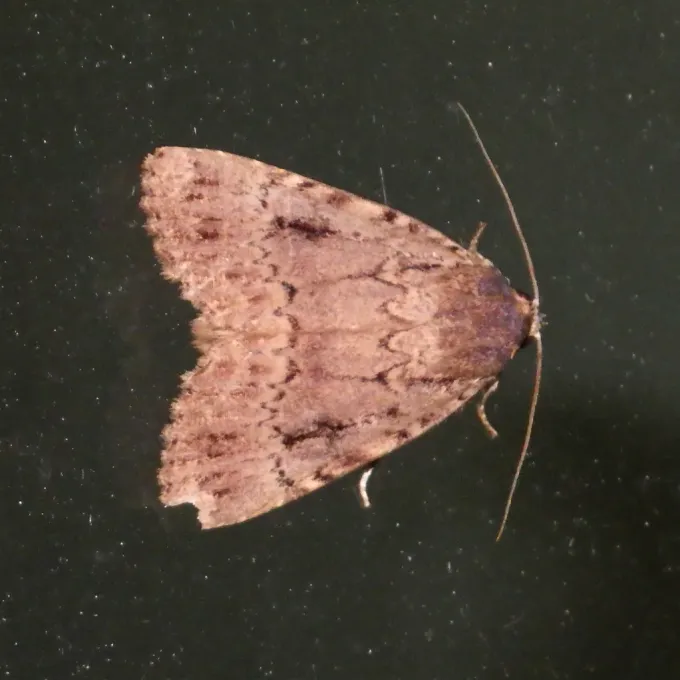
The Copper Underwing (Amphipyra pyramidea) belongs to the Noctuidae family. The adult moth has a wingspan of 40–50 mm, with cryptic brown forewings that camouflage it perfectly against tree bark.
The caterpillar is easily distinguished by a prominent, pyramid-shaped hump on the eighth abdominal segment, which gives the species its common name.
The larvae are typically bright green with lateral white lines and spots, providing camouflage while feeding on the foliage of various deciduous plants.
The pupa is reddish-brown and found in the soil or leaf litter, featuring two spines at the cremaster to anchor itself securely during the transformation phase.
The eggs are laid singly or in small clusters on tree bark, possessing a semi-globular shape and a ridged surface, making them well-adapted for winter survival.
What it damages
As a polyphagous pest, the Copper Underwing larvae feed on a wide array of trees and shrubs, showing a preference for orchard fruit trees such as apple, pear, and plum.
Heavy infestations can cause significant defoliation, where caterpillars consume large portions of the leaf blade, leaving only the primary veins behind.
In young trees or nurseries, the feeding activity on buds and tender shoots can stunt plant growth and reduce overall tree vigor during critical developmental stages.
Damaged leaves often exhibit signs of necrosis or become susceptible to secondary infections, including fungal pathogens that further weaken the tree's health.
Severe defoliation reduces the photosynthetic capacity of the trees, which in turn leads to smaller fruit sizes and lower yields in productive orchards.
When it appears
Adult moths typically fly from mid-summer through early autumn, being primarily nocturnal and active from July to September in most temperate regions.
The larvae emerge in the spring, coinciding with the flushing of tree buds, which ensures a steady supply of high-quality food for their early development.
Growth occurs throughout the summer months as the larvae transition through multiple instars, eventually maturing and descending to pupate in the soil.
The life cycle is closely synchronized with the phenology of host plants, allowing the pest to exploit the most nutritious phases of plant growth.
Overwintering occurs at the egg stage on the bark of host trees, ensuring that the next generation is prepared to hatch as soon as spring temperatures rise.
Signs of infestation
Early symptoms of an infestation include small holes in the leaves, which expand as the larvae grow and consume more tissue daily.
Frass (larval droppings) appearing as small, dark pellets on the leaves or the ground beneath the canopy is a clear indicator of active feeding in the tree crown.
Caterpillars often web leaves together to create shelters, making the presence of silk-tied leaves a reliable sign of their activity within the foliage.
During the night, adults can be attracted to light sources, and their presence in high numbers in light traps serves as an alert for potential larval outbreaks.
Significant canopy thinning and the presence of skeletonized leaves during the mid-summer period are late-stage signs of high pest pressure.
Control measures
Mechanical control, such as manual inspection and removal of egg clusters on tree trunks during winter, can help reduce the initial population size.
Biological control using Bacillus thuringiensis sprays during the early larval stage is an effective and environmentally friendly management strategy.
Pheromone traps are highly effective for monitoring adult flight patterns and can be used for mating disruption in commercial orchards to limit reproduction.
Chemical applications should be reserved for periods of high infestation, using selective insecticides that minimize the impact on non-target beneficial insects.
- Maintain tree health through proper pruning to reduce pest hiding spots.
- Encourage natural predators like birds and parasitic wasps in the orchard.
- Cultivate the soil under the canopy in autumn to destroy pupae.
Taxonomy
- Latin name
- Amphipyra pyramidea
- Order
- Lepidoptera (butterflies)
- Family
- Noctuidae
- EPPO code
- AMPYPY
Discussion
No discussions yet — be the first.