
Copper Underwing
Amphipyra
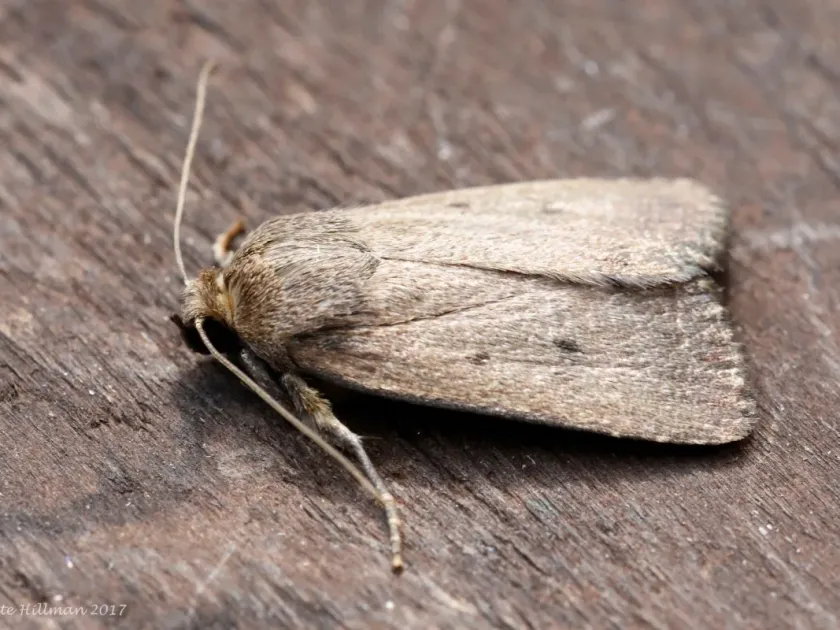
Description
How to identify
The Copper Underwing (genus Amphipyra) belongs to the Noctuidae family, commonly known as owlet moths, widely distributed across various habitats.
Adult moths have dull-colored forewings, usually in shades of dark brown or grey, which provide excellent camouflage against tree bark during the day.
The caterpillars are typically cylindrical and green, often featuring longitudinal stripes that help them blend in perfectly with leaf veins.
These larvae have a smooth appearance and can grow up to 45 mm, usually possessing a head that matches the body color, making them difficult to spot.
Pupation generally occurs in the soil or within leaf litter, where the moth undergoes its metamorphosis protected from environmental extremes.
What it damages
Copper Underwings are polyphagous insects, meaning they feed on a wide variety of plant hosts including fruit trees, shrubs, and even some herbaceous plants.
The larvae are the primary cause of damage, as they consume leaf tissue, which can lead to significant defoliation if the population density is high.
Feeding damage is characterized by irregular holes and notched edges on the leaves, which hinders the plant's ability to perform photosynthesis.
In gardens, they frequently target apple, pear, and cherry trees, potentially damaging buds early in the season and affecting fruit development.
While usually not a major agricultural threat, heavy infestations can weaken trees, leaving them susceptible to secondary infections or winter damage.
When it appears
The life cycle of the Copper Underwing typically consists of a single generation per year, with specific timing for each developmental stage.
Eggs are usually laid on bark or twigs in late summer or autumn and remain in this stage throughout the winter months to survive cold temperatures.
Larval emergence occurs in early spring, coinciding with the flushing of buds and the arrival of fresh foliage on host trees and shrubs.
The caterpillars feed actively through the late spring and early summer before descending into the ground to pupate in mid-summer.
Adult moths emerge in late summer and autumn, completing their life cycle and preparing the next generation for the upcoming winter season.
Signs of infestation
The most common sign of infestation is visible leaf damage, where parts of the leaf blades have been eaten away by developing larvae.
Fecal pellets found on the leaves or at the base of the tree are clear indicators that caterpillars are feeding in the canopy above.
You may also observe the adult moths attracted to artificial light sources near gardens or homes during the dark hours of the evening.
Close inspection of the underside of leaves or the main stems often reveals the caterpillars resting during the day to avoid detection.
In severe cases, a noticeable reduction in leaf density across the canopy of a shrub or tree serves as a sign of a significant infestation level.
Control measures
Autumn soil cultivation under the canopy of infested trees is a recommended practice to disrupt the pupation sites and reduce the next generation.
Sticky bands applied to tree trunks serve as a mechanical barrier, preventing caterpillars from moving between different parts of the plant.
Biological control methods, such as using Bacillus thuringiensis sprays, are highly effective against larvae while minimizing impact on beneficial insects.
Manual removal of caterpillars is a practical approach for home gardeners, best performed in the early morning when the larvae are more stationary.
Chemical control should be reserved for severe outbreaks and must be implemented using selective insecticides that minimize harm to non-target species.
Taxonomy
- Latin name
- Amphipyra
- Order
- Lepidoptera (butterflies)
- Family
- Noctuidae
- EPPO code
- AMPYSP
Discussion
No discussions yet — be the first.