
Ear Moth
Amphipoea oculea
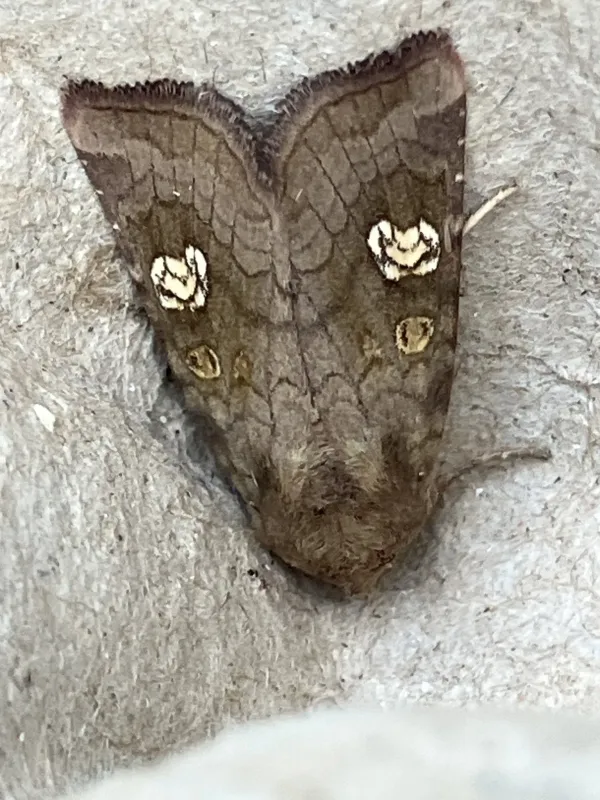
Description
How to identify
The Ear Moth (Amphipoea oculea) belongs to the Noctuidae family, which includes a wide range of significant agricultural moth pests.
Adult moths have a wingspan of approximately 30–35 mm, with forewings exhibiting distinctive reddish-brown hues and intricate patterns that aid camouflage.
Larvae are typical of the family, growing up to 40 mm long, featuring a dirty-white to grey body with a dark-colored head capsule.
Pupation generally occurs in the soil or within the hollow stems of host plants, characterized by a hardened, dark brown pupal casing.
This species is nocturnal, spending daylight hours hiding in dense vegetation, leaf litter, or crevices to avoid predators.
What it damages
The Ear Moth primarily targets cereal crops such as wheat, barley, and oats, as well as various wild grasses that serve as primary hosts.
The larvae are internal feeders, burrowing into the stem and consuming the core, which destroys the plant's vascular tissue and stunts growth.
Infested stems exhibit a classic sign of wilting followed by chlorosis and eventual necrosis, leading to significant stand loss in affected areas.
In high-density populations, a single larva may destroy multiple adjacent stems, resulting in patchy crop development across the field.
The overall impact of this pest includes reduced grain yield and weakened plant vigor, making the crop more susceptible to fungal pathogens.
When it appears
The Ear Moth typically completes one generation per year, with eggs serving as the overwintering stage on plant stems or detritus.
Larval emergence occurs in the spring, timed with the initiation of cereal shoot development, coinciding with the most vulnerable stage of the crop.
Active feeding by the larvae takes place throughout the spring and into early summer as they mature within the host plant stems.
Pupation takes place mid-to-late summer, transitioning the population into the adult phase for reproduction and dispersal.
Adult flight and mating occur from late summer through early autumn, leading to egg-laying for the subsequent season.
Signs of infestation
The most prominent indicator of infestation is the 'dead heart' phenomenon, where the central leaf of the shoot yellows and dies prematurely.
Physical inspections of the plant base often reveal small entry holes where the larva has tunneled into the stem tissue.
Frass (larval excrement) is frequently visible around the base of the stem or at the entry points, indicating active feeding by the caterpillar.
Field observation reveals localized patches of stunted or withered plants rather than uniform damage across the entire field.
- Yellowing and wilting of the central leaf.
- Entry holes located near the soil level of the stem.
- Stunted growth or 'dead heart' syndrome.
- Presence of larval frass at the stem base.
Control measures
Cultural control is essential, focusing on post-harvest deep plowing to bury infested residues and disrupt the overwintering egg populations.
Effective weed management, especially targeting perennial grasses around field borders, is critical to reducing reservoir populations of the moth.
Implementing a diverse crop rotation strategy minimizes the buildup of pest populations, making fields less attractive to the Ear Moth.
Chemical intervention should be based on economic thresholds, utilizing systemic insecticides when larval activity is detected in the early crop stages.
Monitoring adult flight using pheromone traps allows farmers to accurately time protective measures and prevent significant economic loss.
Taxonomy
- Latin name
- Amphipoea oculea
- Order
- Lepidoptera (butterflies)
- Family
- Noctuidae
- EPPO code
- AMPOOC
Discussion
No discussions yet — be the first.