
Amphipoea
Amphipoea
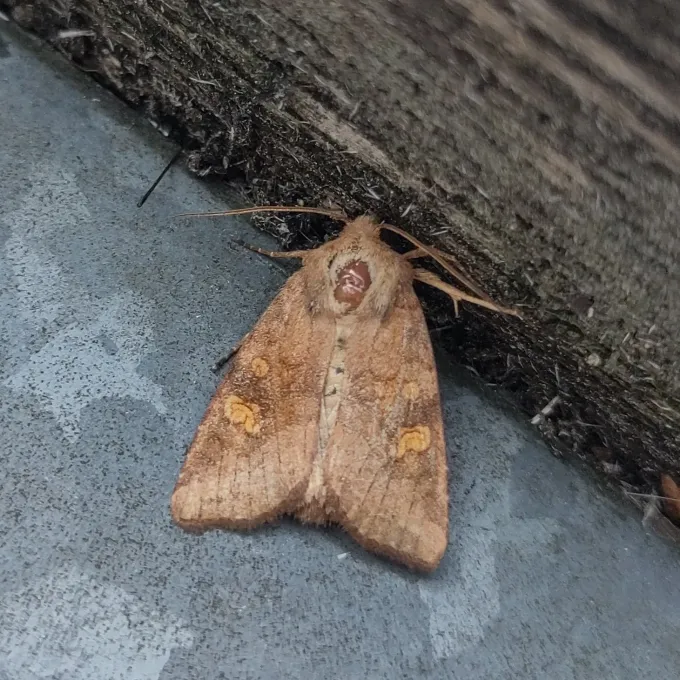
Description
How to identify
Amphipoea is a genus of moths belonging to the family Noctuidae, commonly known as rustic moths or stem borers.
Adult moths typically have a wingspan ranging from 30 to 40 mm, with cryptic coloration including shades of brown, ochre, and orange to blend into surroundings.
The larvae, or caterpillars, are cylindrical in shape and are known for their habit of boring into the stems of host plants.
The life cycle encompasses four distinct stages: egg, larva, pupa, and adult, with winter survival usually occurring in the egg or larval stage.
Due to the morphological similarity between species within the genus, accurate identification often requires expert analysis of their reproductive anatomy.
What it damages
The larvae cause significant agricultural damage by feeding internally on the stems of various herbaceous plants and cereal crops.
Preferred hosts include potatoes, various garden vegetables, and grasses, where the larva creates tunnels that disrupt the plant's vascular system.
Feeding damage prevents the transport of water and nutrients, leading to yellowing, wilting, and eventually the death of the affected plant parts.
Infested areas are prone to secondary infections from bacteria and fungi, which exacerbate the damage caused directly by the caterpillar.
In large-scale plantings, infestation can result in substantial yield losses if not managed during the early stages of larval development.
When it appears
Adult moths are typically active during late summer and early autumn, when they mate and lay eggs on host plant debris or soil.
The hatching of larvae generally coincides with the arrival of warmer spring temperatures, allowing them to attack young, succulent plant growth.
Pupation takes place in the soil, providing a protective environment for the insect during its transformation into the adult stage.
The timing of the appearance of different developmental stages depends heavily on regional climate and specific weather conditions during the growing season.
Monitoring the flight activity of adult moths using light traps or pheromones is crucial for determining the timing of control measures.
Signs of infestation
The most prominent sign of infestation is the sudden wilting of leaves and stems without any obvious external damage or drought stress.
Careful examination of the stem base often reveals tiny holes and the presence of frass (larval droppings) near the plant crown.
Affected plants often show stunted growth and may fall over if the structural integrity of the stem has been compromised by boring larvae.
Internal examination of a wilting stem will usually uncover the caterpillar feeding within the central pith of the plant.
- Sudden wilting of the top of the plant
- Visible entry holes at the base of the stem
- Frass accumulation near the base of the plant
- Decay and softening of the stem tissue
Control measures
Effective management begins with strict field sanitation and the removal of host weeds, which act as primary breeding grounds for the pest.
Cultivation practices such as autumn deep plowing are highly effective at disturbing pupae and reducing the over-wintering population.
Chemical control should be timed strategically, focusing on the period after larval hatching but before they successfully penetrate the plant tissue.
Biological control agents, including specific entomopathogenic nematodes or bacteria, can be used to treat the soil and target larvae.
Implementing crop rotation schemes helps break the life cycle of the pest by ensuring that host plants are not available in the same field consecutively.
Taxonomy
- Latin name
- Amphipoea
- Order
- Lepidoptera (butterflies)
- Family
- Noctuidae
- EPPO code
- AMPOSP
Discussion
No discussions yet — be the first.