
Lesser summer chafer
Amphimallon rufus
Description
How to identify
The Lesser summer chafer (Amphimallon rufus) is a beetle belonging to the Scarabaeidae family, widely recognized for its impact on agriculture and nurseries.
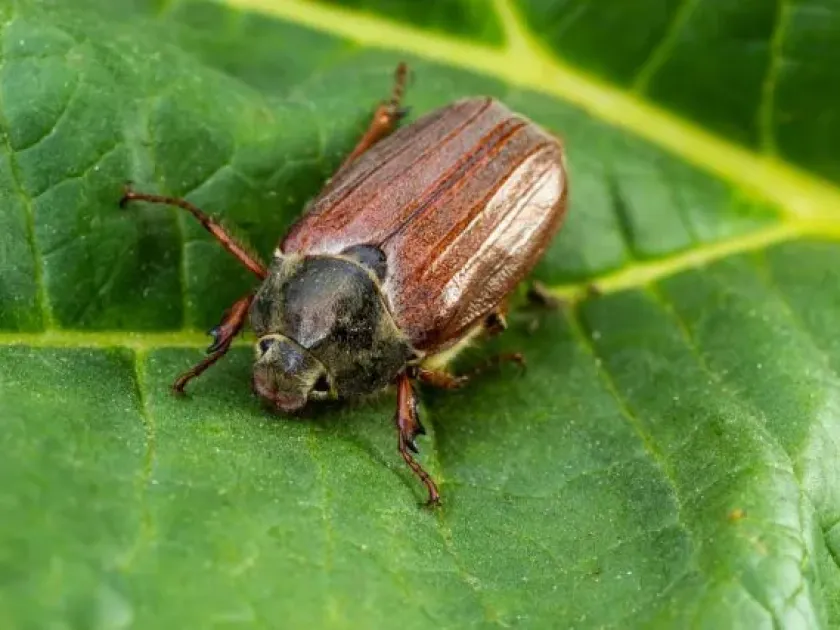
Adult beetles are typically 12–16 mm long, displaying a reddish-brown coloration and a body covered in fine, short hairs, giving them a slightly matt appearance.
The larvae, often referred to as white grubs, are c-shaped with a distinct brown head and three pairs of legs, living underground throughout their developmental stages.
Distinguishing them from other scarab larvae requires close inspection of their raster patterns, which are unique to this specific species and critical for accurate identification.
The life cycle encompasses four stages: egg, larva, pupa, and adult, with the larval stage being the most destructive to agricultural assets and landscaping.
What it damages
The primary damage is caused by the larvae, which feed on the roots of various plants, effectively cutting off the water and nutrient supply to the shoots.
Plants affected include cereals, sugar beets, potatoes, and young nursery stock, where complete destruction of the root system can occur rapidly.
A single larva may not destroy a large plant, but in high infestation densities, they can cause significant thinning of crop stands and loss of seedlings.
Adult beetles feed on the leaves of deciduous trees and shrubs, though this activity is generally considered of minor economic importance compared to root damage.
The persistence of root-feeding grubs in the soil can lead to chronic plant stress, making crops more susceptible to secondary pathogens and drought conditions.
When it appears
Adult beetles emerge in late spring or early summer, primarily becoming active during warm, calm evenings, which facilitates their mating and egg-laying flights.
Eggs are deposited into the soil, preferring moist sites rich in organic matter, which are ideal for the development of the emerging larvae during their first summer.
Larvae remain in the soil, moving vertically depending on soil temperature and moisture levels, generally overwintering at greater depths to survive cold weather.
The most active feeding periods for larvae occur in the spring as the soil warms and again in late summer/early autumn before they prepare for hibernation.
The overall duration of the development cycle can take several years, which means that infestations may persist across multiple planting seasons if not addressed.
Signs of infestation
Symptoms of infestation often appear as stunted growth, wilting of foliage, and eventual yellowing or browning, despite adequate moisture availability.
In lawns or pastures, patches of grass may detach easily from the soil because the root system has been completely consumed by the developing grubs.
Manual inspection of the soil around the base of damaged plants usually reveals the characteristic white, c-shaped larvae in the immediate root zone.
Increased activity of birds, such as crows or starlings, digging in the soil can often indicate a high population density of larvae beneath the surface.
The presence of adult beetles around artificial lights at night serves as a clear indicator of a local population that may contribute to next year's larval problems.
Control measures
Effective management includes mechanical soil cultivation, which exposes the larvae to environmental stress and natural predators like birds.
Crop rotation and the avoidance of fresh manure application in infested areas help to reduce the attractiveness of the soil for egg-laying females.
Chemical control can be achieved through soil-applied insecticides specifically labeled for scarab larvae, usually applied during peak larval activity windows.
Biological control agents, including entomopathogenic nematodes and fungi such as Beauveria bassiana, are increasingly used for eco-friendly population management.
- Implementing deep autumn tillage
- Regular soil moisture monitoring
- Monitoring adult beetle activity
- Maintaining healthy plant vigor through fertilization
Discussion
No discussions yet — be the first.