
Ameletus
Ameletus
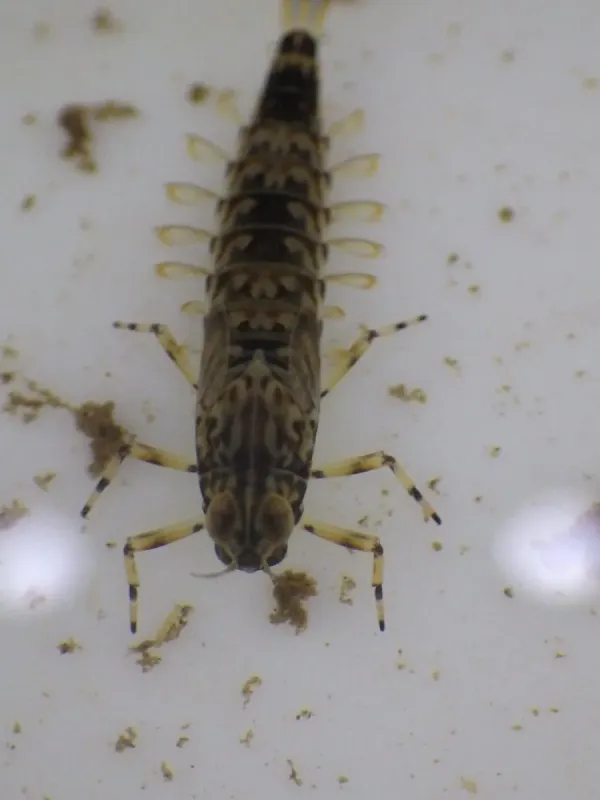
Description
How to identify
The genus Ameletus belongs to the order Ephemeroptera (mayflies), specifically within the family Ameletidae. These insects are essential components of stream and river ecosystems.
Adult mayflies are characterized by their delicate, transparent wings and long, thread-like caudal filaments extending from the abdomen.
The larvae are highly adapted to flowing water environments, possessing a streamlined body and specialized gills that allow them to thrive in oxygen-rich currents.
Taxonomic identification of species within this genus relies on detailed examination of the mouthparts and gill structure, often requiring specialized entomological equipment.
Their coloration typically ranges from dull brown to dark tones, providing excellent camouflage against stones and gravel at the bottom of water bodies.
What it damages
While Ameletus is not a traditional agricultural pest, its activities can become problematic in intensive aquaculture or ornamental pond management.
Larvae primarily feed on periphyton and diatoms, but high population densities can lead to the incidental consumption of young aquatic plant tissues.
In managed fish ponds, they may compete with fry for food resources, potentially affecting the growth rates of valuable fish species in early stages.
The accumulation of waste products from large larval populations can contribute to shifts in the nutrient balance, favoring unwanted algal blooms.
Direct damage to macrophytes is usually localized, manifesting as scraping marks on leaves, which may weaken plants and make them susceptible to secondary infections.
When it appears
The life cycle of Ameletus is strictly governed by environmental cues, primarily water temperature and photoperiod, which trigger development phases.
Adult emergence typically occurs in the spring or early summer, synchronized with the warming of water temperatures and the availability of mating partners.
The larval stage is the most extensive, often lasting an entire year and requiring survival through winter conditions under the water surface.
The adult phase is exceptionally short-lived, as these insects lack functional mouthparts for feeding and focus their energy exclusively on reproduction.
Seasonal pulses of emergence are often distinct, resulting in massive swarms of mayflies appearing in a short window of time around riparian zones.
Signs of infestation
The presence of Ameletus is most easily confirmed by locating larvae on the undersides of submerged rocks in clean, flowing water.
Plant damage signs include small, patchy epidermal "scraped" areas on the underside of aquatic leaves, indicative of larval grazing activity.
Large swarms of adults hovering over the water surface during sunrise or sunset are a primary behavioral indicator of local population density.
Finding cast-off larval exuviae (molted skins) on reeds or shore vegetation is a reliable sign that the insect has reached the final stage of its life cycle.
Localized turbidity near the bottom caused by larvae disturbing sediment can also serve as a behavioral marker of their activity.
Control measures
Chemical control measures are generally avoided for Ameletus due to the sensitivity of aquatic ecosystems and the risk of harming non-target organisms like fish.
Integrated management focusing on habitat modification, such as managing nutrient input to prevent algal overgrowth, is the most sustainable approach.
Physical removal through fine-mesh screening can be effective in small-scale artificial ponds where high populations threaten the integrity of aquatic flora.
Promoting a healthy predator-prey balance by introducing native fish species can naturally keep larval numbers below problematic thresholds.
- Regular maintenance of pond flow and oxygenation levels
- Removal of excessive aquatic weeds where larvae congregate
- Monitoring water quality parameters to limit excessive food sources for larvae
Taxonomy
- Latin name
- Ameletus
- Family
- Ameletidae
- EPPO code
- AMELSP
Discussion
No discussions yet — be the first.