
Amblyseius rykei
Amblyseius rykei
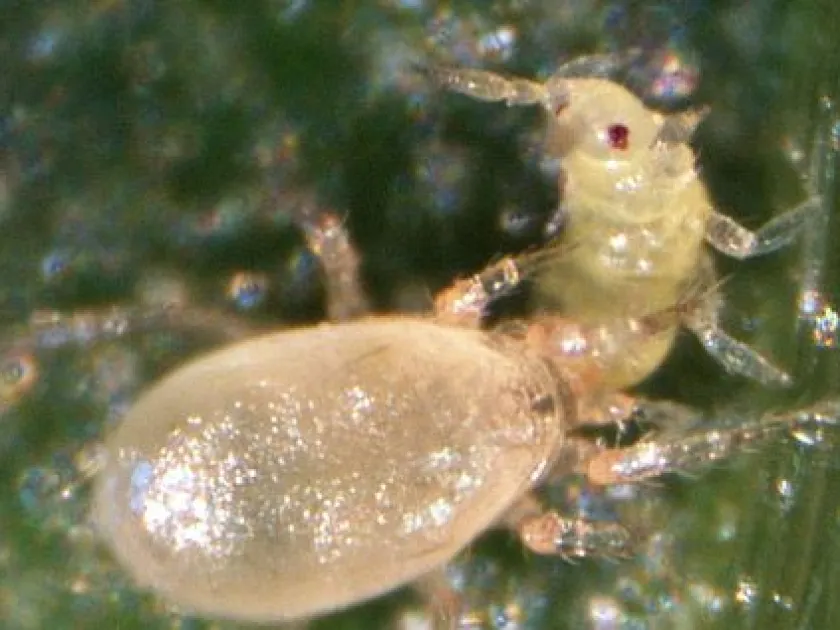
Description
How to identify
Amblyseius rykei is a species of mite belonging to the family Phytoseiidae. While many phytoseiids are widely used as biocontrol agents, specific conditions can lead to their accumulation in agricultural systems, where they may occasionally behave as opportunistic pests rather than beneficial predators.
Morphologically, these mites are microscopic, oval-shaped organisms with a smooth cuticle. They typically appear translucent or pale yellow. Due to their extremely small size, identifying them in the field requires specialized magnification tools and a keen eye for subtle movement on leaf surfaces.
The life cycle follows a standard progression for mites: egg, larva, protonymph, deutonymph, and adult. The duration of these stages is highly temperature-dependent, with warmer conditions significantly accelerating the transition between generations.
These mites prefer microclimates with high humidity, often congregating in sheltered areas of the plant. Common habitats include leaf axils, the underside of leaves, and the proximity of leaf veins, where they are protected from direct wind and light.
The species demonstrates high environmental plasticity, allowing it to adapt to various cropping systems. Under favourable greenhouse conditions, a single colony can expand rapidly, leading to high population densities within a short time frame.
What it damages
The primary economic damage occurs when Amblyseius rykei populations feed on plant tissues. This often happens in cases where their preferred prey is absent, leading the mites to switch to plant-based nutrition, resulting in tissue disruption.
Target crops primarily include greenhouse vegetables and ornamental plants. Young, succulent foliage is particularly susceptible, as the delicate epidermal layers are easily penetrated by the mite's mouthparts during feeding activities.
Visible symptoms include the development of necrotic lesions where the mites have fed. These feeding sites disrupt the plant's ability to regulate water loss and reduce the overall efficiency of photosynthetic processes, leading to chlorosis and stunted growth.
In addition to direct tissue damage, the presence of these mites can lead to a general decline in plant vigor. This systemic stress makes the crop more vulnerable to environmental changes and other opportunistic pathogens that exploit weakened plant defenses.
Long-term infestation can significantly reduce the marketability of flowers or produce. In severe cases, extensive feeding leads to total leaf desiccation and can eventually cause the loss of the entire affected shoot or plant section.
Signs of infestation
Early symptoms of an infestation often appear as tiny, pale speckles on the leaf surface. These markings are the result of cellular damage caused by mites puncturing the epidermis to extract fluids.
Deformation of growing tips and curling of young leaves are classic indicators of mite activity. As the population grows, the cumulative effect of their feeding becomes evident through reduced leaf size and loss of healthy green pigmentation.
A closer inspection with a 10x or higher magnification lens often reveals the presence of live mites on the underside of leaves. The presence of molted skins (exuviae) is a definitive indicator that a stable population is reproducing on the plant.
Plants may show reduced growth rates and poor structural development. In ornamental crops, this often results in a loss of aesthetic value, making the plants unsellable in professional horticultural settings.
- Pale stippling on leaves
- Leaf curling or cupping
- Necrotic brown spots
- Slowed vertical growth
- Evidence of mites under magnification
Control measures
Controlling Amblyseius rykei requires a strategy centered on microclimate management. By regulating humidity levels and ensuring adequate ventilation, growers can create conditions that are less optimal for rapid mite reproduction.
When chemical intervention is necessary, the use of selective acaricides is recommended. It is vital to rotate different chemical classes to prevent the development of resistance within the mite population, especially in enclosed environments.
Sanitation practices play a crucial role in management. Removing plant debris, weeds, and discarded foliage after a harvest cycle eliminates overwintering sites, significantly reducing the initial infestation pressure for the next planting season.
Integrated Pest Management (IPM) techniques, including the use of entomopathogenic fungi or introducing specialized predator species, can be effective. These biological solutions help maintain a natural balance in the ecosystem.
Frequent monitoring using sticky traps and regular scouting of leaves is essential for early detection. Early identification allows for targeted spot-treatments, which are much more efficient and environmentally friendly than broad-spectrum applications.
Discussion
No discussions yet — be the first.