
Common midwife toad
Alytes obstetricans
Description
How to identify
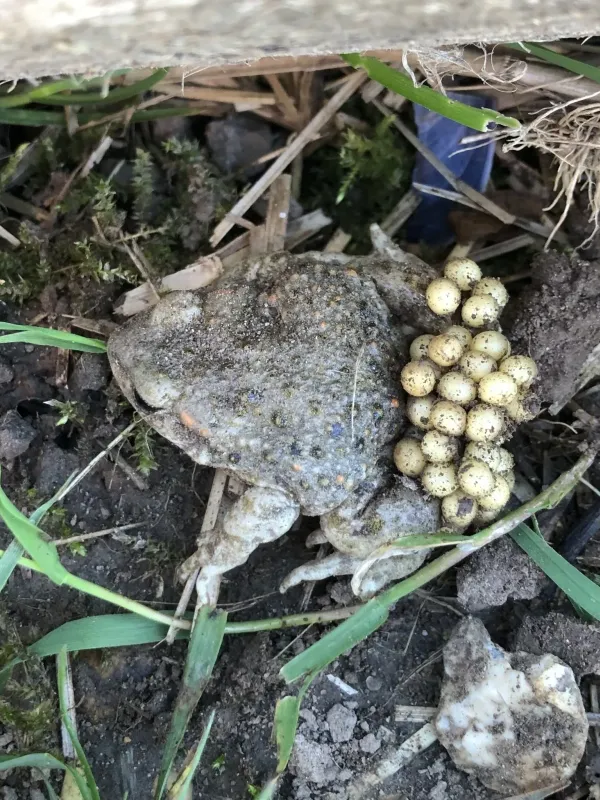
The common midwife toad (Alytes obstetricans) is a small, terrestrial frog belonging to the Alytidae family. Adults typically measure about 5 cm in length and feature a grayish-brown, warty skin, with vertical pupils characteristic of the species.
The name midwife toad originates from the male's unique parental care. The male carries the clutch of eggs wrapped around his hind legs, protecting them until the tadpoles are ready to hatch in the water.
These amphibians are primarily nocturnal. During the day, they remain hidden in burrows, under stones, or within deep vegetation crevices to prevent dehydration and avoid predators.
The species is native to Western and Central Europe. They favor habitats with moisture and shelter, such as woodlands, stony hillsides, and frequently occupy gardens and areas near human dwellings.
From an ecological perspective, they are valuable predators. They consume a variety of small invertebrates, playing a role in the natural balance of the environment.
What it damages
The common midwife toad is not a pest. It has no biological capacity to feed on plant matter, and it does not damage roots, leaves, stems, or fruits of any agricultural crops.
Reports of damage linked to this toad are strictly anecdotal or mistaken. Any destruction of garden produce is typically caused by common pests like slugs, snails, or insects, rather than these amphibians.
The presence of midwife toads in a garden is entirely benign. Their hunting activities help regulate populations of pests that can actually damage crops, such as slugs and soft-bodied insects.
They do not affect soil quality or spread plant diseases. Consequently, they pose no threat to agricultural productivity and do not require any form of pest control measures.
Recognizing them as beneficial allies is vital for integrated pest management. Their presence indicates a healthy, minimally pesticide-impacted growing environment.
When it appears
The seasonal activity of the midwife toad begins in early spring as temperatures rise. This is the commencement of their breeding period, which can extend throughout the warm summer months.
Summer is the peak season for their activity. The males are especially active while carrying the egg clusters, seeking damp environments to keep the developing larvae healthy before release.
As autumn progresses and temperatures drop, the toads enter hibernation. They move into deeper soil layers or underground holes where the temperature remains stable and above freezing.
Weather conditions significantly dictate their visibility. They are most active during or immediately after rainfall, as high humidity allows them to forage safely across the surface.
The developmental stage of the larvae is temperature-dependent. While they often complete their metamorphosis in a single season, some tadpoles may overwinter in water bodies if weather conditions turn cold early.
Signs of infestation
Since the common midwife toad is not a pest, there are no characteristic signs of infestation to look for. One will not encounter gnawed leaves or decayed crop tissue attributed to them.
The only detectable sign of their presence is auditory. During the night, particularly in spring and summer, the male emits a distinct, bell-like whistling sound used to attract females.
Finding an adult toad while performing agricultural tasks like weeding or moving woodpiles is a natural occurrence, indicating that the garden habitat is suitable for amphibians.
An absence of pest damage coupled with the presence of toads suggests an environment with good biological control. There is no need for concern if these creatures are found on-site.
The presence of these animals is an indicator of environmental health. They do not cause secondary damage to gardens, and their activity is entirely non-destructive to human interests.
Control measures
No control measures are necessary, as the common midwife toad is a beneficial organism. In many regions, they are legally protected, and their removal would be counterproductive.
To reduce unwanted interactions, maintain a tidy garden by clearing unnecessary debris or wood piles. This limits the number of hiding spots available near vulnerable plant beds.
Avoid the use of broad-spectrum pesticides, as these chemicals are highly detrimental to amphibians. A chemical-free approach supports the toads, who in turn help control garden pests.
Ensure that crop areas are managed with appropriate irrigation to direct the toad's activity toward natural habitats or less sensitive zones within the landscape.
Embracing their presence is recommended. By maintaining these natural predators, growers can reduce the need for synthetic controls against slugs and other soft-bodied garden pests.
Taxonomy
- Latin name
- Alytes obstetricans
- Family
- Discoglossidae
- EPPO code
- ALYTOB
Discussion
No discussions yet — be the first.