
Eight-spotted forester
Alypia octomaculata
Description
How to identify
The eight-spotted forester (Alypia octomaculata) is a moth belonging to the Noctuidae family. The adult moth is easily identified by its black wings, which feature two prominent yellow or white spots on each, totaling eight spots, giving the species its name.
The insect's body is covered with dense, dark hair, resembling a small bumblebee. Unlike most other moths in the Noctuidae family, this species is strictly diurnal, meaning it is active and flies during the daylight hours.
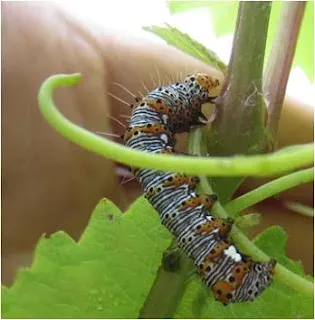
The larvae are approximately 30–35 mm long and possess a distinctive appearance. Their bodies are cream-colored with alternating black cross-bands and orange spots, making them highly visible when feeding on the green leaves of host plants.
The pupal stage is spent in the soil or within protected areas of bark. The pupae are enclosed in a tough, silk-lined cell reinforced with soil particles, providing essential protection against weather and predators during the dormant season.
Entomologists also note that the male's antennae are thickened, a morphological feature that distinguishes them from females, allowing for sex differentiation in population monitoring studies.
What it damages
The primary host plants for this pest are grapevines. The caterpillars feed aggressively on the foliage, consuming the leaf tissue while leaving the veins intact, which causes severe skeletonization of the leaves.
Apart from cultivated grapes, the larvae are known to infest Virginia creeper (Parthenocissus quinquefolia). This wild host can act as a reservoir for the pest, allowing it to migrate into neighboring vineyards.
Heavy defoliation significantly impairs the vine's ability to photosynthesize. This leads to reduced sugar accumulation in berries, poor fruit maturation, and a weakened overall state of the vine going into the winter months.
In cases of severe infestation, the cumulative loss of leaf area can stunt the development of new shoots, directly reducing the vine’s vigor and yielding potential for the subsequent growing season.
Economic damage is most significant when the infestation is left unchecked in early summer, as the feeding larvae can cause substantial harm to the canopy, which is vital for fruit protection and nutrition.
When it appears
Adult moths typically emerge in late spring, generally between May and June. They are highly active during sunny days, when mating occurs and females begin depositing eggs on the undersides of grape leaves.
The species usually completes one to two generations per year, depending on the climatic conditions of the region. The summer generation is often the most damaging due to the peak vegetative needs of the vines.
The life cycle from egg to adult takes approximately six to eight weeks. Because of this relatively rapid development, multiple generations can cause an exponential increase in larval populations during a single season.
As autumn approaches, the larvae seek out overwintering sites, typically in the soil or protected crevices of the trunk. Once they enter the pupal stage, they remain dormant until the following spring.
Effective management requires precise timing, targeting the first generation of larvae as they emerge. Monitoring for the presence of flying adults is the best way to anticipate the upcoming infestation period.
Signs of infestation
The most reliable sign of an infestation is the presence of skeletonized leaves. As larvae feed, they consume the parenchyma, leaving behind a delicate network of leaf veins.
Dark granular droppings, or frass, on the leaves or the ground beneath the canopy are a clear indication of feeding activity. Large amounts of frass suggest a high density of larvae.
Clutches of small, round, yellowish eggs can be found on the undersides of leaves. These should be scouted during the early season, particularly on the younger foliage near the center of the vine.
Visible decline in terminal shoot growth and yellowing of the leaf margins can also signal that a population of caterpillars is actively feeding on the plant's structural tissues.
The sighting of black, bee-like moths flying between the rows is a warning sign that egg-laying is occurring, signaling the need for immediate site inspection and implementation of control measures.
Control measures
Manual removal of larvae and egg clusters is an effective control strategy for small-scale vineyards or garden settings, as it prevents population explosions without using chemicals.
Biological control using Bacillus thuringiensis is highly recommended. This bacterium specifically targets lepidopteran larvae and is safe for beneficial insects, pollinators, and the surrounding environment.
If chemical control is necessary, apply registered insecticides during the early larval development stages. It is crucial to follow all label instructions regarding pre-harvest intervals.
Cultivation practices such as autumn tilling can significantly reduce the overwintering population by disturbing the soil and exposing the pupae to birds and extreme winter temperatures.
- Installation of pheromone or light traps for adult monitoring.
- Removal of Virginia creeper near the vineyard to eliminate alternative hosts.
- Encouraging natural predators such as wasps and birds in the vineyard.
- Maintaining healthy vine growth to better withstand pest pressure.
Taxonomy
- Latin name
- Alypia octomaculata
- Order
- Lepidoptera (butterflies)
- Family
- Noctuidae
- EPPO code
- ALYPOC
Discussion
No discussions yet — be the first.