
Alewife
Alosa pseudoharengus
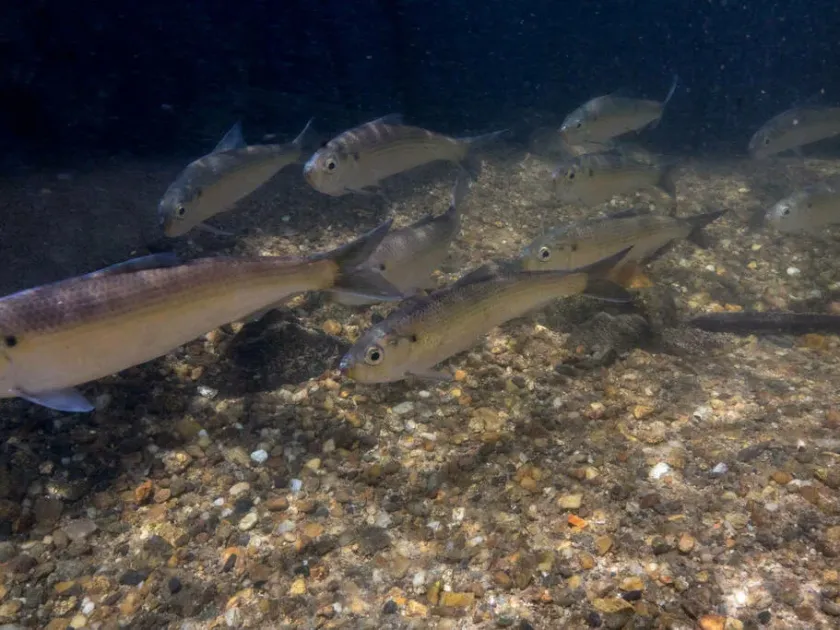
Description
How to identify
The Alewife (Alosa pseudoharengus) belongs to the order Clupeiformes and the family Clupeidae. While primarily an aquatic species, its interaction with irrigation infrastructure poses challenges for agricultural producers.
Adult alewives typically measure 25–30 cm in length. They are characterized by a deep, laterally compressed body, large silver scales, and a distinct dark spot located behind the gill cover.
As an anadromous species, they migrate from the ocean into freshwater rivers and lakes to spawn, which brings them into direct contact with farm water sources.
The life cycle involves seasonal movements that can lead to large-scale presence within water intake systems, interfering with irrigation efficiency.
Agronomists must understand these behavioral patterns to design water management plans that mitigate potential damage to farming equipment.
What it damages
The primary damage caused by alewives in agricultural settings is the physical obstruction of water intake screens and pump mechanisms.
Mass mortality events following spawning result in the accumulation of decaying organic matter, which severely degrades water quality for irrigation purposes.
Increased bacterial loads in stagnant water from decaying fish can harm sensitive crops when applying irrigation via overhead sprinkling.
Blockages lead to inconsistent water supply, resulting in crop water stress and reduced yields during critical developmental stages.
Additional costs are incurred by farmers for maintenance, filter cleaning, and system repairs caused by the intrusion of fish debris into the irrigation network.
When it appears
The peak activity occurs during the spring spawning season, when alewives migrate upstream in large numbers.
Water temperatures serve as the primary trigger for these migrations, making spring a high-risk period for agricultural water systems.
Post-spawning, the downstream movement of juvenile fish continues to pose risks to infrastructure until the summer months.
Summer is characterized by potential water quality issues due to the decomposition of dead fish, which may affect sensitive irrigation equipment.
Strategic scheduling of water intake operations and maintenance is essential to avoid conflicts with these peak migration windows.
Signs of infestation
The most common sign of alewife presence is a sudden drop in water pressure or equipment failure due to clogged intake screens.
A foul, organic odor emanating from irrigation water indicates the decomposition of fish biomass within the intake or storage facility.
Visual observation of dense schools of fish near water intakes or spillways during the spring months is a strong indicator of impact risk.
Changes in water turbidity or oxygen levels in the storage ponds suggest the presence of a high biomass of fish.
The presence of fish scales and organic debris on filtration systems confirms that the water intake is being compromised by alewife activity.
Control measures
The use of physical exclusion screens with appropriate mesh sizes is the most effective method to prevent fish from entering irrigation pumps.
Acoustic deterrents can be deployed to discourage schools of alewives from approaching water intake areas, reducing the risk of obstruction.
Routine maintenance and sanitization of water storage and distribution networks are vital to mitigating the secondary effects of fish decomposition.
Coordinated management of water extraction, accounting for the life cycle of the species, significantly reduces maintenance requirements for farm systems.
- Installing high-flow intake screens.
- Deploying ultrasonic fish repelling devices.
- Conducting frequent water quality testing during migration peaks.
Taxonomy
- Latin name
- Alosa pseudoharengus
- Family
- Clupeidae
- EPPO code
- ALOSPS
Discussion
No discussions yet — be the first.