
Linear whitefly
Aleyrodes lineatus
Description
How to identify
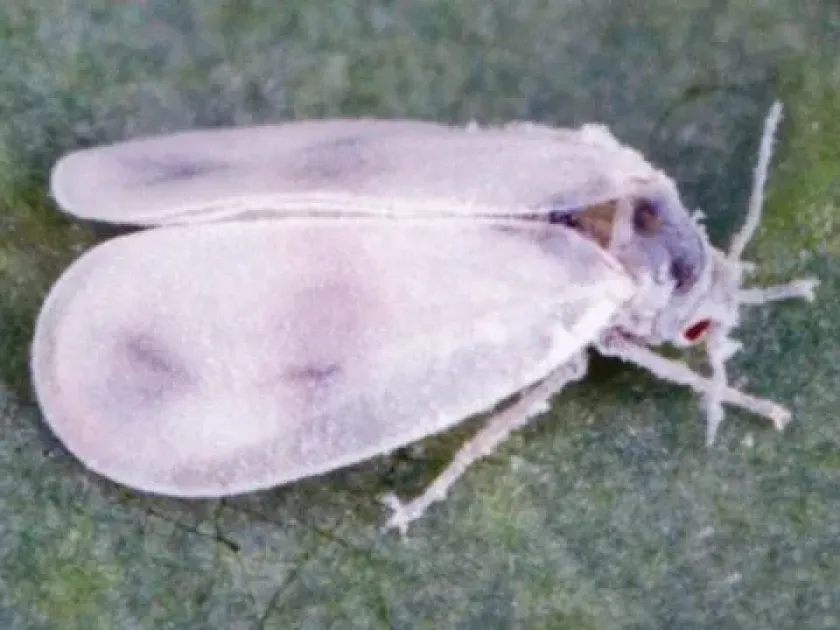
The linear whitefly (Aleyrodes lineatus) belongs to the family Aleyrodidae within the order Hemiptera. It is a minute insect that earns its common name from the distinct dark linear markings found on its wings.
The adult insect is pale in color and covered with a fine waxy, mealy-white powder. Its small size makes it difficult to detect without careful inspection of the underside of leaves.
The life cycle progresses through the egg, larval (nymphal), and adult stages. Females lay eggs on the undersides of leaves, often anchoring them to the plant surface with a short stalk.
The first instar larvae, known as crawlers, are mobile; however, subsequent larval stages are sessile, remaining attached to the leaf to feed on plant sap until they reach the pupal stage.
In temperate climates or greenhouse environments, the linear whitefly can complete multiple generations per year, leading to rapid population explosions if environmental conditions remain favorable.
What it damages
Direct feeding by both nymphs and adults removes vital plant sap, resulting in nutrient depletion, stunted growth, and the development of chlorotic spots on the foliage.
A significant secondary issue is the production of honeydew, a sticky excretion that accumulates on leaves and fruit. This substance serves as a breeding ground for sooty mold fungi, which turn affected areas black.
The presence of sooty mold physically blocks sunlight, severely hindering photosynthesis and reducing the overall vigor and productivity of the host plant.
Linear whiteflies are known to be potential vectors for various plant viruses. Viral transmission can cause systemic infection, leading to leaf distortion, mottling, and total yield failure.
Persistent infestations often result in premature leaf senescence and abscission, which weakens the plant's immune system and makes it more susceptible to other diseases and environmental stressors.
Signs of infestation
The most recognizable sign of an infestation is the sudden appearance of small, white, moth-like insects that fly up in clouds when the infested plant is shaken or disturbed.
The presence of a sticky, shiny film on leaves (honeydew) is a diagnostic indicator. This residue often attracts ants, which may be seen visiting the infested foliage.
Under close examination, the underside of leaves will show small, flattened, scale-like nymphs firmly attached to the surface, often clustered near the leaf veins.
The emergence of dark, velvety patches of sooty mold on the foliage confirms the long-term presence of the pest and indicates that the honeydew excretion has been substantial.
Visible signs of plant decline include yellowing of leaves, curled margins, and an overall lack of vitality, despite adequate watering and fertilization practices.
Control measures
Cultural control involves maintaining greenhouse hygiene, removing weeds that serve as alternate hosts, and ensuring proper spacing between plants to improve airflow.
Yellow sticky traps are highly effective for monitoring and suppressing adult populations, providing an early warning system before a major outbreak occurs.
Biological control agents, such as the parasitic wasp Encarsia formosa, can be introduced to parasitize the larvae and maintain the whitefly population below the economic threshold.
Chemical control should rely on systemic insecticides, applied when threshold levels are exceeded. It is crucial to rotate chemical classes to prevent the development of resistance.
Thorough coverage of the foliage, particularly the undersides, is essential for successful treatment, as this is where the nymphs remain stationary and feed throughout their development.
Discussion
No discussions yet — be the first.