
Citrus whitefly
Aleurocanthus simplex
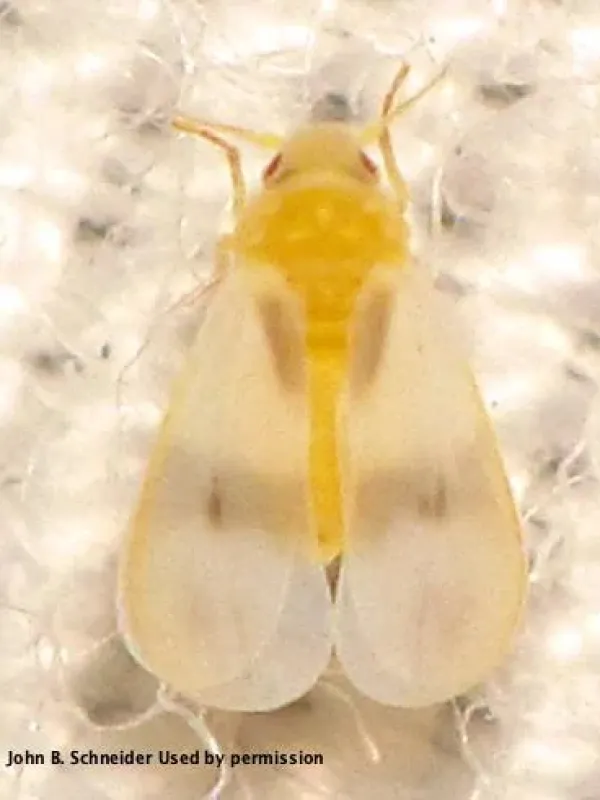
Description
How to identify
The Citrus whitefly (Aleurocanthus simplex) belongs to the order Hemiptera and the family Aleyrodidae. Like all whiteflies, it undergoes a complex life cycle that includes egg, nymph (four instars), and adult stages.
Adult insects are small and often possess wings with distinctive dark patterns, which differentiates them from other whitefly species. The nymphs, especially the later instars, are sedentary and covered with waxy secretions, forming a puparium.
Identification typically requires microscopic examination of the pupal case. Specific morphological traits, such as the arrangement of papillae and marginal bristles, are essential to distinguish Aleurocanthus simplex from related pests.
This species thrives in warm, humid climates, making it a significant pest in citrus-growing regions globally. It can also colonize indoor environments, such as greenhouses or conservatories, where it can reproduce continuously.
The reproduction rate of this species is high. Females deposit numerous eggs on the abaxial side of the leaf, often in spiral or circular patterns, which is a common behavioral trait for many Aleurocanthus species.
What it damages
The primary hosts of this whitefly are plants in the Rutaceae family, particularly citrus species such as lemon, orange, and lime. When populations are high, they may settle on other plants, causing widespread damage.
Both adults and nymphs feed by inserting their piercing-sucking mouthparts into the phloem of the leaf. This feeding causes the plant to lose vital nutrients, leading to yellowing (chlorosis) and wilting of the foliage.
The accumulation of honeydew secreted by the nymphs creates a sticky surface on the leaves. This substance promotes the growth of sooty mold, a fungus that covers the leaf surface and severely inhibits the plant's ability to photosynthesize.
Severe infestations cause premature leaf drop and the drying of twigs. Furthermore, the overall health of the tree declines, resulting in poor fruit quality, reduced harvest size, and increased susceptibility to various pathogens.
Economic damage is caused not only by direct yield loss but also by the costs associated with repeated insecticide applications and the loss of aesthetic value for ornamental citrus trees.
Control measures
Integrated Pest Management (IPM) is the most effective approach for controlling Aleurocanthus simplex. A successful strategy must combine biological, cultural, and chemical tactics to minimize impact.
Cultural practices include pruning heavily infested branches and maintaining adequate plant spacing to increase air circulation. Sanitation is crucial, as the pest can easily spread between plants in dense environments.
Chemical control should rely on systemic insecticides that are effective against sucking insects. However, because nymphs are protected by waxy layers, timing the application during the mobile first-instar crawler phase is critical for success.
Biological control is highly encouraged, particularly in greenhouses, by introducing parasitoid wasps. These natural enemies can keep whitefly populations at manageable levels without the need for constant chemical sprays.
- Use of yellow sticky cards to monitor population dynamics.
- Systemic insecticide treatments during the crawler phase.
- Washing foliage with mild detergent solutions to remove honeydew.
- Introduction of biological control agents like parasitic wasps.
- Strict quarantine for all incoming citrus planting material.
Discussion
No discussions yet — be the first.