
Ancient dart
Agrotis vetusta
Description
How to identify
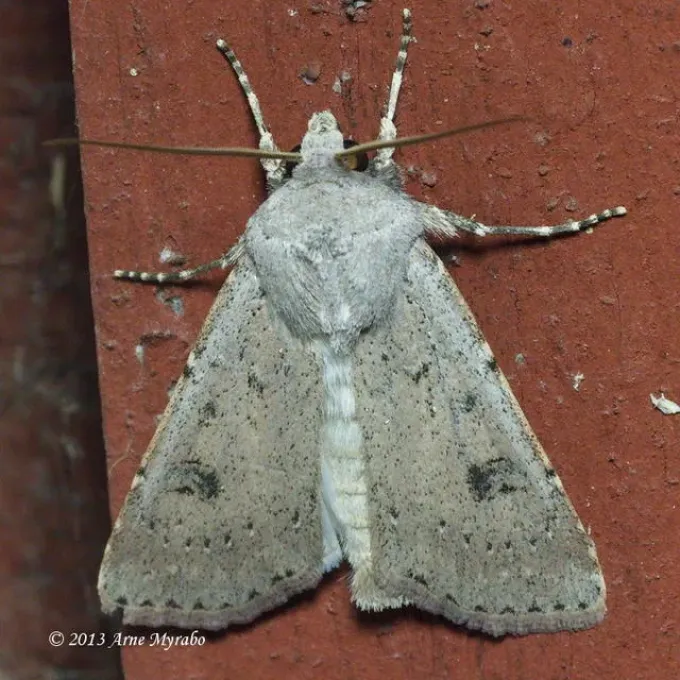
The Ancient dart (Agrotis vetusta) is a moth belonging to the family Noctuidae. The adult moth has a wingspan of approximately 35–40 mm, with brownish-gray forewings featuring darker markings, which provide excellent camouflage against soil backgrounds.
The larvae, commonly known as cutworms, are the primary damaging stage of this species. Full-grown larvae reach 40–50 mm in length and exhibit an earthy gray or brownish color with a lighter dorsal stripe. Their skin texture is robust and hairless, which is typical for soil-dwelling cutworms.
Pupae are reddish-brown and glossy, typically developing within a subterranean earthen cell at a depth of 10–15 cm. This protective chamber allows them to survive overwintering and environmental fluctuations beneath the soil surface.
The biological cycle is highly dependent on regional temperatures and humidity. Generally, this species completes one generation per year, but favorable climate conditions can lead to increased population density and more visible outbreaks in agricultural fields.
The insect typically overwinters as a late-instar larva or pupa in the soil. As spring temperatures rise, the larvae emerge to resume feeding, which unfortunately often coincides with the critical period of seedling emergence for many field crops.
What it damages
As a polyphagous pest, the Ancient dart affects a wide range of crops including cereals, sugar beets, sunflower, corn, and various legumes. It is opportunistic and thrives in fields where diverse crop rotations are practiced without proper sanitation.
Damage is characterized by the larva severing the roots or stems of young seedlings at or just below the soil surface. This causes the plants to wilt rapidly and die, leading to significant thinning of the crop stand and potential total loss of yield in localized spots.
These larvae are primarily nocturnal, spending daylight hours hiding in the upper soil profile or under debris. This cryptic behavior makes them difficult to detect during standard daytime farm inspections, requiring night-time monitoring or pheromone traps.
The greatest harm occurs during the early vegetative stages of the crop. A single large larva can destroy multiple seedlings in a single night, making the pest extremely destructive during the first few weeks after planting when plants lack the biomass to recover.
Economic damage is severe when population levels exceed the threshold. Since the larvae feed near the crown, they often destroy the growing point of the plant, preventing any chance of regrowth or recovery for the damaged seedlings.
Control measures
Effective management begins with agronomic practices, such as deep autumn plowing (tillage), which disrupts overwintering sites and exposes pupae to harsh weather and natural predators. Controlling weeds is also vital, as they serve as initial food sources for larvae.
Chemical control involves the application of registered insecticides (pyrethroids or organophosphates) during peak larval activity. Applications are most effective in the late evening, coinciding with the pest's migration from soil to the surface for feeding.
Biological control strategies include the release of egg parasitoids like Trichogramma. This approach helps reduce the next generation of larvae and is a staple of integrated pest management (IPM) programs aimed at reducing reliance on broad-spectrum chemicals.
- Monitor adult flight activity using light or pheromone traps.
- Maintain clean field borders to reduce alternative host plants.
- Utilize seed treatments to provide early-stage protection against soil pests.
Regular scouting is essential to identify the infestation before it reaches the economic injury level. Once thresholds are exceeded, immediate intervention is necessary to prevent widespread damage across the cultivated area.
Taxonomy
- Latin name
- Agrotis vetusta
- Order
- Lepidoptera (butterflies)
- Family
- Noctuidae
- EPPO code
- AGROVT
Discussion
No discussions yet — be the first.