
Archer's Dart
Agrotis vestigialis
Description
How to identify
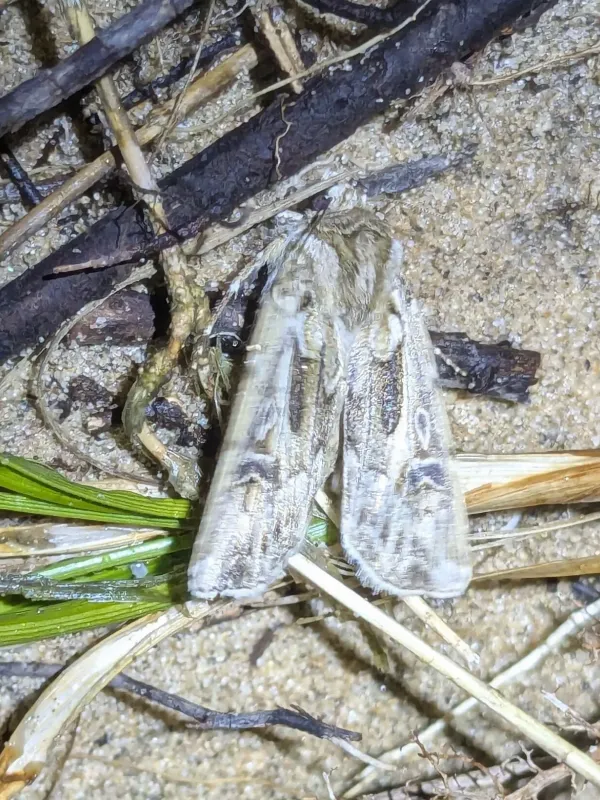
The Archer's Dart (Agrotis vestigialis) is a moth belonging to the family Noctuidae, order Lepidoptera. It is a nocturnal species with a wingspan of up to 40 millimeters.
The forewings of the moth exhibit colors ranging from grayish-brown to almost black, allowing them to camouflage effectively on sandy soils.
The larvae of this species reach 45 millimeters in length and possess an earthy-gray color with dark stripes along the sides of the body.
The pupa of the pest is reddish-brown with a shiny surface and is located in the soil at a depth of up to 15 centimeters in a protective earthen cell.
Eggs are laid by females either singly or in small groups, mainly on plants or directly on the soil surface.
What it damages
The pest is a polyphage, but it causes primary damage to field crops on light soils, including sandy and sandy-loam soil types.
Winter cereal crops, such as rye and wheat, are most severely affected, especially during the early phases of plant development.
In addition to cereals, the larvae can damage seedlings of sugar beets, potatoes, vegetable crops, and young forest plantings.
Damage is caused specifically by the larvae, which feed at night by gnawing the stems of plants near the soil surface or severing them completely.
At high population densities, the pest is capable of destroying seedlings across large areas of the field in a very short time.
When it appears
The larvae of older instars overwinter in the soil at depths where they are protected from severe frosts and temperature fluctuations.
The flight of the moths occurs primarily in summer, in June and July, which coincides with the flowering period of many weeds.
The development of one generation in temperate climates takes about a year, with larval activity increasing during spring and autumn.
Mass emergence of larvae in the spring coincides with the beginning of winter crop vegetation, making this a critical period for crop protection.
Weather conditions such as humid and moderately warm weather contribute to increased egg and young larvae survival.
Signs of infestation
The first sign of infestation is the sudden wilting and lodging of seedlings, which appear chewed at the base of the stem.
During a field inspection under damaged plants during the day, one can find larvae curled into a circle, hiding in the top layer of the soil.
The fields show characteristic bald patches where the plant stand density drops sharply due to plant death.
Damaged parts of plants are often dragged by larvae into burrows, which can be spotted by specific trails left by the pests.
The presence of a large number of nocturnal moths during the flight period indicates a high risk of crop infestation in the next season.
Control measures
An effective agrotechnical method of control is deep autumn plowing, which disrupts the overwintering conditions of the larvae and brings them to the surface.
Weed management is considered an important measure, as young larvae feed mainly on weeds before moving to cultural plants.
Chemical control includes the application of insecticides from the pyrethroid or organophosphate groups on emerging crops.
The use of pheromone traps allows for precise determination of mass moth flight dates, ensuring timely protective measures.
- Crop rotation compliance.
- Early winter sowing.
- Pest density monitoring.
- Timely treatment of field borders.
Taxonomy
- Latin name
- Agrotis vestigialis
- Order
- Lepidoptera (butterflies)
- Family
- Noctuidae
- EPPO code
- AGROVE
Discussion
No discussions yet — be the first.