
Flame Shoulder
Agrotis plecta
Description
How to identify
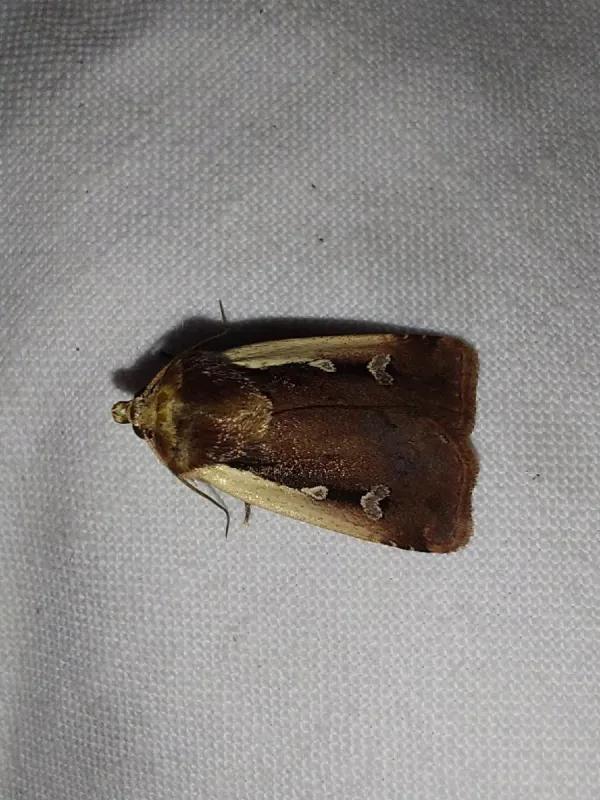
The Flame Shoulder (scientific name Ochropleura plecta, formerly Agrotis plecta) is a moth belonging to the family Noctuidae.
It is distinguished by a prominent creamy-white strip on the leading edge of its forewings, set against a dark brownish background.
The larvae, or caterpillars, reach about 30 mm in length and possess a dull, brownish color with lateral pale lines along their bodies.
The species typically undergoes two generations per year in temperate climates, with pupation occurring in the soil.
Adult moths are nocturnal and are frequently attracted to artificial lights, which is a common way to monitor their presence in agricultural areas.
What it damages
As a polyphagous insect, the Flame Shoulder feeds on a wide range of herbaceous plants, including various vegetables and field crops.
The larvae are known to cause damage by feeding on foliage, often creating irregular holes in the leaves during their early development stages.
In more severe infestations, the caterpillars may sever the stems of young seedlings at the soil surface, leading to plant death.
Root and crown damage can also occur, particularly when larval populations are high, resulting in stunted growth or plant wilting.
The economic impact is most significant in early-season crops, where plant density is crucial for overall field productivity.
When it appears
The adult moths are generally active from spring through late summer, with flight peaks often occurring in early summer.
Larval activity spans the entire growing season, as overlapping generations create a persistent presence of pests in the field.
Pupae overwinter in the soil, emerging as adults once the ground warms up sufficiently during the spring months.
During the day, larvae typically hide beneath soil particles or dense vegetation to avoid heat and predation.
Feeding behavior is strictly nocturnal, which necessitates evening scouting for accurate damage assessment.
Signs of infestation
Visual identification of feeding damage, such as chewed leaf margins or holes, is the primary sign of an active infestation.
Wilting of young plants combined with evidence of stem damage at the base suggests the presence of cutworm-type activity.
Frass (larval droppings) found on the soil surface near the base of plants is a strong indicator of nearby caterpillars.
Digging around the base of damaged plants during the day often reveals the larvae, which typically curl into a ball when disturbed.
Inconsistent crop stands and sudden plant loss are critical indicators that require immediate site inspection.
Control measures
Cultural control strategies include thorough soil cultivation and weed management, which disrupt the larval and pupal development stages.
Applying insecticides should be timed with peak larval activity, ideally in the late evening when the insects are actively feeding.
Biological controls, such as beneficial nematodes or microbial insecticides, provide an effective and environmentally friendly management option.
Monitoring using pheromone traps helps in detecting the arrival of adult moths, allowing for proactive intervention if population thresholds are exceeded.
Maintaining high field hygiene by removing plant debris reduces overwintering sites, significantly lowering the risk of infestation in the following season.
Discussion
No discussions yet — be the first.