
Turnip moth
Agrotis nigrum
Description
How to identify
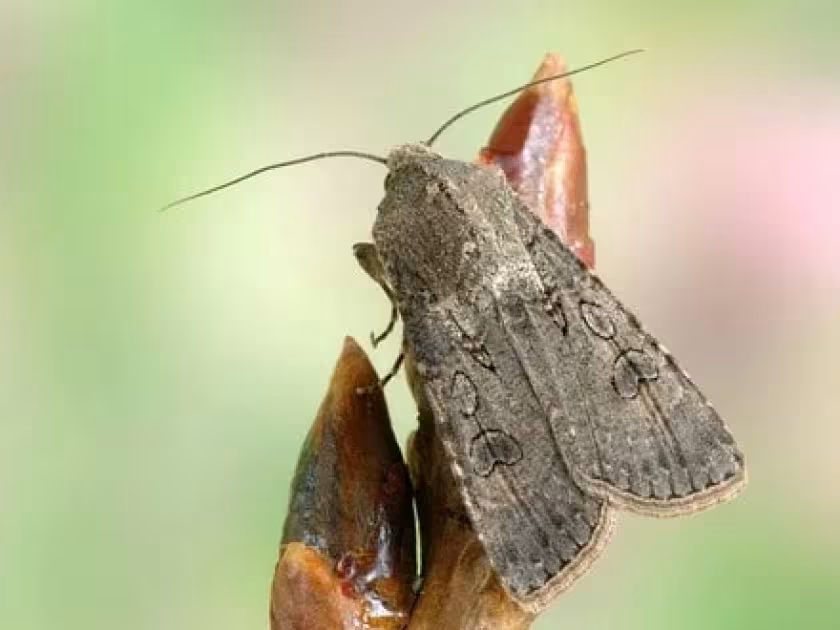
The turnip moth (Agrotis segetum) belongs to the Noctuidae family and is a significant pest in agricultural sectors globally. The adult moth has a wingspan of 35–45 mm, with grey-brown forewings and lighter hindwings.
The larvae, known as cutworms, grow up to 50 mm long. They are typically earthy-grey or brown in color with a greasy-looking, shiny cuticle that makes them easily recognizable.
The life cycle encompasses four stages: egg, larva (which goes through six instars), pupa, and adult. Depending on the climate, the species usually completes two generations per year.
The larvae overwinter deep in the soil profile. As temperatures rise in spring, they move towards the upper soil layers to pupate within small, protective earthen cells.
Adult moths are nocturnal and active during the night, feeding on nectar. They are attracted to light, which makes light traps an effective tool for monitoring their population density.
What it damages
This species is a polyphagous pest, meaning it feeds on a wide range of crops including cereals, maize, sunflowers, sugar beets, and various vegetables like carrots and potatoes.
The primary damage is caused by larvae of later instars, which feed on the roots and underground stems, often completely severing the plant at the root collar. This results in rapid wilting.
A single larva can destroy multiple seedlings in one night, leading to patchy crop stands and significant yield losses that often necessitate expensive field replanting.
In root crops, the larvae create large, irregular cavities by boring into the fleshy parts, which destroys the marketability of the product and increases susceptibility to rot.
Seedlings and young plants are particularly vulnerable, as even minor stem damage at this growth stage often causes irreversible plant death and yield reduction.
Signs of infestation
The most prominent sign of an infestation is the sudden wilting of previously healthy-looking plants, especially in dry weather, which indicates that the stem has been cut below the soil line.
Inspecting the soil around the base of a wilted plant usually reveals a curled-up larva, as they remain in the soil during the day and only emerge to feed at night.
Missing plants in rows or circular bare spots across the field are indicative of active larval feeding clusters that require immediate attention from farm management.
Younger larvae may leave small holes in the lower leaves of the host plants, which provides a warning sign before the larvae grow large enough to cut the stems completely.
The presence of nocturnal moths hovering over crops can be identified through field scouting using pheromone traps, signaling that egg-laying is occurring in the area.
Control measures
Effective agrotechnical practices include deep autumn plowing, which exposes overwintering larvae to the soil surface, leaving them vulnerable to predators and freezing temperatures.
Weed management is crucial, as many wild plants serve as primary hosts for egg-laying and early-stage larval feeding before they migrate to the cash crops.
Biological control through the release of Trichogramma wasps during the egg-laying period has shown success in reducing the larval population without the need for broad-spectrum chemicals.
Chemical control should be applied in the evening, aligning with the nocturnal activity of the larvae. Using appropriate insecticides ensures that the chemicals contact the pests while they are actively feeding.
Integrated Pest Management (IPM) involves using pheromone and light traps to monitor population cycles, ensuring that insecticide applications are timed for maximum economic and biological impact.
Discussion
No discussions yet — be the first.