
Gladiaria cutworm
Agrotis gladiaria
Description
How to identify
The gladiaria cutworm (Agrotis gladiaria) is a member of the Noctuidae family within the order Lepidoptera, known for its significant impact on various field crops.
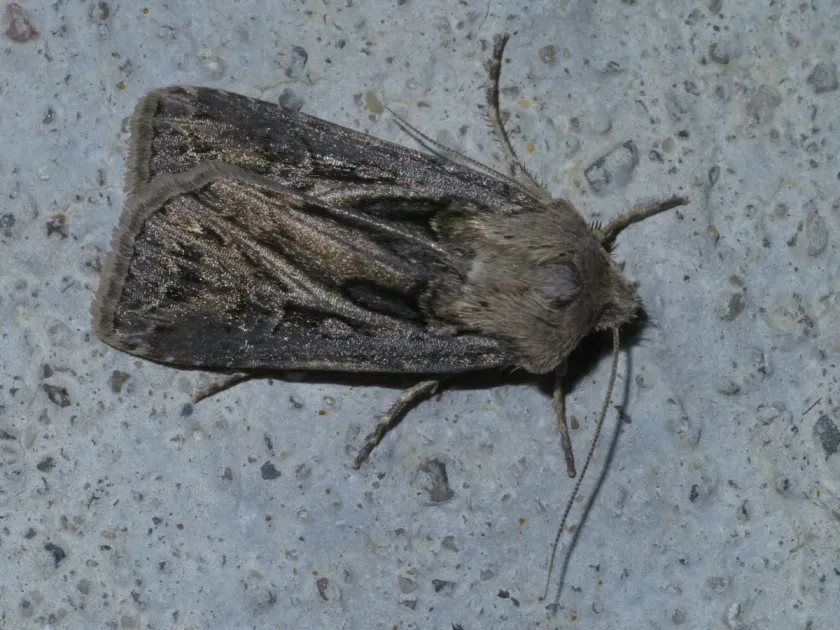
The adult moth is typically nocturnal, featuring brownish or greyish wings with patterns that provide excellent camouflage against the soil environment.
The life cycle encompasses four distinct stages: egg, larva, pupa, and adult, with the larval stage being the most destructive to agricultural production.
Larvae usually overwinter in the soil at various larval instars, enabling them to survive harsh winter conditions until the onset of spring temperatures.
Pupation occurs within a soil cell, and the emergence of adults is synchronized with the availability of suitable host plants for oviposition.
What it damages
Agrotis gladiaria is a polyphagous pest, meaning it can feed on a wide variety of cultivated plants, causing severe economic damage.
Cereal crops like wheat, barley, and oats are highly susceptible to damage during the seedling stage when larvae feed on the developing stems.
Root crops and various vegetables, such as sugar beets and potatoes, are also frequently targeted, leading to reduced yield and poor crop stands.
The larvae are known for their habit of severing the main stem at or slightly below the soil surface, resulting in plant death.
When present in high populations, the larvae can cause significant gaps in crop rows, forcing farmers to consider replanting operations.
Signs of infestation
The most common sign of an infestation is the appearance of wilted or severed seedlings that seem to have collapsed overnight.
Examining the soil around the base of affected plants often reveals the larvae, which typically hide beneath the surface during the daytime.
The presence of small, pellet-like frass near the base of the plant is another indicator of larval feeding activity occurring in the vicinity.
Areas of the field showing patchy emergence or necrotic seedlings are classic symptoms of cutworm damage that require immediate investigation.
Careful excavation of the soil around the damage site confirms the presence of the pest, helping to distinguish it from other soil-borne diseases.
Control measures
Management of the gladiaria cutworm involves a combination of cultural, biological, and chemical strategies to keep populations below economic thresholds.
Deep fall tillage is an effective cultural practice that exposes larvae to predators and environmental extremes, significantly reducing overwintering survival rates.
Effective weed control is critical, as many weed species serve as alternative hosts and egg-laying sites for adult moths.
Chemical control via insecticides is most effective when applied in the evening, aligning with the nocturnal feeding habits of the larvae.
Monitoring populations using pheromone traps allows for precise timing of interventions, reducing the need for broad-spectrum insecticide applications.
Taxonomy
- Latin name
- Agrotis gladiaria
- Order
- Lepidoptera (butterflies)
- Family
- Noctuidae
- EPPO code
- AGROGL
Discussion
No discussions yet — be the first.