
Large Yellow Underwing
Agrotis fimbria
Description
How to identify
The Large Yellow Underwing (Agrotis fimbria, also known as Noctua fimbria) belongs to the Noctuidae family of moths. It is a robust nocturnal insect with a wingspan of 50–65 mm.
The forewings have a variegated brown pattern providing excellent camouflage, whereas the hindwings are a bright, diagnostic yellow with a distinct wide black border.
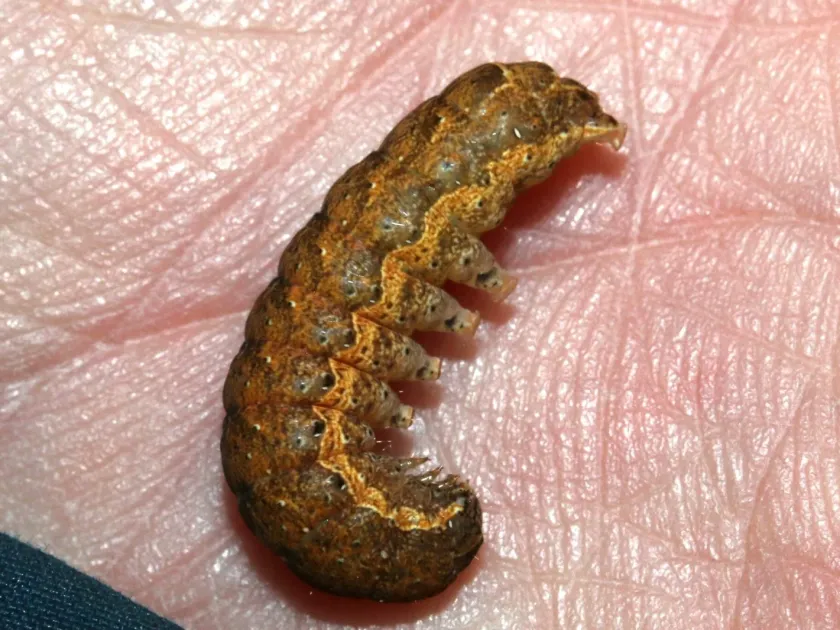
The larvae, which are the damaging stage, grow up to 50 mm in length. They display various shades from pale green to reddish-brown with longitudinal markings.
Pupation occurs in a small earthen cell underground, where the insects also typically spend the winter months to survive cold periods.
Adult moths are strictly nocturnal and possess a powerful flight, which makes them highly mobile and capable of spreading across agricultural landscapes rapidly.
What it damages
This moth is a polyphagous pest, meaning its larvae feed on a vast array of plant species, including garden vegetables, field crops, and woody ornamentals.
Larvae feed primarily at night, consuming leaf tissue and potentially damaging buds, stems, and flowers, leading to stunted development in infested plants.
Commonly affected crops include various salad greens, cabbages, potatoes, and sugar beets, where the larvae can defoliate entire plants if left unchecked.
In commercial orchards, larvae may feed on new foliage and developing fruit buds, causing significant economic damage by reducing the vigor of young trees.
High population densities can result in severe yield losses, especially in young plantings where seedlings are particularly vulnerable to larval feeding.
When it appears
Adult moths typically emerge between June and August. Their peak activity corresponds with warm summer evenings, during which they mate and lay eggs.
The eggs are laid in clusters on the leaves of host plants. After a short incubation period, the small larvae emerge and begin their feeding cycle.
The larvae continue to grow throughout late summer and autumn, reaching a mid-instar stage before they seek out protective shelters for winter hibernation.
Overwintering occurs as larvae in the upper layers of soil or deep within leaf litter, where they are protected from sub-zero temperatures.
In the spring, as soil temperatures rise, the larvae resume feeding before eventually pupating in the soil to complete the next generation's life cycle.
Signs of infestation
Early symptoms of infestation often include irregular holes in leaves, which expand as the larvae grow and their appetite increases significantly.
Presence of dark frass (larval droppings) on the soil surface near the base of plants is a strong indicator of active nocturnal feeding by the larvae.
Gardeners may observe wilting or sudden collapse of seedlings, which can be caused by larvae feeding on the stem bases at the soil level.
During the day, larvae can often be found by gently digging into the soil at the base of affected plants or checking under debris near the root zone.
- irregular leaf defoliation;
- larval presence at the base of the plant during the day;
- accumulated frass near the root zone;
- damage to seedlings during spring growth.
Control measures
A successful integrated pest management (IPM) approach is essential, starting with thorough autumn soil cultivation to expose pupae to predators and frost.
Weed management is vital, as the presence of wild host plants provides a refuge for the larvae to survive before transitioning to nearby crops.
Biological controls, such as applying Bacillus thuringiensis (Bt) or entomopathogenic nematodes, can effectively reduce larval populations without toxic chemicals.
If chemical intervention is necessary, apply registered insecticides in the evening hours when larvae are most active and feeding on the foliage.
Monitoring using light traps or pheromone dispensers helps in timing interventions precisely, ensuring maximum efficacy while minimizing environmental impact.
Taxonomy
- Latin name
- Agrotis fimbria
- Order
- Lepidoptera (butterflies)
- Family
- Noctuidae
- EPPO code
- AGROFI
Discussion
No discussions yet — be the first.