
Heart and dart moth
Agrotis exclamationis
Description
How to identify
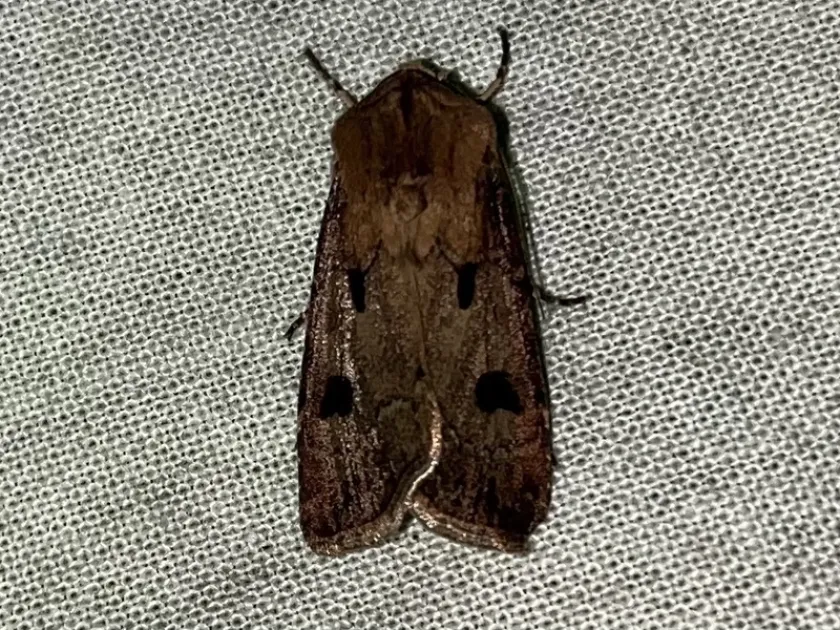
The heart and dart moth, scientifically known as Agrotis exclamationis, is a significant member of the Noctuidae family. The adult moth is characterized by its dull brownish-grey forewings, which feature a distinct dark spot shaped like an exclamation mark, serving as a primary identification key.
The larvae, commonly referred to as cutworms, are stout and grow up to 50 mm in length. They display a brownish or greyish dorsal side with a paler stripe and a granular texture on the skin, which distinguishes them from other cutworm species.
What it damages
This species is a known polyphagous pest with a broad host range. It infests a variety of crops, including cereals, sugar beets, sunflower, maize, and various vegetable species, representing a significant threat to young plant development.
Larvae feed primarily at night, remaining hidden in the soil or under debris during the day. They cause damage by severing the roots or the main stem just below the soil surface, leading to rapid wilting and the total loss of the seedling.
When it appears
The life cycle typically consists of one generation per year, though warmer climates may support a second generation. Adults are active from late May to early August, with peak flight activity occurring during the mid-summer months.
The species overwinters as fully grown larvae deep in the soil profile. As soil temperatures rise in the spring, the larvae migrate toward the surface to resume feeding and eventually pupate in small soil cells, marking the beginning of the new annual cycle.
Signs of infestation
Visual indicators of an infestation include the sudden disappearance or wilting of seedlings in specific patches across the field. Closer inspection usually reveals that the stems have been eaten through at the base, often leaving the upper parts intact.
To confirm the presence of Agrotis exclamationis, one should dig into the soil around affected plants, typically within a 5-10 cm radius. During the day, the larvae will be found curled up in a characteristic spiral shape within the topsoil layer.
Control measures
Effective management requires a combination of cultural and chemical methods. Deep autumn plowing is a critical practice, as it disrupts the soil, exposing overwintering larvae to predators and extreme weather conditions.
Maintaining a weed-free field is essential, as dense weed cover provides ideal conditions for egg-laying and early larval development. When infestations exceed economic thresholds, the application of authorized insecticides is recommended to protect the crop during vulnerable stages.
Taxonomy
- Latin name
- Agrotis exclamationis
- Order
- Lepidoptera (butterflies)
- Family
- Noctuidae
- EPPO code
- AGROEX
Discussion
No discussions yet — be the first.