
Hawaiian cutworm
Agrotis crinigera
Description
How to identify
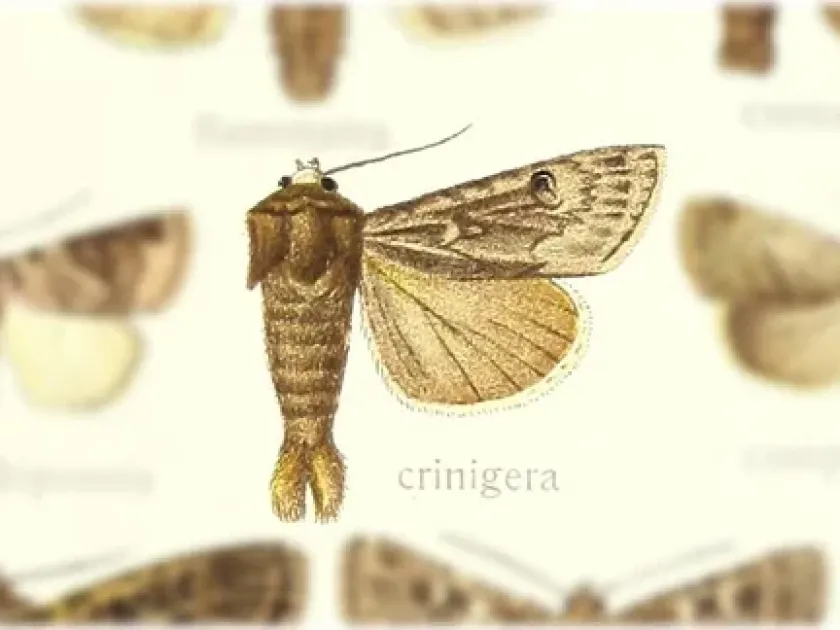
The Hawaiian cutworm (Agrotis crinigera) is a moth species belonging to the family Noctuidae, native to the Hawaiian Islands. Adult moths typically have a wingspan of 40-50 mm and exhibit cryptic coloration, blending seamlessly with dry vegetation.
The larvae, or cutworms, are the primary damaging stage. They undergo several instars, varying in color from light green to dark brown, often displaying distinct longitudinal stripes. They possess a robust body shape typical of soil-dwelling caterpillars.
Pupation occurs within the soil, where the pupae remain protected from predators and environmental fluctuations. This stage is critical for the species' ability to persist in diverse habitats across the islands.
Taxonomically, this species is placed in the order Lepidoptera. It remains a notable agricultural pest due to its adaptability to tropical farming systems and persistent presence throughout the year.
Adult moths are nocturnal and strongly attracted to light, a behavior frequently exploited by researchers and farmers to monitor adult population levels via light traps.
What it damages
This pest affects a wide range of horticultural and field crops. It is particularly notorious for damaging vegetable crops such as cabbage, lettuce, and beans, which are essential for local agricultural production.
Cutworms primarily feed at night, often severing the stems of young seedlings at the soil surface. This behavior leads to the rapid loss of entire plant stands in localized areas, causing significant economic setbacks.
Older larvae may also consume foliage, leading to reduced photosynthetic efficiency and diminished plant vigor, which directly impacts the quality and marketability of the harvested produce.
Feeding wounds created by the larvae serve as entry points for various bacterial and fungal pathogens, potentially leading to widespread secondary diseases that further devastate the crop.
In ornamental nurseries, the Hawaiian cutworm can cause substantial aesthetic damage, ruining plants by defoliation or through root and stem damage in container-grown stock.
When it appears
Due to Hawaii's mild, tropical climate, Agrotis crinigera can breed throughout the year. There is no true hibernation period, allowing for continuous and overlapping generations.
Population surges are often observed during dry seasons. As natural vegetation dries up, these larvae migrate to irrigated agricultural fields, where the lush, well-watered crops become their primary food source.
The development time from egg to adult is highly dependent on ambient temperature and soil moisture levels, typically completing its cycle in a matter of weeks under optimal conditions.
Their nocturnal nature dictates the timing of their activity; during the day, they reside beneath the soil surface, in mulch, or among crop debris, emerging only at night to feed.
Effective management requires constant vigilance, with peak surveillance recommended during warm, dry weather conditions when the risk of immigration into cultivated areas is highest.
Signs of infestation
The most evident sign of a cutworm infestation is the presence of toppled seedlings in the field, often cut cleanly at the base as if by a knife.
Look for irregular, jagged holes in leaves, which indicate nocturnal feeding. If these signs appear on young, vulnerable plants, it is a clear indicator of a cutworm outbreak.
Small mounds of granular frass (insect excrement) found at the base of plants are a tell-tale sign that larvae are active in the immediate vicinity.
- Seedlings that have wilted or fallen overnight.
- Visible larvae found by gently disturbing the top 2-3 cm of soil near damaged plants.
- Increased moth activity around lights near field perimeters.
Early detection is crucial; inspecting fields in the early morning can help identify the pest before the damage becomes irreversible across the crop stand.
Control measures
Integrated Pest Management (IPM) is essential for controlling the Hawaiian cutworm. Relying on a single method is rarely sufficient given their life history and high reproductive capacity.
Cultural practices, such as deep tillage prior to planting, are effective at disrupting the soil environment, exposing pupae to predators and heat, and reducing the initial larval population.
Biological control agents, including entomopathogenic nematodes or formulations of Bacillus thuringiensis, offer environmentally friendly alternatives to conventional pesticides, particularly when applied to the soil.
Chemical control should be employed only when monitoring thresholds are exceeded. Applications should target the evening hours when larvae are actively emerging to feed on the surface.
Maintaining clean fields by eliminating weeds and crop residues removes alternative hosts and hiding spots, effectively limiting the pest's ability to survive and thrive between cropping cycles.
Taxonomy
- Latin name
- Agrotis crinigera
- Order
- Lepidoptera (butterflies)
- Family
- Noctuidae
- EPPO code
- EUXOCR
Discussion
No discussions yet — be the first.