
Clavis dart
Agrotis clavis
Description
How to identify
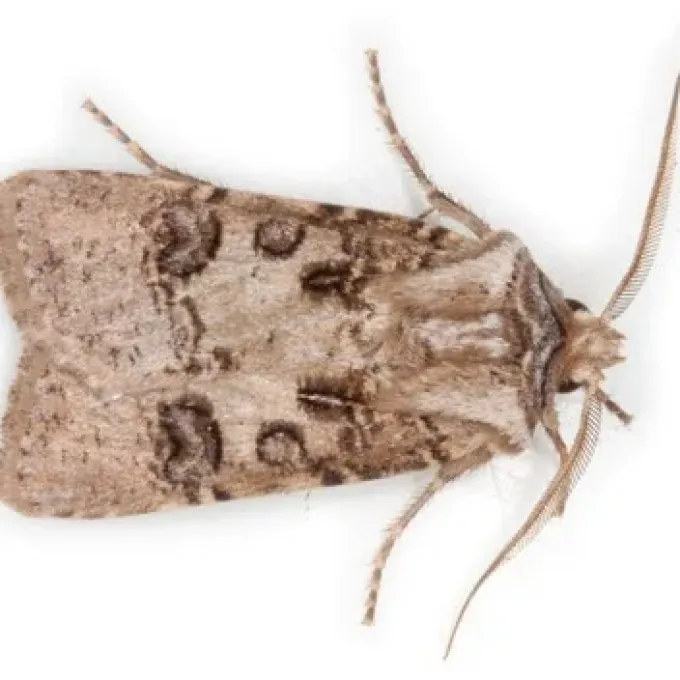
The Clavis dart (Agrotis clavis) is a moth belonging to the Noctuidae family. The adult moth has a wingspan ranging from 35 to 45 mm, with forewings that display a mottled brown or greyish pattern, which serves as camouflage against soil and plant debris.
The larvae, commonly known as cutworms, are stout and typically earth-colored, reaching lengths of up to 50 mm. They possess a tough cuticle and a powerful set of mandibles capable of cutting through the stems of various young agricultural plants.
This species generally completes one generation per year. The larvae spend the winter deep in the soil, entering a state of diapause, which allows them to survive extreme cold and wait for favorable spring conditions.
In the spring, larvae migrate toward the soil surface as temperatures rise. They initially feed on weed cover before moving onto emerging crops, making early-season field sanitation vital for pest suppression.
The flight of the adult moths typically occurs from late May through July. Females lay their eggs on the underside of leaves or directly onto the soil surface in areas with sufficient moisture and vegetation cover.
What it damages
The Clavis dart is a polyphagous pest that poses a significant threat to a wide range of agricultural crops, including cereals, maize, sunflowers, sugar beets, and various vegetable species cultivated on open land.
The primary damage is caused by the larvae, which are nocturnal feeders. During the day, they hide just below the soil surface, emerging at night to chew through the stems of plants at or slightly below the soil line.
This feeding behavior results in rapid wilting and the death of young plants, leading to noticeable gaps in crop stands. If severe infestations occur, this can necessitate field reseeding, causing substantial economic losses.
Later in the season, larvae may consume leaves or damage the underground portions of tubers and roots. These injuries not only reduce plant vitality but also serve as entry points for soil-borne pathogens and rot.
Crops under water stress are particularly vulnerable, as they lack the vigor to recover from root or stem damage. Consequently, uniform field emergence and weed control are the first lines of defense against this pest.
Signs of infestation
The most common sign of a Clavis dart infestation is the presence of withered, fallen seedlings in an otherwise healthy-looking field. These localized wilting spots indicate nocturnal larval feeding activity.
To confirm the presence of the pest, one should carefully excavate the soil around the base of a damaged plant. Finding a larvae curled into a distinct "C" shape is a definitive sign of cutworm presence.
Monitoring the flight of adult moths using pheromone traps or light traps is a proactive way to detect their presence early in the season. This data helps agronomists decide when to implement control measures.
A high density of weeds in and around the field serves as a major attractant for egg-laying females. If a field shows patchy growth or sudden stand reduction in spring, it is highly likely that cutworms are responsible.
Persistent wet soil conditions followed by warming trends often correlate with increased larval surface activity, which makes this the most critical time to scout the field and assess the need for intervention.
Control measures
Integrated Pest Management (IPM) is essential for controlling the Clavis dart. Cultural practices, such as deep autumn plowing, are highly effective as they expose larvae to adverse weather and predators.
Rigorous weed management is crucial. By eliminating host weeds, farmers remove the primary food source for young larvae and destroy the sites where adult moths prefer to lay their eggs.
Chemical control involving contact or systemic insecticides should be applied during the evening when the larvae are actively feeding on the surface. This ensures maximum exposure to the chemical treatment.
Biological controls, including the use of egg parasitoids like Trichogramma, can significantly reduce the population of the pest when timed correctly with the egg-laying cycle of the moths.
Crop rotation and maintaining optimal sowing dates help plants establish strong root systems before the period of peak larval activity, increasing their ability to withstand potential damage from these pests.
Taxonomy
- Latin name
- Agrotis clavis
- Order
- Lepidoptera (butterflies)
- Family
- Noctuidae
- EPPO code
- AGROCO
Discussion
No discussions yet — be the first.