
Turnip moth
Agrotis
Description
How to identify
The Turnip moth (Agrotis segetum) is a member of the Noctuidae family. It is a notorious soil pest that causes significant damage to various agricultural crops across Europe, Asia, and Africa.
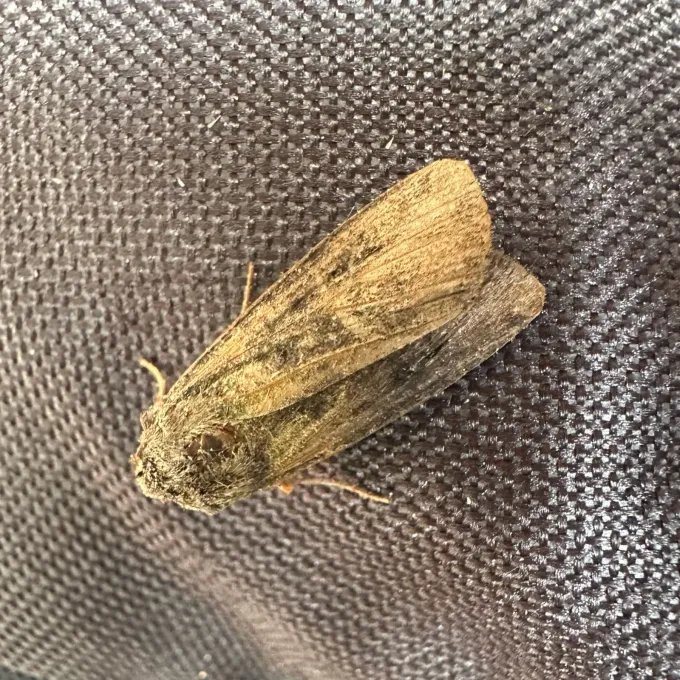
Adult moths have a wingspan of 35–45 mm. The forewings are generally greyish-brown with darker markings, providing excellent camouflage against soil backgrounds, while the hindwings are lighter in color.
The larva, or caterpillar, is the most destructive stage. It is earthy-grey in color, smooth-skinned, and reaches up to 50 mm in length. When disturbed, it typically curls into a tight circle.
The pupa is shiny brown and resides in a small cell within the soil. Depending on the geographical region and climate, this pest can complete one or two generations within a single year.
The larvae overwinter deep in the soil profile. As soil temperatures rise in the spring, they migrate toward the surface to feed on the tender roots and stems of emerging crops.
What it damages
This pest is highly polyphagous, attacking over 150 different plant species. It is particularly devastating to cereal crops, such as winter wheat, barley, and rye, as well as various vegetable crops.
Root crops like sugar beets, potatoes, and carrots are also frequent victims. The larvae tend to feed on the root collar, effectively severing the plant from its root system, leading to rapid wilting.
Young larvae initially graze on the leaves, causing skeletonization. However, as they reach the third and fourth instar stages, they become subterranean, cutting off stems at the soil surface.
Feeding damage often leads to secondary infections by soil-borne pathogens, such as fungi and bacteria, which can result in the complete collapse of entire plant stands on a field.
In cases of heavy infestation, farmers can observe significant yield losses, with the pest being capable of destroying large patches of a field in a very short period of time.
When it appears
The flight of the first generation of adults typically begins in late May and continues through June. Moths are most active during the night, as they are nocturnal fliers.
Females lay their eggs individually on the soil surface or the underside of leaves near the ground. A single female is capable of producing up to 2,000 eggs during her lifespan.
Larval development is heavily influenced by moisture levels in the soil. They thrive in moderate humidity, while extreme heat or drought may cause them to seek deeper, cooler layers of soil.
A second generation of adults usually emerges in August and September. This generation is particularly dangerous for newly sown winter crops, as the larvae are highly active during the germination phase.
By late autumn, the larvae of the second generation prepare for dormancy. They retreat deep into the soil to survive the winter, successfully completing their annual development cycle.
Signs of infestation
The most obvious sign of an infestation is the appearance of wilted plants scattered throughout the field. These plants can easily be pulled from the soil due to severed root systems.
Close inspection of the soil around affected plants often reveals small entry holes or "tunnels." Digging a few centimeters into the soil near these points will usually expose the larvae.
Patchy stands of crops are a common indicator of Turnip moth presence. Fields may appear thin or uneven, with dead areas where the larvae have moved from one plant to the next.
Early-stage damage on leaves, appearing as small, irregular holes or missing edges, serves as a warning before the larvae shift to their more destructive subterranean feeding habits.
The detection of adult moths near light sources at night or via pheromone traps provides early warning signs, allowing producers to prepare for potential outbreaks before significant damage occurs.
Control measures
Cultural practices, such as deep autumn plowing, are highly effective. This process disrupts the overwintering larvae, exposing them to predators and harsh environmental conditions.
Maintaining a clean field free of weeds is crucial, as weeds serve as a food source for moths and provide sheltered spots for egg-laying during the early stages of the season.
Biological control, such as the release of Trichogramma wasps during the egg-laying period, can significantly reduce the pest population by parasitizing the moth's eggs.
Chemical control should be applied based on economic thresholds. Since the larvae are primarily active at night, insecticide applications are most effective when timed for the evening hours.
Monitoring with pheromone traps is essential for integrated pest management. By tracking adult flight patterns, farmers can precisely time their interventions to maximize the efficacy of control measures.
Taxonomy
- Latin name
- Agrotis
- Order
- Lepidoptera (butterflies)
- Family
- Noctuidae
- EPPO code
- AGROSP
Discussion
No discussions yet — be the first.