
Flounced Chestnut
Agrochola helvola
Description
How to identify
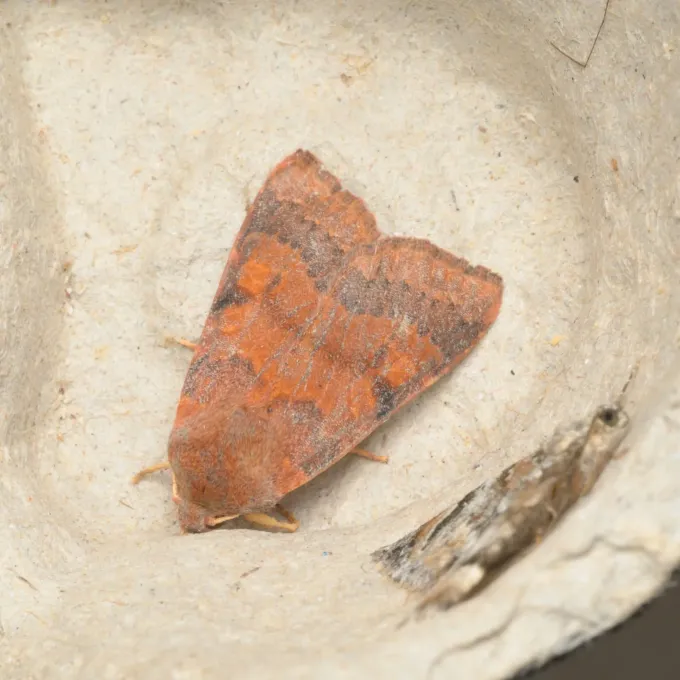
The Flounced Chestnut (Agrochola helvola) is a nocturnal moth species belonging to the Noctuidae family. The adult moth is characterized by a wingspan ranging from 35 to 42 mm and a variable color pattern, typically featuring shades of ochre, orange-brown, and chestnut.
The larvae, or caterpillars, exhibit a wide range of colors from pale green to brownish, often with subtle markings along the dorsal region. They are nocturnal feeders, remaining hidden during the daylight hours.
The life cycle involves complete metamorphosis, consisting of the egg, larva, pupa, and adult stages. This species typically produces one generation per year, with the overwintering stage occurring as an egg.
Adult moths are primarily active during the autumn months, appearing from late summer through October. They are frequently attracted to artificial lights, which facilitates identification for agricultural monitoring.
As part of the Hadeninae subfamily, this moth is a significant subject in temperate zone entomology. Its population dynamics are closely linked to the availability of woody host plants.
What it damages
This species primarily feeds on the buds and foliage of various deciduous trees and shrub species. Common host plants include oak, birch, willow, and several fruit-bearing trees within the Rosaceae family.
During the spring, the emerging larvae primarily target budding vegetation. By feeding on the young buds, they can significantly reduce the potential leaf surface area and fruit yield of orchard trees.
In cases of high infestation, these caterpillars can cause substantial defoliation. This process stresses the plants, leading to reduced vigor and increased susceptibility to other biotic and abiotic stressors.
For nursery and forestry operations, the damage to apical buds can cause structural deformities in young saplings, potentially impacting their future growth and quality as timber or ornamental stock.
Furthermore, larval feeding creates entry points for various phytopathogens, including fungi and bacteria, which may lead to subsequent necrosis and tissue death on affected twigs and branches.
When it appears
The life cycle is strictly seasonal. Adult moths emerge in the autumn, during which time mating and oviposition take place, ensuring the species survives the winter as eggs deposited on host bark.
Egg hatching aligns with the beginning of the spring growth phase for host trees. This synchronization allows the young larvae to have immediate access to the most nutritious plant parts, such as budding foliage.
The larval development period typically spans several weeks during the spring. Once growth is complete, the larvae drop to the ground to pupate within the soil or leaf litter.
The pupal stage remains dormant throughout the warm summer months. This biological strategy helps the species avoid high-temperature extremes during the most active growing season of the host plants.
Monitoring efforts should focus on the early spring for caterpillar activity and late summer for adult moth population estimates, providing a clear window for effective agricultural intervention.
Control measures
Integrated Pest Management (IPM) is essential for controlling the Flounced Chestnut. Monitoring population levels using pheromone or light traps during the adult flight period provides the necessary data for targeted control.
Biological control agents, such as Bacillus thuringiensis sprays, are highly effective against early-instar larvae. This method is preferred in orchards to protect beneficial insect populations.
If larval density exceeds economic thresholds, targeted insecticide applications may be required. These should be timed carefully, focusing on the early spring before the larvae cause significant structural damage.
- Maintain soil health and manage weeds to reduce shelter for pupae.
- Encourage insectivorous bird populations to naturally regulate caterpillar numbers.
- Remove and destroy egg-infested branches during dormant winter pruning.
- Use physical barriers or sticky bands on tree trunks if feasible in specific cultivation settings.
By integrating cultural, biological, and chemical methods, growers can effectively protect their plants while minimizing the broader environmental impact of pest control practices.
Taxonomy
- Latin name
- Agrochola helvola
- Order
- Lepidoptera (butterflies)
- Family
- Noctuidae
- EPPO code
- AMATHE
Discussion
No discussions yet — be the first.