
Chestnut-coloured Brocade
Agrochola circellaris
Description
How to identify
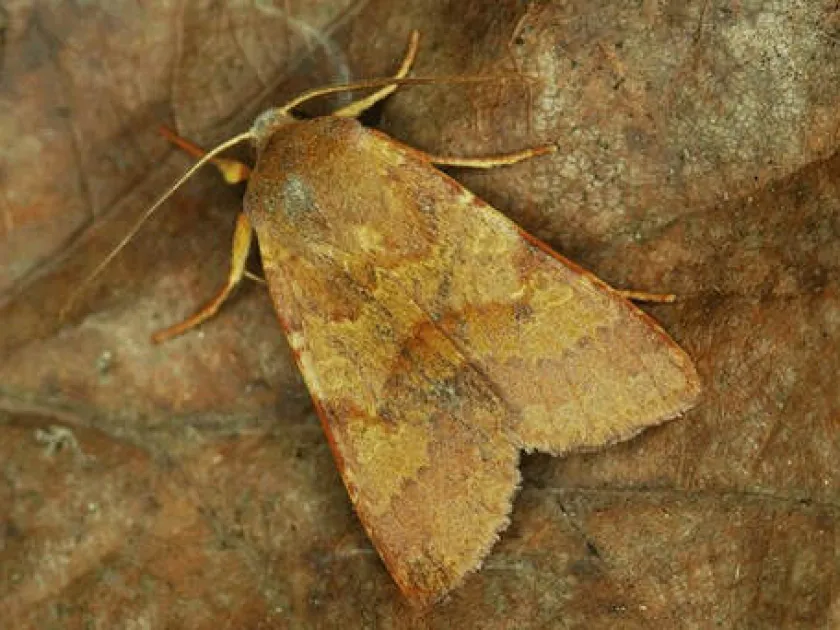
The Chestnut-coloured Brocade (Agrochola circellaris) belongs to the Noctuidae family within the Lepidoptera order. The adult moth has a wingspan of 30–40 mm, with colors ranging from ochre-yellow to reddish-brown, providing excellent camouflage.
The forewings are characterized by a kidney-shaped spot and a dark transverse band, which gives the moth a distinctive rusty appearance. Its body is densely covered with hair-like scales, a feature reflected in its common naming.
The larvae (caterpillars) grow up to 35–40 mm in length. They are typically light green or brownish with a dark dorsal line and light side stripes, helping them blend into the foliage of their host plants.
Pupation occurs in the soil within a firm cocoon. The pupae are brown and smooth-surfaced, an adaptation that allows them to survive fluctuations in soil temperature and moisture during the dormant stage.
Females lay eggs on the branches of host trees and shrubs. The eggs are spherical and change color as the embryo develops, serving as a biological indicator for pest monitoring programs.
What it damages
This pest is a polyphage, capable of feeding on a wide range of woody and shrubby plants. It poses a significant threat to fruit orchards, including apple, pear, cherry, and plum trees.
In natural habitats, the caterpillars feed on the leaves of broad-leaved trees such as oak, elm, poplar, and willow. Large outbreaks can lead to significant defoliation of forest stands.
In agricultural settings, the moth damages not only the foliage but also developing fruit buds and blossoms, which can drastically reduce yield and compromise the aesthetic quality of fruit.
Wounds caused by larval feeding expose plants to secondary infections, including fungal and bacterial diseases, which can weaken the overall health and vigor of the orchard trees.
During years of high population density, the pest can severely impact nursery stock, slowing down the growth of saplings and reducing their hardiness before the winter season.
When it appears
The adult moths are active primarily in autumn, from September to November. They are nocturnal insects that feed on nectar or tree sap, often visible at light sources or sugar bait stations.
The species overwinters at the egg stage. Eggs remain on the bark of twigs throughout the cold season, an adaptation that allows the insect to colonize temperate climate zones successfully.
Caterpillars emerge in the spring during the budding phase of host plants. This period represents the peak of their activity and the time when they inflict the most severe damage to new growth.
The feeding stage lasts several weeks, followed by a transition into the soil to pupate. The lifecycle is strictly synchronized with the phenological phases of the host plants.
The pupal stage takes place in the soil during the summer months, making the pest relatively inactive and hidden from foliage-based treatments during the peak of the growing season.
Signs of infestation
Early signs of infestation include skeletonized or partially eaten leaves, often located in the middle and lower parts of the tree canopy where larvae hide during the day.
The presence of frass (caterpillar droppings) on leaf surfaces or at the base of the tree is a strong indicator of an active pest population that requires immediate inspection.
Damaged buds that fail to develop or appear dried out in early spring are critical indicators of larval feeding activity on the developing plant tissues.
Sighting adult moths near lights in the autumn provides an early warning signal, allowing growers to prepare for potential spring infestations and check for egg clusters.
Visual inspection of tree bark in late winter or early spring can reveal egg clusters, which helps in assessing the potential threat level for the upcoming vegetative cycle.
Control measures
The most effective chemical control measure involves the application of insecticides during the mass hatching of larvae in the spring, targeting the active feeding stage.
Cultural practices, such as autumn soil cultivation beneath the tree canopy, help disrupt the pupal stage, effectively reducing the overwintering population for the next season.
Using light traps or pheromone lures in the autumn allows for effective monitoring of the adult moth population, helping to time further protective measures accurately.
Encouraging natural predators, including insectivorous birds and parasitic wasps, can help keep the population of this pest in check as part of an integrated pest management strategy.
- Applying contact insecticides during the larval feeding window.
- Regular pruning of orchard trees to remove potential egg-laying sites.
- Enhancing plant vitality through proper fertilization to improve resistance.
Taxonomy
- Latin name
- Agrochola circellaris
- Order
- Lepidoptera (butterflies)
- Family
- Noctuidae
- EPPO code
- AMATCI
Discussion
No discussions yet — be the first.