
Damselfly
Agrion
Description
How to identify
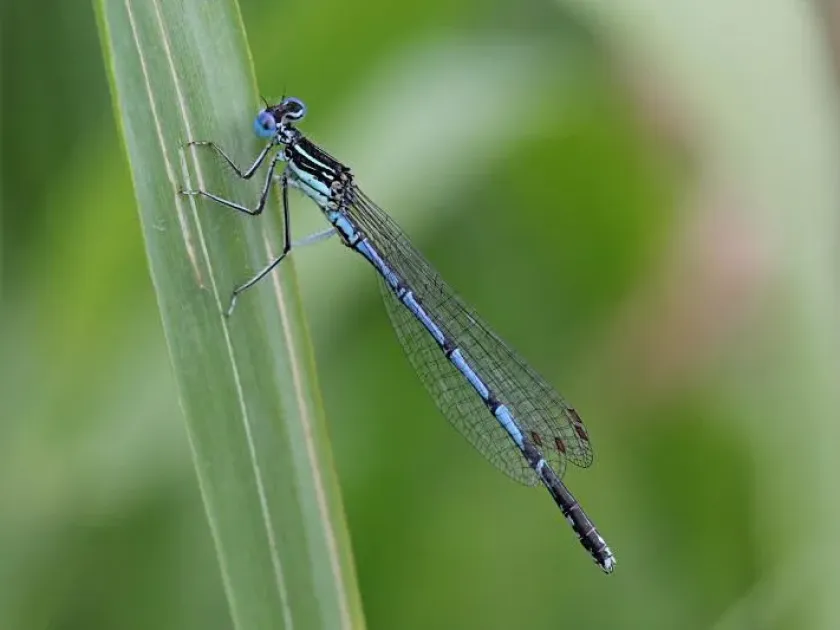
Damselflies belong to the order Odonata and the family Coenagrionidae. They are characterized by a very slender and delicate body structure, which makes them appear as thin lines during flight.
Adults usually measure around 30–35 mm in length. Males often exhibit vibrant blue or cyan markings against a black body, while females generally display more muted, greenish or brownish tones.
Their wings are transparent and narrowed at the base, and in resting position, most species keep their wings folded along their abdomen, differentiating them from dragonflies.
The larvae, known as naiads, are aquatic. They possess elongated bodies with three prominent tail gills, which are essential for respiration throughout their underwater development.
Damselflies are active predators in both their aquatic larval stage and their adult flying stage, serving as essential biological controllers within their habitats.
What it damages
It is vital for agronomists to note that damselflies (Agrion) are not considered plant pests. They do not consume or damage any part of agricultural crops, including leaves or roots.
Instead, these insects act as natural predators, feeding on smaller flying insects like aphids, midges, and other flies that can potentially harm agricultural produce.
Their larvae residing in ponds also contribute to ecological balance by feeding on various small aquatic invertebrates, which supports the health of local water bodies.
The presence of damselflies near farmland is a positive indicator of a healthy, biodiverse environment and natural suppression of pest populations.
Since they do not inflict any damage on crops, there is no economic impact or requirement for population reduction for this species.
When it appears
The adult flight season typically occurs during the warmer months, ranging from late May to early September depending on the geographical region and climate.
Larval development takes place in standing or slow-moving water throughout the year, involving multiple molting stages before the final metamorphosis into an adult.
Activity peaks during sunny days when the insects are hunting for food or searching for mates to oviposit into aquatic plant tissues.
As autumn approaches, populations naturally decline, and only the next generation of larvae survives the winter at the bottom of ponds and marshes.
Their life cycle is highly dependent on ambient temperature, ensuring that the emergence of adults coincides with peak prey availability.
Signs of infestation
The most obvious sign of their presence is the visual observation of delicate, colorful insects flying gracefully near water sources or field margins.
The presence of eggs embedded in the stems of aquatic vegetation serves as a biological marker of their life cycle, which poses no threat to farming operations.
The total absence of physical damage symptoms on crops, such as holes or necrotic spots, confirms their neutral or beneficial status to the farmer.
They do not produce frass, webbing, or any other signs typically associated with damaging infestations, making them easy to distinguish from real threats.
Their continued presence signifies an environment free from heavy toxic pollution, indicating that the local ecosystem remains resilient.
Control measures
No pest control measures are required for damselflies, as they are essential beneficial insects rather than agricultural enemies.
The use of broad-spectrum insecticides on crops should be carefully managed, as these chemicals can harm beneficial predators like damselflies and disrupt the natural pest control balance.
Maintaining clean water sources and diverse surrounding vegetation is the best way to support these allies in the integrated pest management program.
- Avoid excessive pesticide use near water bodies.
- Preserve riparian zones and wetlands near agricultural land.
- Promote biological diversity to enhance natural predatory control.
The most effective strategy is to protect their habitat, allowing them to continue their natural work of reducing pest insect populations on your farm.
Discussion
No discussions yet — be the first.