
Agonoscelis furcatus
Agonoscelis furcatus
Description
How to identify
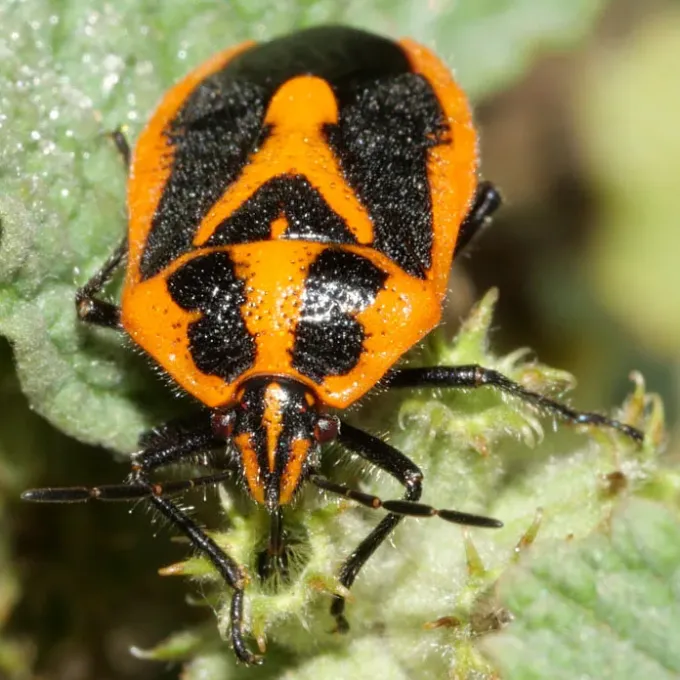
The Agonoscelis furcatus, commonly known as a type of shield bug, belongs to the Pentatomidae family within the order Hemiptera. It is recognized by its characteristic shield-shaped body and a specific fork-like projection on the pronotum.
Adult insects typically measure 10–12 mm in length. Their coloration ranges from yellowish-brown to reddish-brown, often featuring a mottled or spotted pattern that provides excellent camouflage against dry vegetation and plant debris.
The nymphal stages of the bug undergo five molts. These nymphs resemble smaller, wingless versions of the adults. As they progress through these stages, they become increasingly mobile and ravenous in their feeding habits.
The life cycle involves overwintering as adults in protected environments such as leaf litter, soil crevices, or plant refuse. Once temperatures rise in the spring, they emerge to feed on wild hosts before migrating to cultivated fields.
Females deposit eggs in distinct clusters on the undersides of leaves. Identifying these clusters early in the season is a crucial step in preventing an outbreak, as the nymphs tend to stay together shortly after hatching.
What it damages
As a generalist pest, Agonoscelis furcatus targets a wide variety of crops, including cereals, legumes, and various vegetable plants. They cause the most severe economic damage during the flowering and fruit-setting phases.
Using their piercing-sucking mouthparts, these bugs extract nutrients from stems, leaves, and developing seeds. During feeding, they inject saliva containing enzymes that cause tissue death and localized necrosis.
In cereal crops, damage to the grain leads to shriveled kernels and reduced test weight. This results in poor quality harvests that are less valuable for milling, baking, or seed production due to lost germination viability.
For vegetable crops, the bug causes visible deformities in fruits and pods, often leading to premature abscission. These aesthetic and physical damages render the produce unmarketable in commercial agricultural settings.
Furthermore, these insects act as vectors for various plant pathogens. The combination of direct sap extraction and the introduction of viral or fungal agents significantly accelerates the decline of infested crop stands.
Signs of infestation
The primary sign of an infestation is the visual observation of adults or nymphs in the morning or evening hours. They are typically found aggregating on flower heads, ears of corn, or the undersides of foliage.
Damage symptoms manifest as chlorotic spots, which eventually turn brown or necrotic. On younger, more succulent plants, severe feeding can result in stunted growth and the twisting of leaves or stems.
The discovery of egg masses on leaf undersides serves as a critical warning for immediate intervention. Regularly inspecting fields allows farmers to monitor population growth before the insects transition to the fruit stage.
An offensive, pungent odor is a secondary indicator of their presence. When threatened or disturbed, these bugs release a chemical compound from their scent glands, which is often detectable even when the insects are hidden.
In fields with high population densities, cereal crops may exhibit partial sterility or "whiteheads," where the ear fails to fill properly due to disrupted vascular transport caused by the bugs' feeding activity.
Control measures
Integrated Pest Management (IPM) is the most effective approach to handling Agonoscelis furcatus. This includes cultural, biological, and, when necessary, chemical measures to reduce population levels.
Cultural practices such as removing wild host weeds from field perimeters are essential. By eliminating these early-season breeding grounds, farmers can significantly reduce the pressure on their main crops.
When populations exceed the economic threshold, targeted insecticide applications are used. It is vital to choose products that are effective against shield bugs while minimizing impact on beneficial predatory insects.
- Deep autumn plowing to disturb overwintering sites.
- Rotation of crops to disrupt the pest cycle.
- Monitoring with pheromone traps.
- Application of pyrethroid or neonicotinoid insecticides.
Biological control, leveraging natural predators and parasitoids, plays a significant role in maintaining lower insect populations. Limiting broad-spectrum insecticide use helps preserve these natural allies within the ecosystem.
Discussion
No discussions yet — be the first.