
Agevillea
Agevillea
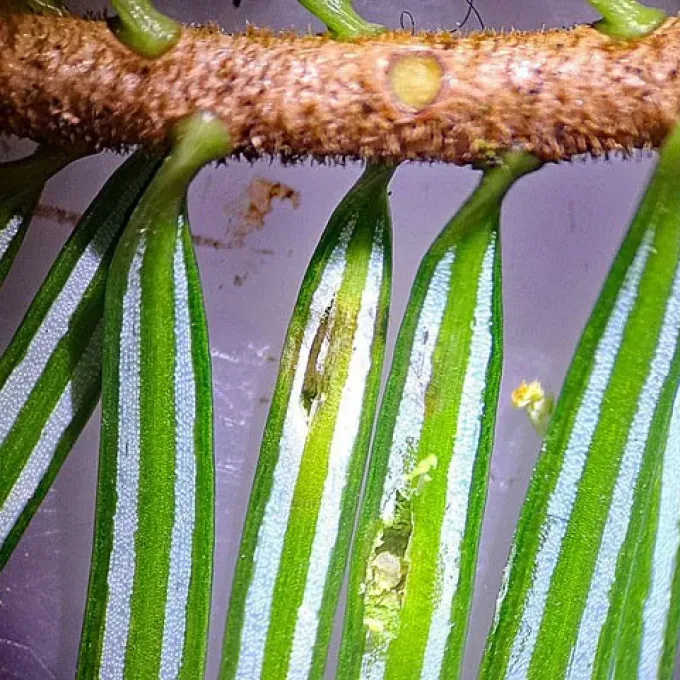
Description
How to identify
Agevillea is a genus of gall midges (Cecidomyiidae), whose members are often highly specialized phytophages. These are small insects characterized by a fragile build, long legs, and specific wing venation.
Species of this genus often exhibit a high degree of mimicry, making them difficult to detect without the use of entomological traps or a stereomicroscope. Identification at the genus level requires analysis of the male genital apparatus morphology and larval characteristics.
The larvae of Agevillea are typically spindle-shaped and bear characteristic locomotor outgrowths common to many gall midges. Their coloration varies from milky white to orange, depending on the stage of development and the type of host plant tissue.
Adults are cryptic, being active mainly during twilight hours. The imago stage does not cause direct damage to plants, as its life cycle focuses on oviposition within the tissues of young shoots or flower buds.
A key role in the life cycle is played by the insect's ability to induce the formation of pathological outgrowths (galls), inside which the larva develops, protected from external factors and most predators.
What it damages
The primary hosts for Agevillea are woody and shrub species, particularly conifers and some broadleaf plants. The pest specializes in damaging the meristematic tissues of young shoots.
Larvae developing within plant tissues disrupt normal growth processes. This leads to the formation of local swellings, shoot deformation, and premature bud drop.
Under high population density, the pest can cause mass drying of apical shoots. This is particularly critical for young seedlings in nurseries, where the loss of the leader shoot leads to a defective crown structure.
In addition to direct mechanical damage, the activity of larvae often facilitates the entry of secondary infections — fungal and bacterial pathogens that develop in weakened areas.
Economic damage is determined by a decrease in the aesthetic value of plantings and the loss of annual wood growth, which is considered a significant loss in forestry and landscape design.
When it appears
The life cycle of Agevillea is strictly synchronized with the phenology of the host plant. The onset of imago activity usually coincides with the period of bud burst in spring.
Oviposition occurs during the period of intense sap flow. First-generation larvae appear in mid-spring, and their active feeding phase coincides with the period of intense shoot growth.
Depending on the regional temperature regime, one or two generations may develop throughout the season. The second generation is usually associated with the formation of late-summer shoots.
The pest overwinters in the larval or pupal stage, usually within galls on shoots or in the leaf litter under the infested tree, ensuring high survival rates during cold temperatures.
Pupation begins with the arrival of consistently warm temperatures, followed by the emergence of adults for mating and the start of a new life cycle.
Signs of infestation
The first sign of Agevillea presence is the appearance of atypical swellings (galls) on young shoots or the bases of needles, which differ in color from healthy tissue.
Upon closer inspection of the apical parts of the shoots, one can observe curvature of the growth axis and slowed bud development. Branches in affected areas often become brittle.
- Presence of exit holes in shoot tissues where adult insects (imago) have emerged.
- Local yellowing and drying of needles or leaves on damaged shoots.
- Deformation of young growth, which takes on unnatural shapes.
Severe infestation is accompanied by mass needle drop, which may create the illusion of fungal needle cast, but specific cavities within the tissues are visible upon closer inspection.
The presence of a large number of small orange or reddish larvae inside the tissue when cutting an affected area confirms the active phase of Agevillea infestation.
Control measures
Control of Agevillea is difficult due to the cryptic lifestyle of the larvae, so the emphasis is on preventive measures and monitoring during the imago emergence period.
Timely sanitary pruning and destruction of infested shoots before the emergence of adult insects can significantly reduce the pest population in a garden or nursery.
The use of systemic insecticides is only effective at the moment of larval hatching, before they manage to hide inside the galls and form protective barriers.
The use of pheromone traps for early detection of the start of flight allows for precise calculation of application times, minimizing environmental impact on beneficial entomofauna.
Biological control methods include attracting natural enemies of gall midges, such as hymenopteran parasitoids, which can significantly suppress pest reproduction.
Discussion
No discussions yet — be the first.