
Ageniaspis avetianae
Ageniaspis avetianae
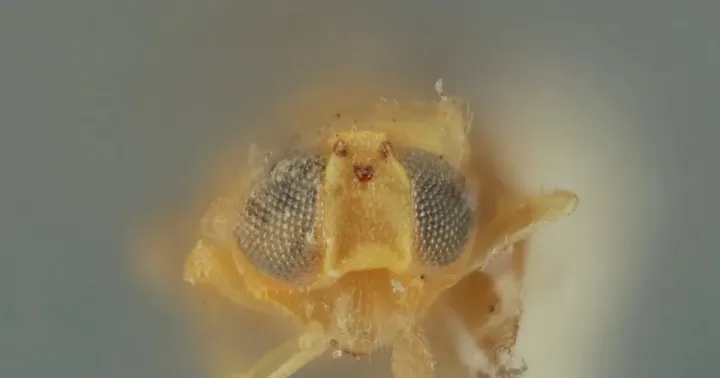
Description
How to identify
Ageniaspis avetianae is a minute parasitic wasp belonging to the family Encyrtidae (order Hymenoptera). It is a highly specialized natural enemy of specific moth species found in fruit orchards.
The insect exhibits the phenomenon of polyembryony, where a single egg produces multiple larvae, allowing for a high reproductive rate and significant impact on the host population.
Adult specimens are microscopic with a metallic sheen, typical of encyrtid wasps. Their presence is usually detected through their effects on host larvae rather than direct observation of the adults.
As a specialized parasitoid, it has evolved complex mechanisms to locate host eggs or young larvae within the dense foliage of fruit trees, ensuring the survival of the next generation.
This species is considered a vital component of integrated pest management (IPM) programs, providing essential biological control services that reduce the need for synthetic pesticides.
What it damages
Ageniaspis avetianae does not cause any damage to crops. It is strictly a parasitoid that targets the larvae of pests such as the apple moth (Yponomeuta malinellus).
By developing inside the host, it kills the pest before it can consume significant amounts of plant leaf material, effectively preventing the damage that the moth larvae would otherwise cause.
The biological action of this wasp is entirely beneficial to the grower. It serves as a natural regulator that maintains the balance of the orchard ecosystem.
Misidentifying this beneficial insect as a pest or using broad-spectrum insecticides can remove this natural control agent, leading to an uncontrolled outbreak of fruit moths.
Therefore, its role is strictly protective, and its economic value lies in reducing crop loss and lowering the overall chemical footprint of orchard maintenance.
When it appears
The activity cycle of Ageniaspis avetianae is strictly synchronized with the life cycle of its host moth, beginning in spring when the moth starts laying eggs on tree branches.
Adult wasps emerge in spring and summer to locate and parasitize host eggs. The development of the wasp larvae proceeds within the host throughout the feeding period of the moth larvae.
The species overwinters inside the mummified remains of the host larvae, which are typically found attached to the twigs or within remaining leaf structures in the orchard.
Seasonal weather conditions, such as temperature and humidity, play a crucial role in the timing of the wasp’s emergence and its synchronization with the pest's susceptible stages.
Successful management relies on understanding this seasonal synchrony to avoid applying disruptive agricultural chemicals during the wasps' most active periods.
Signs of infestation
The primary sign of Ageniaspis avetianae presence is the observation of mummified, malformed, or abnormally dark and swollen moth larvae within the characteristic web nests.
When moth larvae fail to develop into pupae and instead appear stunted or dead within the nest, it is a strong indication that the parasitoid population is active.
Small, neat emergence holes found on the bodies of dead moth larvae indicate that the adult wasps have successfully completed their life cycle and emerged from the host.
A noticeable decrease in the number of healthy moth larvae in an orchard despite the presence of web nests is a key performance indicator of this biological control agent.
Field scouts often sample these web nests to calculate the parasitism rate, which determines whether the natural control is sufficient or if intervention is truly necessary.
Control measures
Control of Ageniaspis avetianae involves conservation rather than eradication. The main goal is to create an environment where this beneficial insect can thrive and effectively regulate pest populations.
Growers are encouraged to minimize the use of non-selective, highly toxic insecticides, especially during the peak emergence times of adult parasitoids.
Incorporating flowering plants or cover crops in and around the orchard can provide essential nectar sources for adult wasps, thereby increasing their longevity and reproductive success.
Adopting an integrated pest management (IPM) approach ensures that chemical treatments are only used when absolutely necessary and are selected for their compatibility with beneficial insects.
- Limit the use of broad-spectrum pesticides.
- Monitor parasitism levels before deciding on chemical interventions.
- Enhance biodiversity with flowering plants to support beneficial insects.
- Avoid calendar-based spraying schedules.
Taxonomy
- Latin name
- Ageniaspis avetianae
- Order
- Hymenoptera
- Family
- Encyrtidae
- EPPO code
- AGENAV
Discussion
No discussions yet — be the first.