
Korean bush mosquito
Aedes koreicus
Description
How to identify
Aedes koreicus is an invasive mosquito species originally native to East Asia, now spreading across Europe. It belongs to the Culicidae family and is known for its high adaptability to temperate climates.
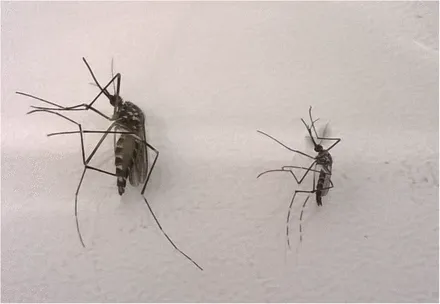
The insect is characterized by a dark body with white bands on the legs and abdominal segments. A distinct feature is a set of five pale rings on the hind legs and a silver stripe on the thorax.
This species is highly resilient, capable of surviving harsh winters in the egg stage. This physiological trait allows it to colonize regions previously considered unsuitable for other mosquito species.
The Korean bush mosquito is typically associated with human-altered environments. It frequently breeds in small containers, garden objects, and drainage systems near residential or agricultural areas.
Identification often requires careful inspection or DNA analysis, as it shares morphological similarities with other invasive mosquitoes like the Asian tiger mosquito.
What it damages
While Aedes koreicus is not a direct plant pest, its presence negatively impacts agricultural labor efficiency and site management.
Because these mosquitoes are active during the day, they significantly interfere with outdoor fieldwork, horticultural tasks, and maintenance in greenhouses.
Large populations create an inhospitable work environment, which can lead to delays in seasonal agricultural cycles and reduced productivity for field crews.
As a potential vector for various pathogens, this species poses a secondary risk to the general health and safety of staff operating in the affected areas.
Management costs increase due to the necessity of implementing vector control measures to maintain a safe working environment near irrigation reservoirs and farm buildings.
When it appears
The activity of Aedes koreicus typically begins in early spring, as soon as temperatures remain consistently above freezing, and extends well into the autumn.
Peak population densities occur during the summer months, particularly when intermittent rainfall creates numerous temporary water sources for breeding.
The lifecycle is relatively short, allowing for multiple overlapping generations in a single season, which enables the species to spread rapidly across new territories.
Autumn triggers the production of diapausing eggs, which are engineered to endure sub-zero temperatures, ensuring the population's survival throughout the winter.
Unseasonably warm or wet autumns can prolong the activity period, increasing the risk of bites and potential pathogen exposure for agricultural workers.
Signs of infestation
A primary indicator of a Aedes koreicus infestation is high mosquito activity during daylight hours, which differs from the nocturnal behavior of many native species.
The presence of larvae in standing water, such as open barrels, discarded containers, or clogged gutters, confirms that the species is breeding on-site.
Reported bite incidents, characterized by intense itching and localized swelling, are common complaints in areas where this species has become established.
Observing aggressive behavior, where mosquitoes fly toward humans persistently during the day, serves as a strong signal of their presence.
Discovering adults with distinct striped legs near human dwellings or storage facilities is a definitive sign of an established breeding population.
Control measures
The most effective strategy is the removal or modification of standing water sources, such as containers, tires, and blocked drainage, to disrupt the breeding cycle.
Covering water storage tanks with fine mesh netting is a crucial preventative measure to deny female mosquitoes access to egg-laying sites.
Workers should be equipped with appropriate personal protective equipment and approved repellents to minimize exposure during field activities.
In cases of severe infestation, the use of biological larvicides (such as Bacillus thuringiensis israelensis) in water sources provides targeted control without environmental harm.
Regular maintenance of irrigation systems and site hygiene are essential to long-term control, preventing the colonization of the property by this invasive pest.
Taxonomy
- Latin name
- Aedes koreicus
- Order
- Diptera (flies)
- Family
- Culicidae
- EPPO code
- AEDSKO
Discussion
No discussions yet — be the first.