
Adris
Adris
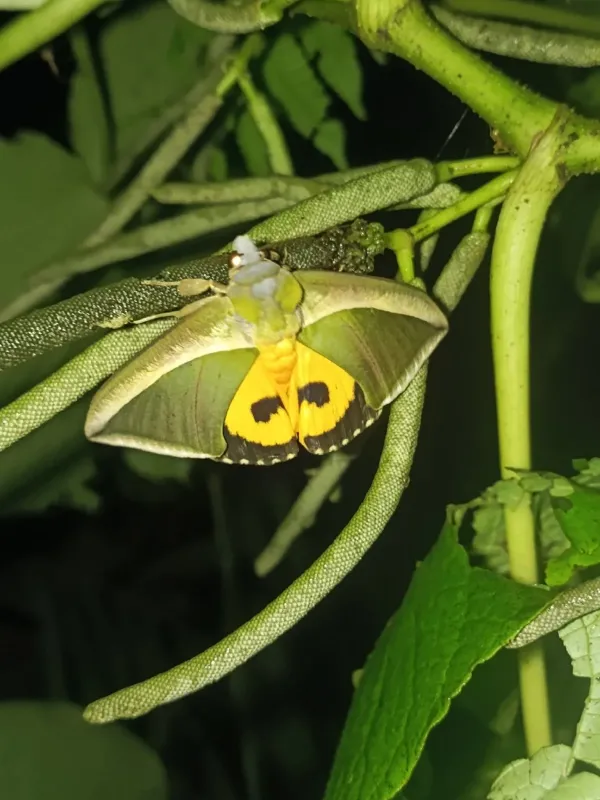
Description
How to identify
Adris is a genus of moths belonging to the family Erebidae and the subfamily Calpinae. These insects are often categorized as fruit-piercing moths due to their specialized feeding behavior. Adult moths typically possess cryptic coloration, allowing them to blend into tree bark during the day.
The morphology of the adults includes a heavily sclerotized proboscis, evolved to pierce the tough skin of various fruits to reach the juices within. The wingspan is substantial, and the moths are capable of migratory flights to locate suitable food sources.
Systematically, they are closely related to other "vampire" moths. They have evolved to feed on plant exudates and fruit juices, making them significant pests in orchards where fruit ripening occurs.
Adults are strictly nocturnal. During the day, they remain stationary on trunks or dense foliage, making them difficult to detect during regular daylight inspections of the field or orchard.
Oviposition typically occurs on the underside of host plant leaves. This placement protects the eggs from desiccation and predation during the critical early stages of larval development.
What it damages
Adris poses a serious threat to a wide range of fruit and berry crops, including apples, pears, peaches, and citrus. The damage is primarily inflicted during the fruit ripening stage, leading to significant economic losses.
The primary damage is caused by the adults, which use their proboscis to pierce the skin of the fruit to feed on the juice. This action not only ruins the aesthetic appeal of the product but also renders it unsuitable for long-term storage.
The puncture wounds created by the moths serve as entry points for secondary infections, such as fruit rot (Monilinia) or various fungal molds. Consequently, a single moth bite can lead to the decay of the entire fruit.
In regions with high population densities, these pests can destroy up to 30-40% of the harvest. The damage is further exacerbated by premature fruit drop caused by the weakening of the plant tissue.
Beyond fruit production, larvae may also feed on the foliage of certain ornamental plants, making the genus a concern for both agricultural and urban green space management.
When it appears
The lifecycle of Adris is highly dependent on regional climatic conditions. Typically, the species completes one or two generations per year, with the flight of the adults coinciding with the maturation of early and mid-season fruit varieties.
Overwintering usually occurs in the pupal stage within the soil or as adults in protected refugia. As spring temperatures rise, the insects emerge and begin their reproductive cycle.
Peak infestation usually occurs in late summer and early autumn. During this time, adults feed intensively to build up energy reserves for winter, necessitating vigilant monitoring by farmers.
Environmental factors, such as night temperature and humidity, significantly influence moth activity. Warm, humid nights generally correlate with increased feeding activity and population spread.
Monitoring should begin in mid-summer using light traps or pheromone lures to detect the onset of adult emergence and calculate the optimal timing for intervention.
Signs of infestation
The first indicator of infestation is the appearance of small, pinpoint punctures on the surface of ripening fruits. These spots eventually develop into dark, soft, or rotting areas.
- Molds or secondary fungal growth around puncture sites.
- Unexplained premature fruit drop beneath the trees.
- Sighting of moths attracted to artificial light sources at night.
- Visible larval feeding damage on leaves and young shoots.
- Fermentation odors emitting from damaged fruit on the tree.
Nighttime orchard patrols with a torch are an effective way to confirm the presence of Adris, as the moths are highly active and can be seen feeding on the fruit surface.
Control measures
Effective management of Adris requires an integrated pest management (IPM) approach. A critical sanitation measure is the prompt removal and destruction of fallen fruit, which provides both food and breeding grounds for the pests.
Chemical control is most effective when targeted at adults during peak flight periods. Applications should be performed in the late evening, coinciding with the moths' peak feeding activity.
Light traps can significantly reduce adult populations in smaller areas. When combined with monitoring tools, they help determine the precise thresholds for chemical intervention.
Cultural practices, such as deep autumn tillage, help destroy overwintering pupae in the soil, effectively disrupting the lifecycle and reducing the following season's population.
For small-scale growers, physical barriers such as fruit netting provide the most reliable protection, preventing moths from reaching the fruit entirely and eliminating the need for pesticide application.
Discussion
No discussions yet — be the first.