
Rose-briar aphid
Acyrthosiphon porosum
Description
How to identify
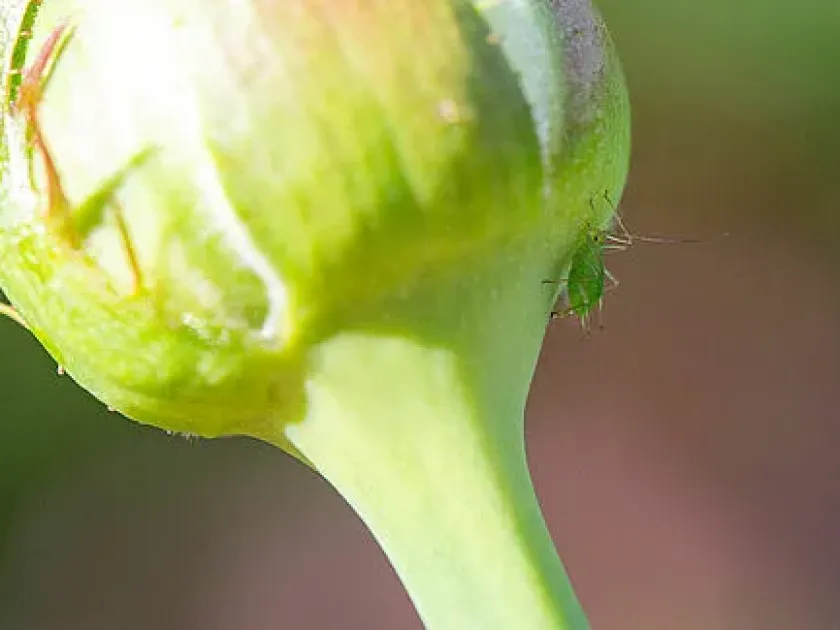
The Rose-briar aphid (Acyrthosiphon porosum) is a small sap-sucking insect belonging to the order Hemiptera and the family Aphididae.
These insects are typically light green or yellowish-green, which allows them to blend in perfectly with the foliage of their host plants.
Adults measure approximately 2–3 mm in length and may exist as either wingless (apterous) or winged (alate) forms during the growing season.
A key diagnostic feature of this species is the reticulated pattern of pores on the body surface, distinguishing it from other rose-infesting aphids.
Their life cycle involves rapid asexual reproduction during the spring and summer, leading to large, dense colonies on the undersides of leaves.
What it damages
This species primarily feeds on plants within the Rosaceae family, specifically targeting wild roses, briars, and various ornamental rose cultivars.
The aphids congregate on tender young tissues, including shoot tips and developing flower buds, where nutrients are highly concentrated.
By extracting plant sap, the aphids rob the host of essential nutrients, disrupting its physiological and developmental processes.
Infested plants often show signs of stunted growth, leaf distortion, and poor flower quality, which ruins the plant's aesthetic value.
Heavy infestations can lead to significant stress, making the rose bushes more susceptible to secondary infections and environmental stressors.
When it appears
The life cycle begins in spring when eggs, which have overwintered on the stems, hatch in response to warming temperatures and bud burst.
Population growth accelerates throughout late spring and early summer as the host plant produces abundant new succulent growth.
Winged forms develop when colonies become overcrowded or when food quality declines, allowing the species to disperse to new rose bushes.
As autumn approaches, the aphid produces sexual forms that mate and lay overwintering eggs on the bark of rose stems.
The developmental rate is heavily influenced by ambient temperature, with peak activity observed during mild, warm weather conditions.
Signs of infestation
The most noticeable sign is the presence of tightly clustered aphids on the underside of young leaves and around the bases of flower buds.
Leaf curling and yellowing are classic symptoms resulting from the aphid's saliva, which is injected during the feeding process.
The excretion of honeydew creates a sticky film on the leaves, which often leads to the growth of unsightly black sooty mold.
Ant activity is frequently observed, as ants are attracted to the sugary honeydew and often protect aphid colonies from predators.
- Curled and distorted young leaves.
- Sticky honeydew residue on foliage.
- Stunted or blackened flower buds.
- Increased presence of foraging ants.
Control measures
Chemical control involving systemic insecticides is effective for managing large populations when non-chemical methods are insufficient.
Biological control utilizing natural predators like ladybirds, lacewings, and hoverfly larvae is highly recommended for organic management.
Mechanical removal through pruning infested shoots or using a strong water spray can effectively reduce aphid numbers in smaller gardens.
Proper plant nutrition is vital; avoid excessive nitrogen fertilizer applications, which create the succulent growth that aphids prefer.
Preventive sprays, such as insecticidal soaps or horticultural oils, can be used early in the season to disrupt the colonization process.
Discussion
No discussions yet — be the first.