
Actebia fennica
Actebia fennica
Description
How to identify
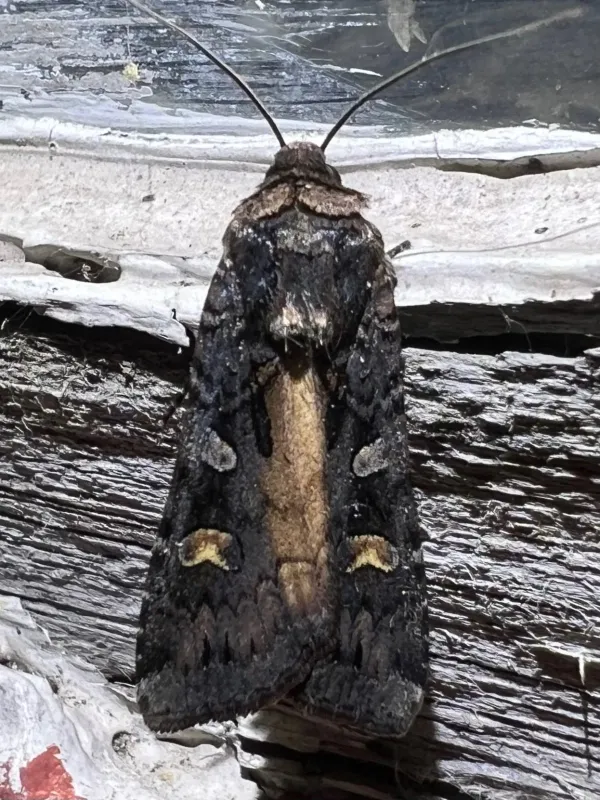
Actebia fennica, known commonly as the black army cutworm, is a moth species of the family Noctuidae. The adult moth has a wingspan ranging from 35 to 45 mm.
The forewings are dark-colored, typically shades of grey or brown to almost black, which provide excellent camouflage against soil or plant debris.
The larvae are highly active caterpillars that move across fields in large numbers, often described as an army, which is a major concern for field crops.
The skin of the caterpillar is covered in fine setae, and their color can shift from greyish-brown to deep black, aiding their concealment in the field.
The developmental cycle consists of the egg, larval (caterpillar), pupal, and adult (imago) stages, with the caterpillar stage causing the most severe economic damage.
What it damages
This pest is a generalist feeder that impacts a wide range of plants, including many staple cereal crops such as wheat, barley, and oats.
The most devastating impacts occur during the early stages of crop development, where larvae feed on emerging seedlings, often cutting the stem at the base.
Vegetable crops, including potatoes and cabbages, are also highly susceptible to the feeding patterns of this moth, leading to significant yield losses.
In cases of high infestation, entire fields can be defoliated, resulting in bare patches that require immediate replanting or chemical intervention.
The larvae feed voraciously, often consuming not only the leaves but also the growing points of the plants, which permanently prevents further crop development.
When it appears
Adult moths typically emerge during the summer months, with activity concentrated in the latter half of the season when conditions favor mating and egg-laying.
The insect typically overwinters in the larval stage, burrowing deep into the soil or hiding under protective plant residue to survive the cold winter months.
In early spring, when the soil warms up, the overwintered larvae resume feeding, targeting the young and tender tissues of emerging spring crops.
The duration of the larval feeding period can extend up to six weeks, depending on local temperatures, moisture levels, and the availability of food sources.
Pupation occurs within the soil profile, marking the transition from the larval stage back to the adult moth, thereby completing the seasonal lifecycle.
Signs of infestation
Initial signs of infestation often appear as stunted growth or localized bare patches where the plants have been completely consumed or cut down.
Digging around the base of damaged plants usually reveals the larvae, which are nocturnal but may be found coiled in the soil during the daytime.
Ragged edges on leaves or completely severed plant stems at the soil line are hallmark indicators of cutworm activity within a field.
The presence of larval frass (droppings) near the base of the plant indicates an active feeding site and a need for immediate scout-based investigation.
Nocturnal observations often show the caterpillars actively moving over the soil surface, especially after a period of rainfall or heavy dew.
Control measures
Implementing a robust crop rotation plan is essential to disrupt the lifecycle of the moth and prevent the buildup of pest populations in a specific area.
Deep fall tillage is a proven mechanical control measure that disturbs the soil and exposes the overwintering larvae to predators and cold temperatures.
Chemical control using systemic or contact insecticides should be applied when populations exceed economic thresholds, ideally during the evening hours.
- Using pheromone or light traps to monitor adult moth activity and predict potential outbreaks.
- Effective weed control to remove alternate host plants that support larval survival.
- Application of biological insecticides containing entomopathogenic fungi as an environmentally friendly alternative.
Enhancing crop vigor through proper fertilization can help plants withstand minor damage, though high infestations require aggressive management techniques.
Taxonomy
- Latin name
- Actebia fennica
- Order
- Lepidoptera (butterflies)
- Family
- Noctuidae
- EPPO code
- ACTEFE
Discussion
No discussions yet — be the first.