
Miller moth (Acronicta tridens)
Acronicta tridens
Description
How to identify
The Dark Dagger (Acronicta tridens) belongs to the Noctuidae family of moths. The adult moth has a wingspan of 35-45 mm, with greyish-brown forewings featuring dark, dagger-like markings that give the species its common name. These markings are essential for camouflage when the moth is resting on tree bark.
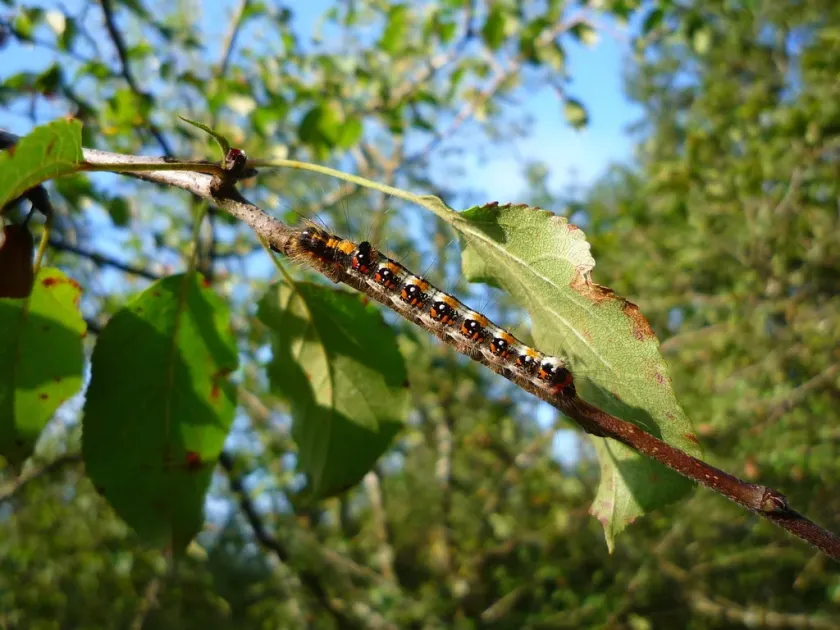
The caterpillar is highly distinctive, characterized by tufts of hair and a prominent, often bright yellow or reddish hump on its back. This coloration acts as a warning to potential predators, signaling that the larvae may be unpalatable or mildly toxic.
The pupal stage occurs inside a tough, silk-lined cocoon, often reinforced with wood shavings or bark fragments. These cocoons are typically hidden in crevices of tree trunks or under plant debris, where the insect overwinters.
Depending on the climatic conditions, the moth completes one or two generations annually. Adult flight typically begins in late spring, continuing through early summer as temperatures consistently remain above the necessary threshold.
Identification can sometimes be difficult as it closely resembles the Grey Dagger (Acronicta psi). Experts usually rely on the detailed examination of larval markings and adult genitalia to distinguish between these closely related species.
What it damages
This species is a polyphagous pest, meaning it feeds on a wide range of host plants. Fruit trees in the Rosaceae family, such as apple, pear, cherry, and plum, are among the most frequently attacked and suffer the most economic damage.
In addition to orchard crops, the larvae are known to feed on various shrubs and deciduous trees, including hawthorn, blackthorn, willow, and birch. This flexibility in diet allows the pest to maintain high population levels in diverse environments.
Damage is caused exclusively by the larval stage. Early instars perform skeletonizing of the leaves, while later instars consume the entire leaf lamina, leaving only the tougher veins and midribs behind, which severely impairs the plant's photosynthetic ability.
Severe infestations can lead to significant defoliation, which stresses the tree, reduces its vigor, and negatively impacts fruit production for the current and following seasons. Young saplings in nurseries are particularly vulnerable to complete loss of foliage.
Weakened trees become susceptible to secondary infections and opportunistic pests, leading to a long-term decline in orchard productivity. Consistent monitoring is necessary to prevent these outbreaks from escalating.
Signs of infestation
The first signs of infestation include irregular holes in the foliage during the growing season. As the larvae grow, the damage becomes more pronounced, often resulting in ragged leaf margins or completely stripped branches.
Direct visual observation of the larvae is the most reliable method for identification. Due to their distinct appearance, they are often visible on the underside of leaves or along branches during early morning or evening hours.
Accumulation of frass (caterpillar droppings) on lower leaves or around the base of the tree is a clear indicator of pest activity. In some cases, light webbing might be present where the larvae have been feeding or resting.
Control measures
Cultural control measures, such as the removal and destruction of leaf litter in the autumn, are vital. This practice destroys pupae that would otherwise successfully overwinter and produce a new generation in the spring.
Hand-picking larvae is an effective management tactic for small-scale plantings or home gardens. Regular pruning and maintaining tree health help ensure that the plant can withstand minor feeding damage without suffering long-term structural harm.
Biological control, including the use of B. thuringiensis (Bt) sprays, is highly recommended for organic management. Encouraging natural predators, such as insectivorous birds and predatory wasps, provides sustainable, long-term regulation of the population.
Chemical intervention should be reserved for instances where the economic threshold is exceeded. Use authorized systemic or contact insecticides, ensuring applications are timed to target the younger, more vulnerable larval instars.
- Monitoring flight patterns with pheromone traps.
- Applying insecticides only during peak larval activity.
- Promoting biodiversity to support natural predator populations.
Taxonomy
- Latin name
- Acronicta tridens
- Order
- Lepidoptera (butterflies)
- Family
- Noctuidae
- EPPO code
- ACRNTR
Discussion
No discussions yet — be the first.