
Acronicta superans
Acronicta superans
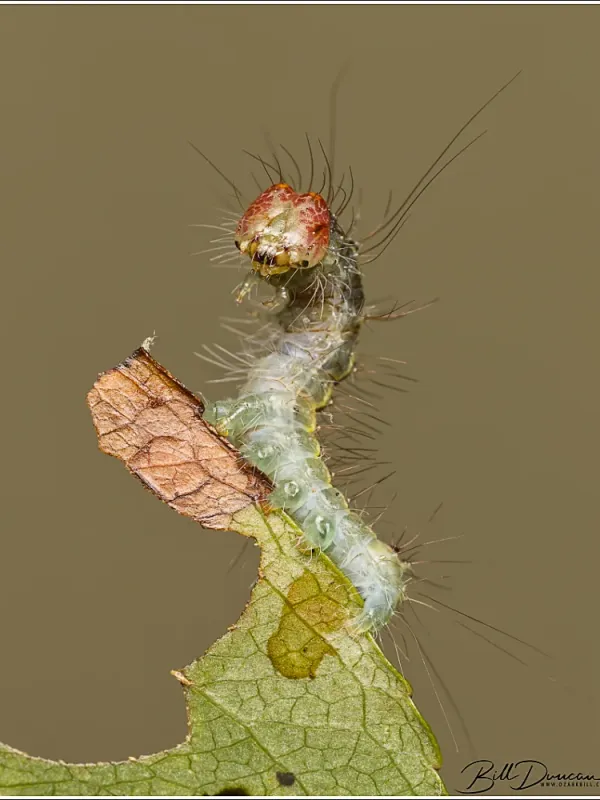
Description
How to identify
Acronicta superans, commonly known as the delightful dagger moth, is a member of the Noctuidae family. The adult moth features a wingspan of approximately 40–45 mm, with greyish-brown forewings adorned with distinct black, arrow-like markings.
The larvae, or caterpillars, reach lengths of up to 50 mm. They are characterized by a hairy appearance, with a dark body contrasted by vibrant yellow or orange longitudinal stripes, a visual warning of their defense mechanisms.
This species undergoes a complete metamorphosis, including egg, larva, pupa, and adult stages. They typically overwinter as pupae within robust cocoons hidden in tree bark crevices or among leaf litter at the base of the tree.
Adult moths are primarily nocturnal, emerging in early to mid-summer. During daylight hours, they remain motionless on tree trunks, where their camouflage blends seamlessly with the texture and color of the bark.
The biological development of this species is sensitive to temperature fluctuations. A long, warm summer can occasionally facilitate a partial second generation, increasing the potential pressure on host plants.
What it damages
The larvae of Acronicta superans are oligophagous, showing a strong preference for trees in the Rosaceae family. They are frequently found causing damage to apple, pear, plum, cherry, and apricot trees in orchards.
As primary defoliators, the larvae consume large amounts of leaf tissue. During peak feeding periods, they can skeletonize leaves, leaving only the primary veins intact, which significantly reduces the tree's photosynthetic capacity.
Heavy infestations lead to stunted tree growth and weakened resistance to environmental stressors. For young orchards or nursery stock, such defoliation can compromise the structural development of the trees.
Beyond leaf consumption, high populations may damage young fruit and tender shoots. This can result in aesthetic defects to the produce and a overall reduction in the harvest volume and quality.
In mature orchards, severe damage to the canopy can negatively impact the formation of fruit buds for the following season, creating long-term economic losses if left unchecked.
Signs of infestation
Early identification is often based on the presence of unevenly consumed leaf edges and skeletonized foliage. Larvae are often found on the underside of leaves or resting along the twigs.
Droppings, known as frass, appearing as dark pellets beneath the canopy are a classic indicator of caterpillar activity. If spotted, a closer inspection of the canopy is recommended to determine the severity.
During the dormant season, inspect the trunk bark for small, silken cocoons. These are often integrated with wood chips or bark scales, serving as the overwintering chambers for the pupae.
A noticeable increase in bird activity within the orchard can sometimes signal an active pest population, as birds may target the caterpillars as a food source.
- Irregular holes in leaves or entire leaf blades consumed.
- Hairy caterpillars visible on foliage during mid-summer.
- Dark, bark-camouflaged cocoons found on tree trunks.
Control measures
Cultural control involves maintaining orchard hygiene, including the removal and destruction of debris where pupae may overwinter. Scraping loose bark from older trees during the dormant season can also eliminate hiding spots.
Biological control using microbial insecticides based on Bacillus thuringiensis is highly effective. These products specifically target young larvae while leaving beneficial insects unharmed.
Chemical intervention should be reserved for periods when monitoring indicates the population has crossed the economic injury threshold. Selective insecticides with low residual impact on pollinators are preferred.
Pheromone monitoring traps are an essential tool for orchardists. They help track the flight period of adults, ensuring that any protective measures are timed precisely to the most vulnerable stage of the pest.
Encouraging the presence of natural predators, such as predatory wasps and beetles, plays a vital role in maintaining the balance of the orchard ecosystem and preventing mass outbreaks of the moth.
Taxonomy
- Latin name
- Acronicta superans
- Order
- Lepidoptera (butterflies)
- Family
- Noctuidae
- EPPO code
- ACRNSU
Discussion
No discussions yet — be the first.