
Poplar Dagger Moth
Acronicta populi
Description
How to identify
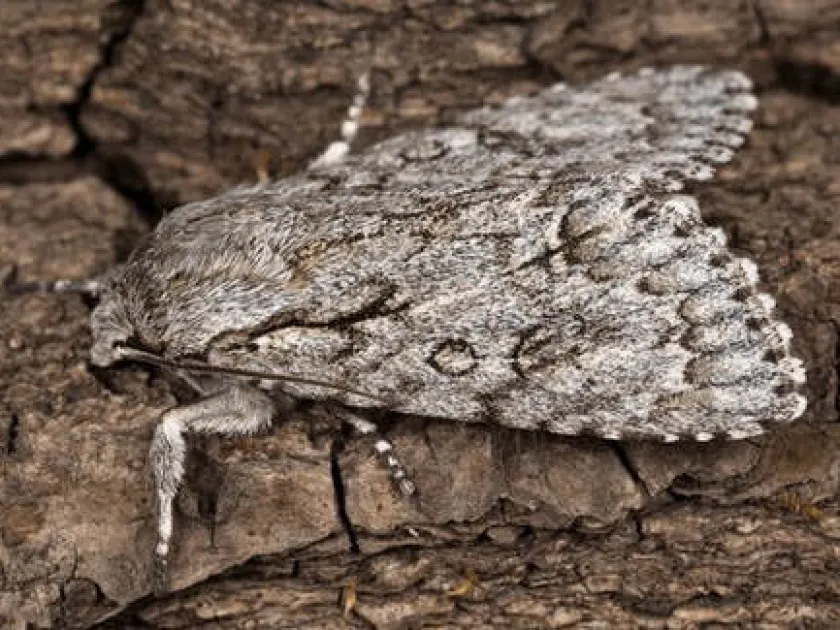
The Poplar Dagger Moth (Acronicta populi) is a moth belonging to the Noctuidae family, order Lepidoptera. Adults are characterized by brownish-grey forewings with a pattern resembling dagger markings.
The larvae, or caterpillars, of this species grow to a significant size and are covered in dense hairs, a common trait for various species within this genus.
The life cycle encompasses four stages: egg, larva, pupa, and imago. They typically overwinter in the pupal stage, encased in cocoons hidden within bark crevices or ground litter.
In temperate climates, the development of one generation generally takes approximately six to eight weeks, depending on temperature and host plant availability.
The species is subject to natural control by various entomophages, including parasitic wasps and predatory beetles that frequent forest environments.
What it damages
The primary hosts for the larvae are trees belonging to the Salicaceae family, specifically poplars (Populus) and aspens, and occasionally willows.
While often considered a secondary pest in mature forests, outbreaks can lead to significant defoliation, particularly in younger or stressed trees.
Nursery operations are the most susceptible, where heavy feeding by larvae can severely retard the growth of young saplings and decrease their vitality.
Older larvae are capable of consuming entire leaves, leaving only the main veins, which significantly disrupts the tree's photosynthetic capability.
Weakened trees become more susceptible to secondary infestations by wood-boring insects and various pathogenic fungi.
When it appears
Adult moths typically emerge in late spring or early summer, following the onset of warmer nocturnal temperatures.
Larval activity reaches its peak during the mid-summer months, particularly between July and August, when food availability is at its highest.
Pupation takes place towards the end of summer or early autumn, as the larvae prepare to overwinter in protective shelters.
The most critical period of damage occurs during the intensive vegetative growth phase of poplar trees, aligning with the caterpillar's peak feeding requirements.
Extended warm autumns may occasionally trigger a partial second generation, extending the potential period of damage until early September.
Signs of infestation
Initial signs of infestation include the presence of skeletonized leaves, where early-stage larvae consume leaf tissues while leaving veins intact.
As the larvae mature, they consume entire leaf blades, resulting in sparse canopies and visible gaps within the tree's foliage.
Frass (larval excrement) accumulation on leaves or at the base of the tree is a strong indicator of active feeding in the canopy above.
The presence of cocoons on the lower trunk or in the soil near the tree base confirms the successful completion of the larval stage and transition to pupation.
Direct sighting of the larvae on the underside of leaves or branches is the most reliable way to confirm an ongoing infestation.
Control measures
Biological control using formulations of Bacillus thuringiensis is recommended for managing early-stage larvae without harming beneficial pollinators.
In high-density scenarios within nurseries, systematic applications of approved contact insecticides may be necessary to protect tree development.
Cultural practices, such as clearing leaf litter from around the base of trees, are effective in reducing overwintering populations of the moth.
Promoting a healthy population of birds and predatory insects within the ecosystem can provide long-term natural suppression of the moth.
- Conduct visual canopy inspections starting in late spring.
- Utilize light traps for adult monitoring and population density tracking.
- Apply targeted biorational insecticides at the first sign of larval damage.
Taxonomy
- Latin name
- Acronicta populi
- Order
- Lepidoptera (butterflies)
- Family
- Noctuidae
- EPPO code
- ACRNPO
Discussion
No discussions yet — be the first.