
Large Dagger moth
Acronicta major
Description
How to identify
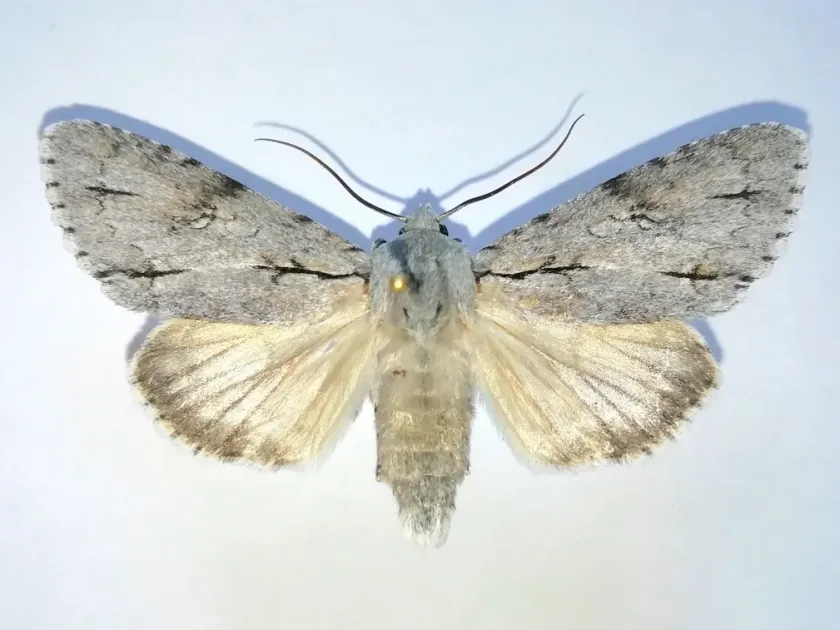
The Large Dagger moth (Acronicta major) belongs to the Noctuidae family. It is a nocturnal insect with an average wingspan of 40–45 mm.
The forewings are grayish-brown with distinctive dark, arrow-like markings, which is the origin of the common name "Dagger." The hindwings are generally lighter in color.
The caterpillar is the most destructive stage, characterized by dense tufts of hair covering its body. These hairs provide some protection from predators.
The pest spends the winter in the pupal stage. It creates a robust cocoon, usually tucked into tree bark crevices, garden debris, or the soil near the base of the host plant.
Adult moths emerge in late spring or early summer to mate and lay eggs on the undersides of host leaves, initiating the new lifecycle.
What it damages
This species is a polyphagous pest, though it primarily targets deciduous trees and shrubs, showing a strong preference for the Rosaceae family.
It frequently causes significant damage to fruit trees such as apples, pears, plums, and cherries, which are vital for orchard productivity.
Caterpillars consume leaf tissue voraciously, often leaving only the main veins behind, which severely hinders the plant's ability to perform photosynthesis.
Severe infestations lead to partial or total defoliation of the tree. This stress weakens the tree's immune system and reduces its capacity to store energy for the coming winter.
Reduced photosynthetic activity negatively impacts fruit set and overall yield, leading to significant economic losses in commercial orchards.
When it appears
The flight period for adult moths begins in late May and extends through June, depending on local climatic conditions and regional temperatures.
The larval stage is most active throughout the summer months. Peak feeding intensity typically occurs in July and August as the caterpillars grow rapidly.
Pupation usually takes place in late summer or early autumn. The larvae seek out secure locations to spin their cocoons and enter their overwintering state.
Environmental factors significantly influence the lifecycle length. Warmer summers may lead to faster larval development, potentially resulting in two generations per season.
By autumn, the caterpillars complete their cycle, and the pest population enters a dormant phase to survive the winter temperatures.
Signs of infestation
The first signs of an infestation are "windowed" leaves, where young larvae have eaten the soft tissue between the veins, leaving behind a fine mesh.
As the caterpillars mature, they consume the entire leaf blade, causing ragged edges and significant holes that are easily visible during a casual orchard inspection.
The presence of frass (caterpillar droppings) on the leaves or the ground beneath the tree canopy is a clear indicator of active feeding by the pest.
Inspecting the trunk and major branches in autumn can reveal cocoons hidden in the bark, confirming the presence of the moth in the ecosystem.
- Ragged leaf edges and missing foliage.
- Presence of hairy caterpillars on leaves.
- Frass deposits on the ground or canopy.
Control measures
Cultural control is a primary defense. Regularly cleaning tree trunks of loose bark and clearing garden debris helps destroy pupation sites.
Autumn soil cultivation around the base of fruit trees can disturb and kill pupae hidden in the ground, preventing them from emerging in the spring.
For small gardens, manual removal of caterpillars and pruning infested branches are effective and non-toxic ways to manage population levels.
Biological insecticides, particularly those containing Bacillus thuringiensis, are highly effective against young larvae while remaining safe for beneficial insects.
Chemical applications should be timed to match the larval hatching period, using contact or systemic insecticides approved for fruit-bearing crops.
Taxonomy
- Latin name
- Acronicta major
- Order
- Lepidoptera (butterflies)
- Family
- Noctuidae
- EPPO code
- ACRNMA
Discussion
No discussions yet — be the first.