
Alder Moth
Acronicta alni
Description
How to identify
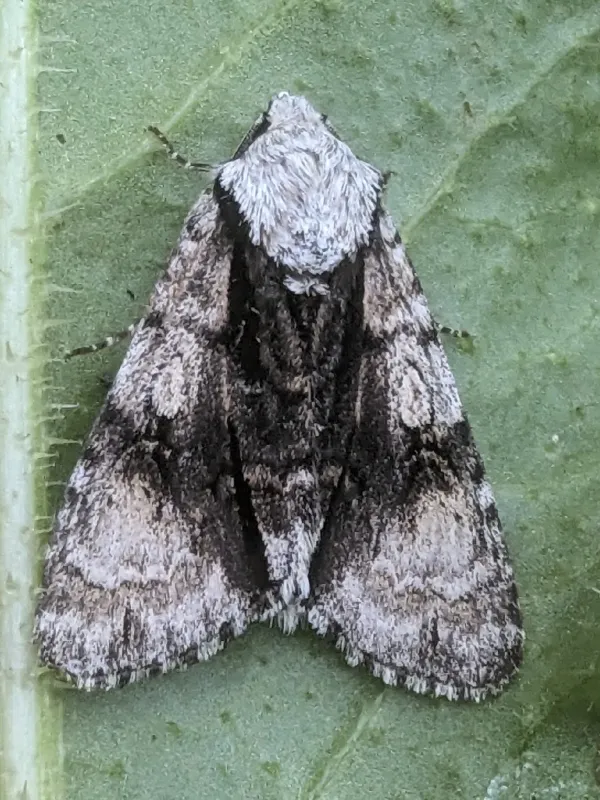
The Alder Moth (Acronicta alni) is a moth belonging to the Noctuidae family. The adult moth features grey forewings with distinct black markings, resembling arrowheads, which gives the species its common name.
Young larvae mimic bird droppings as a defense mechanism against predators. As they mature, they develop a striking appearance with black and yellow bands and peculiar, club-shaped hairs.
The life cycle encompasses four stages: egg, larva, pupa, and imago. The species overwinters as a pupa, usually enclosed in a cocoon spun within bark crevices, rotten wood, or leaf litter.
Adult moths typically emerge from May to July. After mating, females deposit their eggs singly or in small groups on the underside of the leaves of host plants.
The adult moth has a wingspan of approximately 35–45 millimeters. It is widely distributed across Europe and parts of Asia, inhabiting deciduous woodlands, parks, and gardens.
What it damages
The Alder Moth primarily affects deciduous trees, including alder, birch, lime, hazel, oak, and beech. It is also frequently found on fruit trees like apple, plum, and cherry.
The damage is caused by the caterpillars, which are voracious feeders. They skeletonize the leaves before consuming the entire leaf blade, often leaving only the main veins behind.
In cases of high infestation, the Alder Moth can cause significant defoliation, which weakens the host tree, reduces its vigor, and makes it susceptible to secondary pests and fungal diseases.
For fruit trees, feeding damage can lead to lower yields and poor fruit quality. Young saplings are particularly vulnerable, as heavy foliage loss can significantly stunt their growth.
Although large-scale outbreaks are relatively rare compared to other moth species, consistent monitoring is recommended to prevent local population buildup.
Signs of infestation
The most visible sign of an infestation is defoliated or "holey" leaves in the tree canopy. These signs typically appear from mid-summer onwards as the larvae grow larger.
Caterpillars can be spotted during a close inspection of the branches and leaf undersides. While younger ones are inconspicuous, the older larvae are very distinctive due to their vibrant colors.
The presence of frass (caterpillar droppings) on leaves or accumulated beneath the tree canopy is a clear indicator of active feeding activity.
Before pupation, larvae may chew into the bark of the tree to create overwintering sites, which can lead to visible damage or scarring on the tree trunk.
- Holes and missing leaf tissue in the canopy.
- Presence of brightly colored larvae with club-shaped hairs.
- Accumulation of frass beneath the tree branches.
- Skeletonized leaves left on the tree.
Control measures
Managing the Alder Moth involves a combination of mechanical and biological methods. Hand-picking caterpillars from branches is a simple and effective measure for home gardens.
Maintaining tree health through proper pruning and regular inspections helps reduce the likelihood of heavy infestations. Removing dead wood and debris can eliminate overwintering sites for pupae.
If chemical control is necessary, apply registered insecticides that target Lepidopteran larvae. It is most effective to treat the area while the larvae are in their early development stages.
Biological control, such as using Bacillus thuringiensis, offers an eco-friendly way to manage the pest without harming beneficial insects or the environment.
Monitoring the tree canopy during the summer months allows for timely intervention, ensuring that the pest population remains below the threshold for significant damage.
Taxonomy
- Latin name
- Acronicta alni
- Order
- Lepidoptera (butterflies)
- Family
- Noctuidae
- EPPO code
- ACRNAL
Discussion
No discussions yet — be the first.